3D printing using MJF makes sense when the part needs tough nylon behavior, compact nesting, and no support scars on the obvious surfaces. I would not treat it as a magic shortcut, though. Most bad MJF quotes I see start with the same problem: the CAD file is printable, but the buyer has not said which holes must fit, which surfaces must look clean, or whether powder trapped inside the part is acceptable.
MJF usually gets discussed as a faster nylon process. That is partly true in the right batch, but speed is not the detail that saves a project. The useful question is simpler: can this geometry survive powder-bed printing, powder cleanup, dyeing or sealing, and final assembly without surprising you?
Where 3D Printing Using MJF Actually Helps
The best MJF candidates are not decorative shells with mirror-smooth expectations. They are functional nylon parts: brackets, internal housings, ducts, fixtures, clips, cable guides, small enclosures, robot parts, and short-run production pieces where tooling is too slow or too expensive.
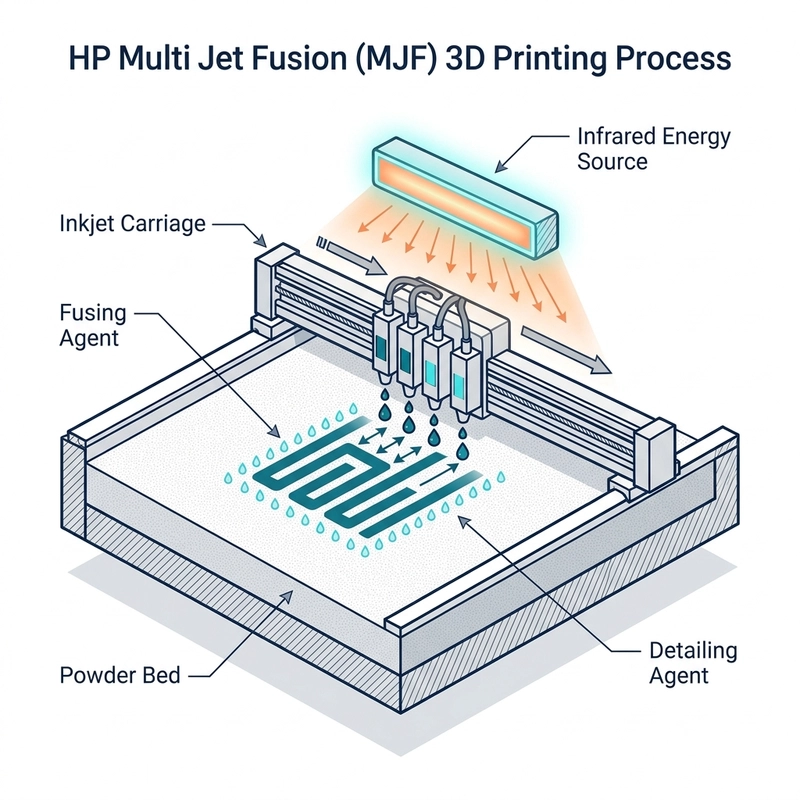
The loose powder supports the part during printing, so MJF can handle shapes that would be annoying in FDM or resin printing. No support tower has to be broken off the bottom face. That helps with batches of nested parts, but it also creates a different problem: powder has to get out after the build. A blind chamber, a tiny internal channel, or a decorative hollow body can print and still be a cleaning headache.
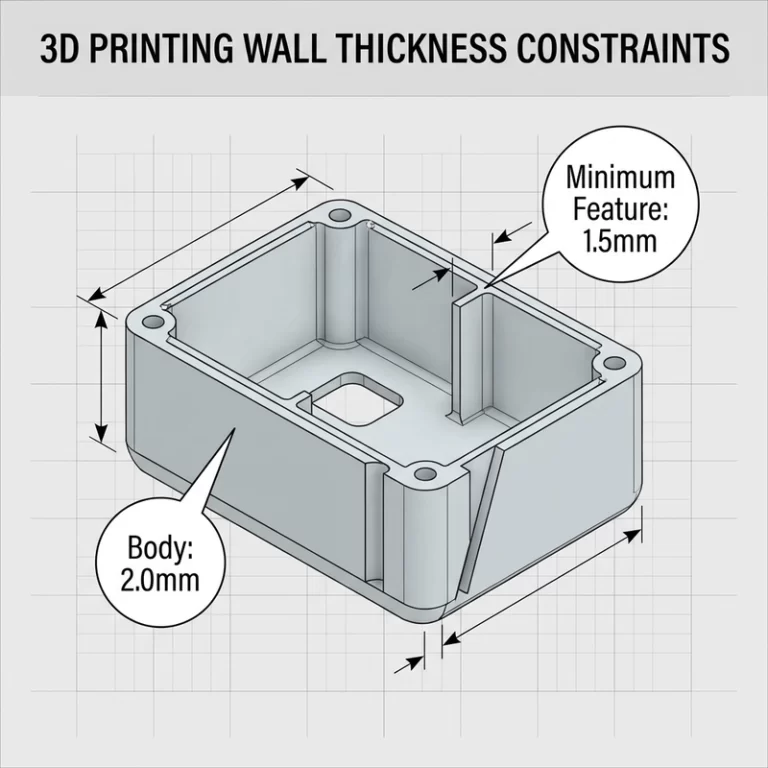
Before I call a part a good MJF job, I check the trapped-volume risk, thin ribs, snap features, hole size, and the surfaces the customer will actually touch. A part can be strong enough and still feel wrong if the contact face is gritty or the sliding clearance closes after cleanup.
3D Printing Using MJF Still Needs Powder Cleanup
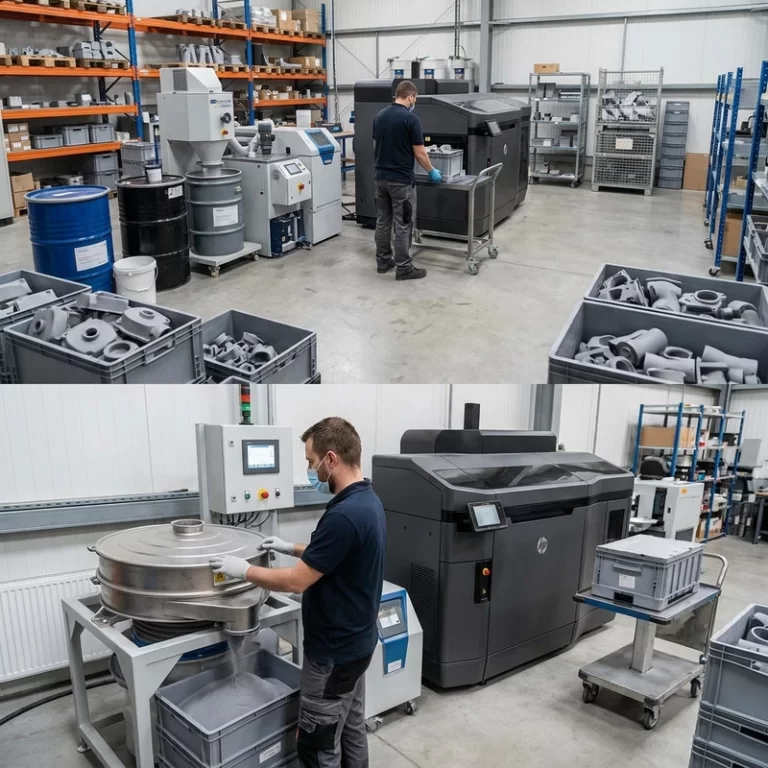
MJF is a powder-bed polymer process. That means every quote should consider depowdering, blasting, washing if required, and the finish step. Fine holes, deep slots, small threads, blind cavities, and lattice areas may hold powder. If the model is a duct or enclosure, add access openings where the design allows it. If the inside must be clean, say that in the RFQ instead of assuming it.
Small raised logos and engraved text also need caution. They may survive on a larger flat face, but very fine lettering can soften after blasting or dyeing. I prefer sending one marked-up screenshot that labels the important cosmetic faces. It saves a lot of back-and-forth because the supplier can orient and finish the part with the real priority in mind.
PA12 Is Common, But It Does Not Answer Every Design Question
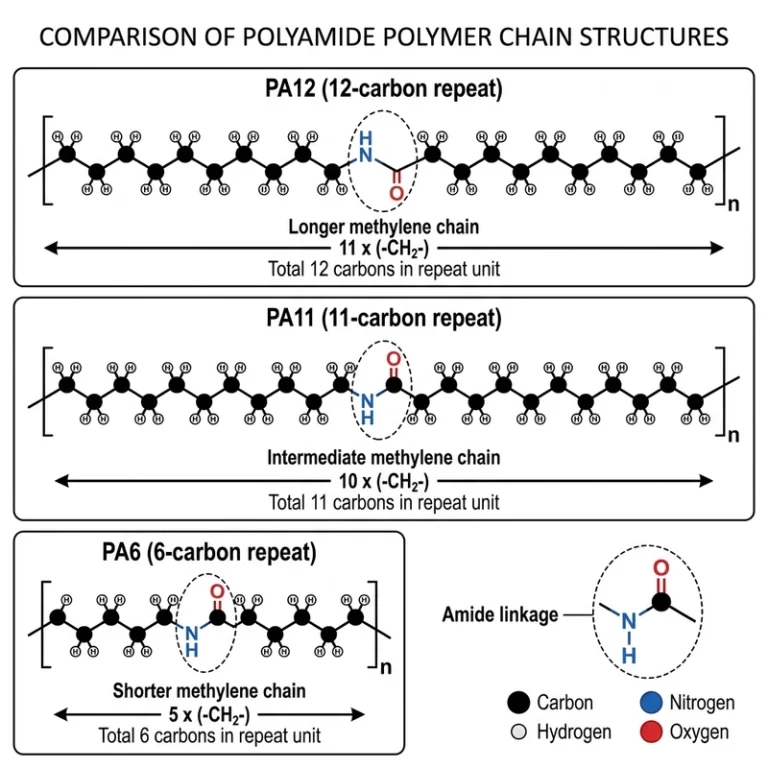
For 3D printing using MJF, most buyers are really asking about PA12 nylon. PA12 is useful because it has a good balance of toughness, flexibility, chemical resistance, and dimensional stability for many functional prototypes and low-volume parts. That does not mean every PA12 print is automatically food-safe, medical-ready, outdoor-rated, or approved for a hot automotive zone. Those claims need material data, supplier process control, and the right finishing or validation route.
If the job is mainly about nylon behavior, our PA12 nylon material guide is a better companion read than a general process page. If the job is mainly about whether a wall, boss, hinge, or moving clearance is printable, start with the 3D printing design guidelines before changing material.
Fits, Holes and Inserts Need Real Allowance
A CAD gap is not the final physical gap. Powder printing, thermal behavior, blasting, dyeing, sealing, and measurement method all add small changes. For press fits, moving hinges, sliding covers, and snap assemblies, I would not copy the clearance from an injection molded drawing and hope it lands the same way.
For repeated assembly, printed threads are usually not my first choice. Larger printed threads can work for light-duty prototypes, but tapped holes, heat-set inserts, molded-in-style brass inserts after printing, or a redesign around standard fasteners are often more reliable. The right answer depends on screw size, load, number of cycles, and whether the buyer can accept secondary processing.
Surface Finish Is a Buying Decision, Not a Decoration Step
Raw MJF nylon usually has a fine matte, slightly grainy surface. Many parts are dyed black because it hides handling marks and gives the part a more uniform appearance. Grey, black, sealed, coated, and painted parts should not be quoted as the same thing. Each finish changes cost, lead time, handling risk, and sometimes fit.
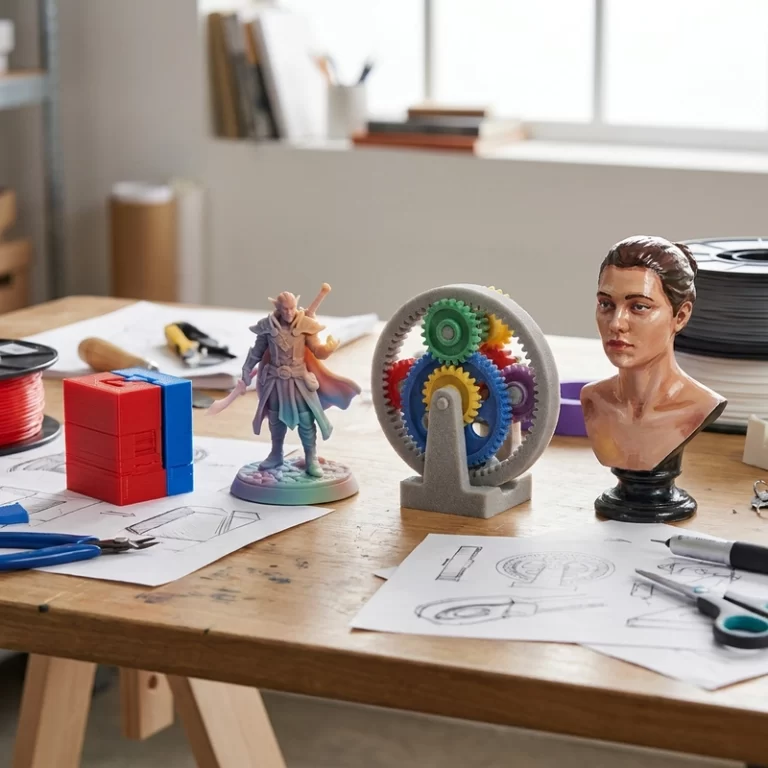
For display parts, painted housings, or consumer-facing samples, ask for the finish route early. A part that looks acceptable as an internal fixture may not be good enough as a retail product shell. 3D printing using MJF can get you a strong nylon part, but it will not turn into an injection molded cosmetic surface without extra finishing work and realistic acceptance criteria.
Cost Changes When the Batch Changes
The quote for MJF is affected by the bounding box, nesting efficiency, part count, powder handling, post-processing, inspection, and packaging. Two small parts can be cheap or awkward depending on orientation, wall thickness, and how much cleaning they need. A larger batch can lower the per-part machine share, but it may also expose more finishing labor if every part needs cosmetic sorting.
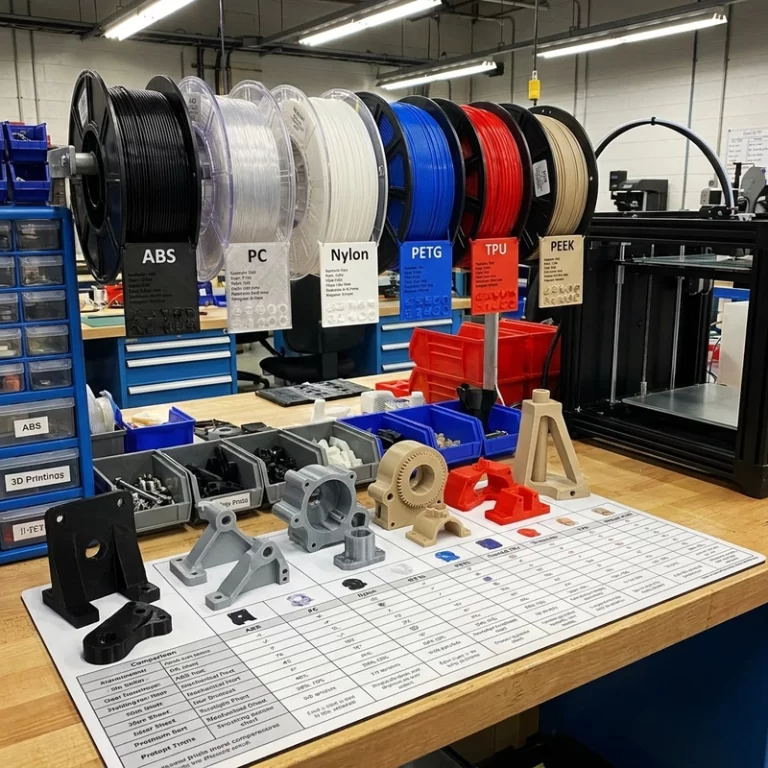
If you compare MJF with SLS, SLA, FDM, or CNC, compare the complete part, not only the print line. A strong raw nylon part with dyeing and inserts may beat CNC on geometry but lose on tight bores. A resin part may look smoother but fail in a snap-fit. Use the custom 3D printing service process overview to frame that comparison, then use a clean 3D printing quote checklist to document the actual requirement.
What to Send Before 3D Printing Using MJF
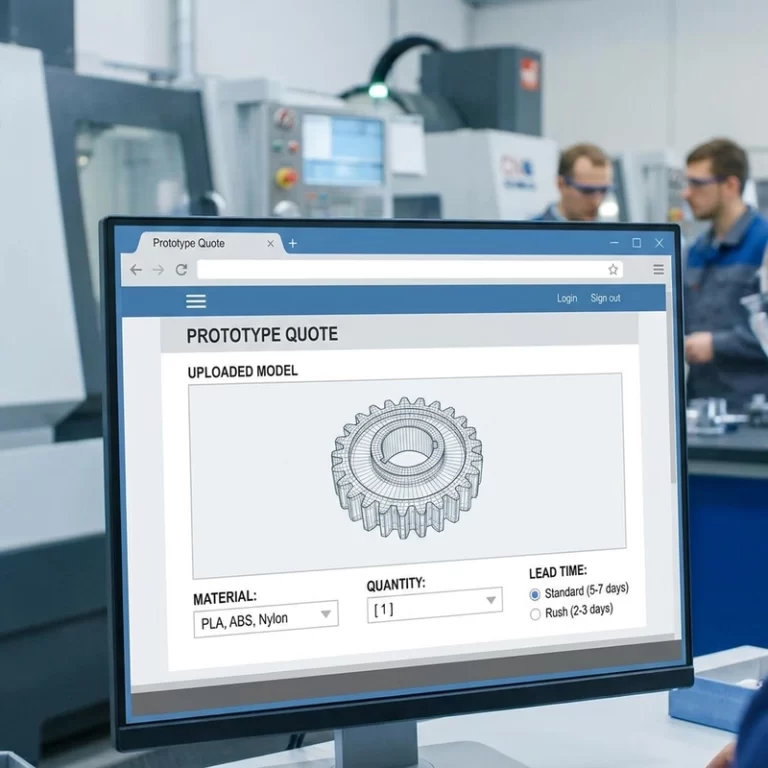
For a useful quote, send the STL or STEP file, quantity, target material, finish expectation, critical dimensions, assembly notes, and any areas where trapped powder is unacceptable. If a hole must take a screw, mark it. If a face will be visible to the customer, mark it. If the part is only a fixture for internal use, say that too.
I also like keeping terminology grounded in a neutral source such as ASTM additive manufacturing resources, especially when several teams are discussing the same project. It keeps the RFQ from turning into a naming argument. 3D printing using MJF works best when the file, material, finish, and inspection notes are boringly clear before the build starts.