
MJF Nylon 3D Printing Service
MJF nylon 3D printing for PA12 housings, brackets, clips, ducts and low-volume functional parts. Send STEP or STL files for a manual review of powder removal, wall design, fit, finish, quantity and critical dimensions.
Description
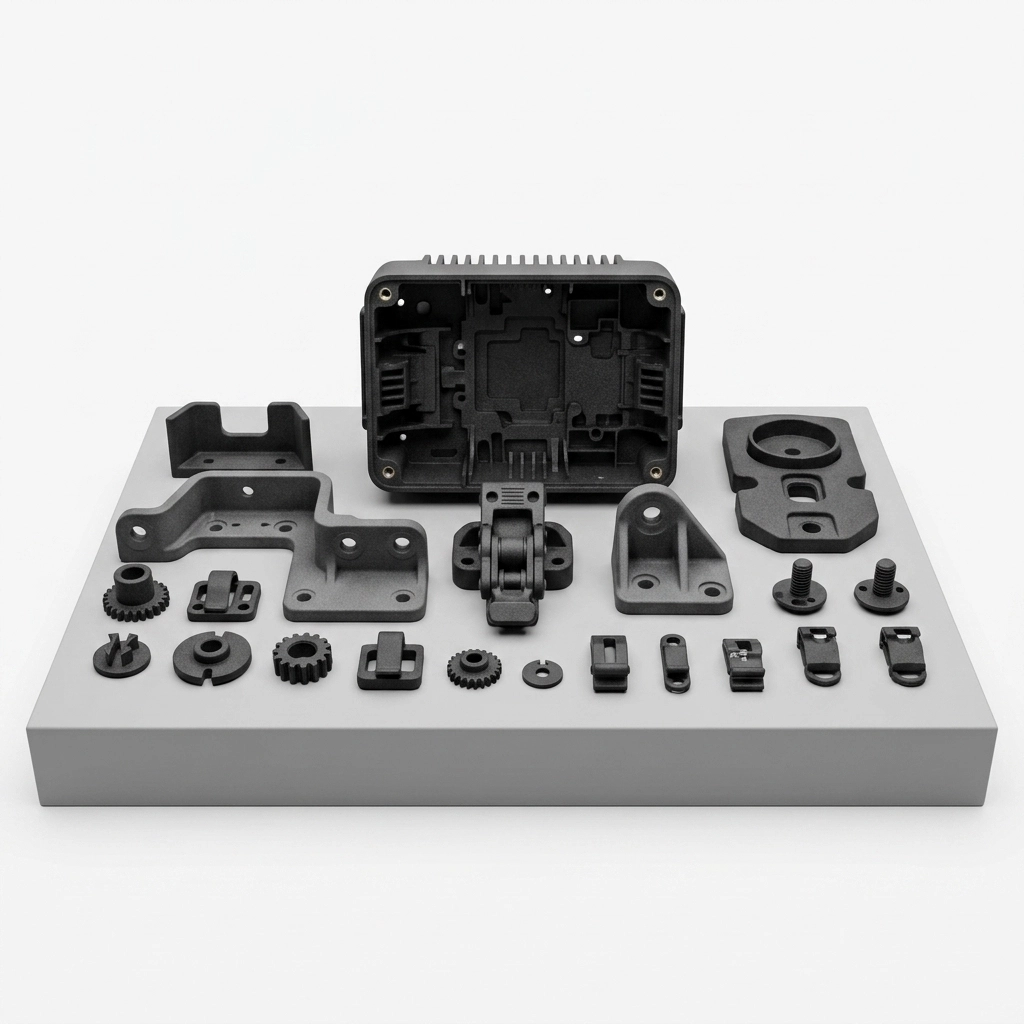
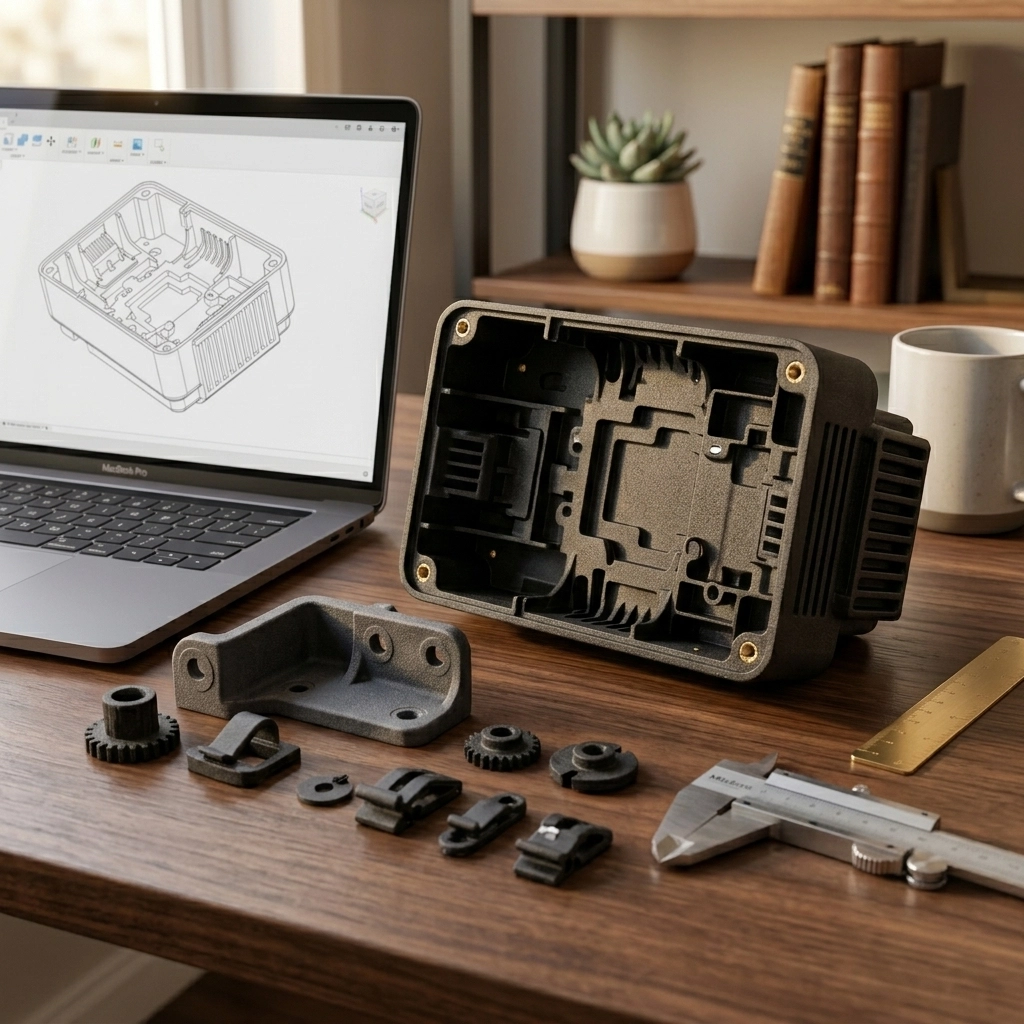
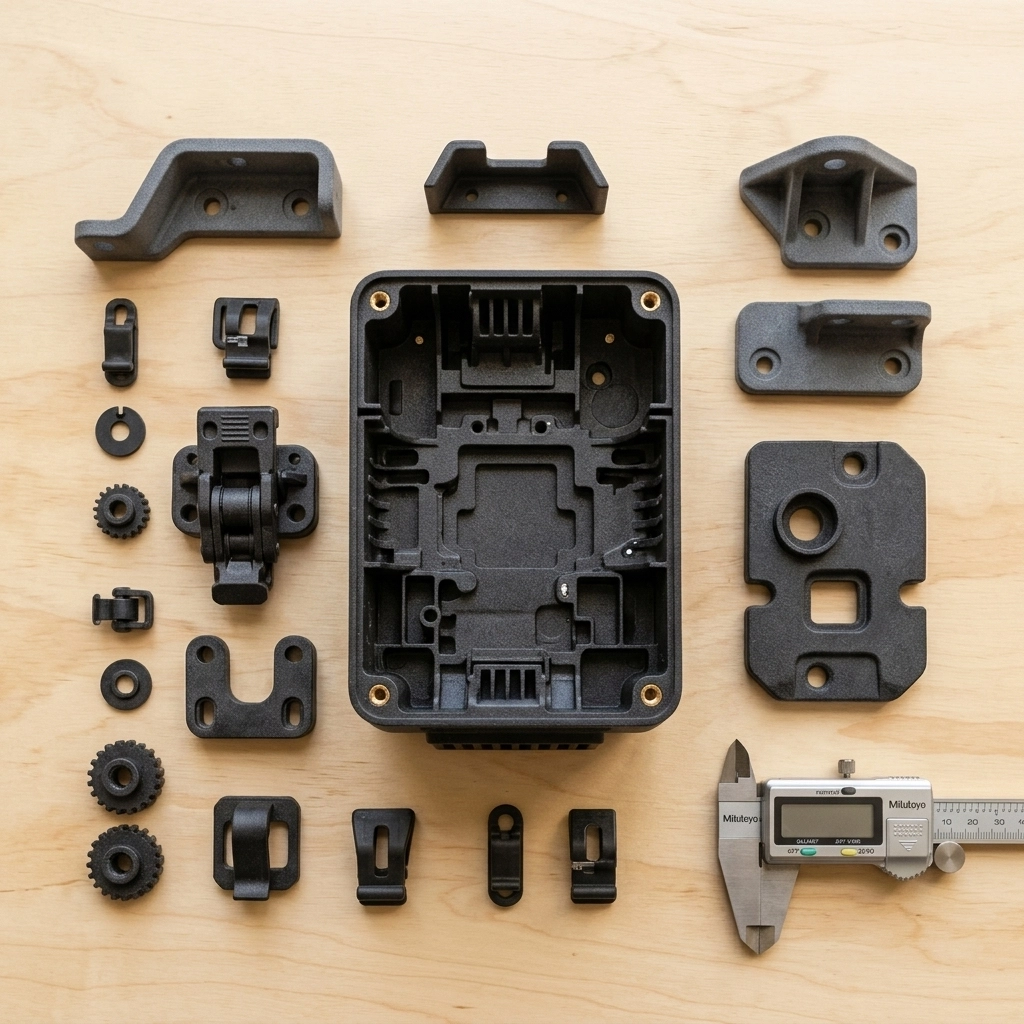
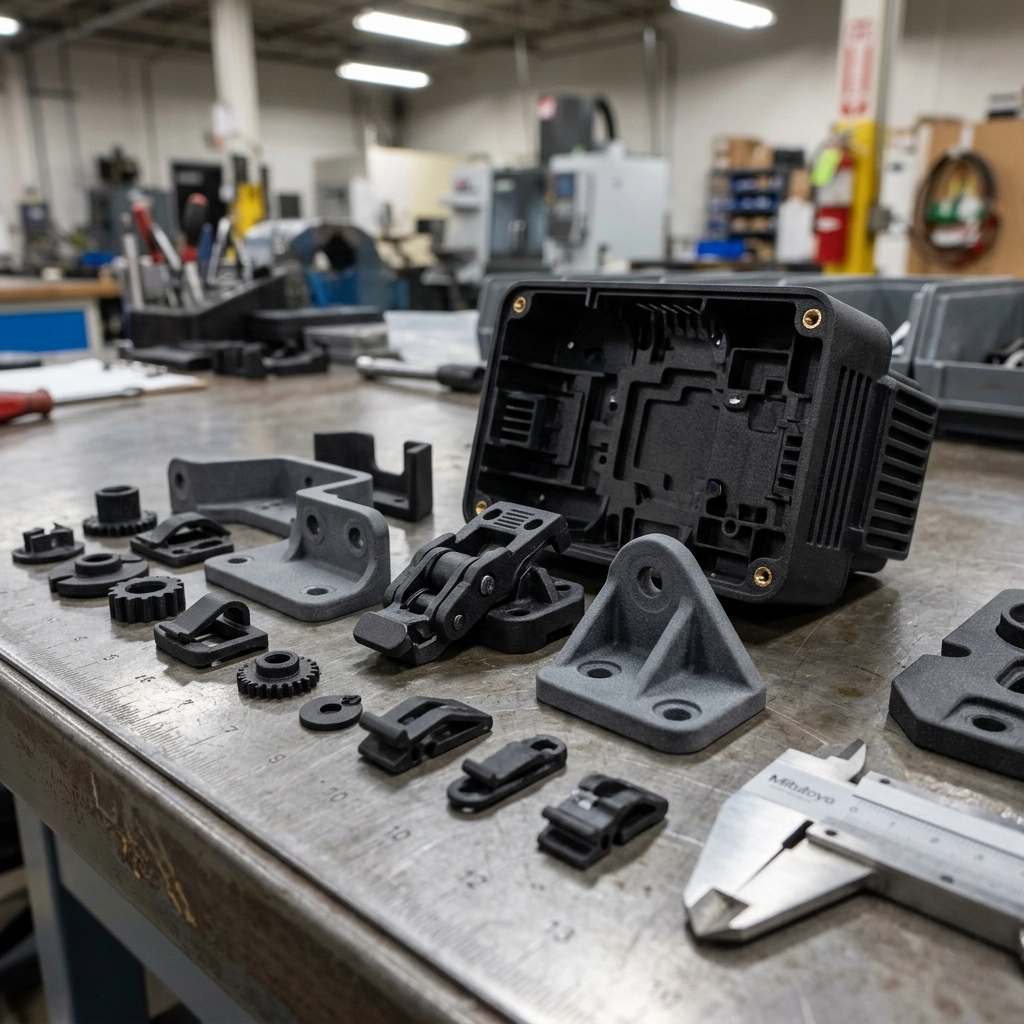
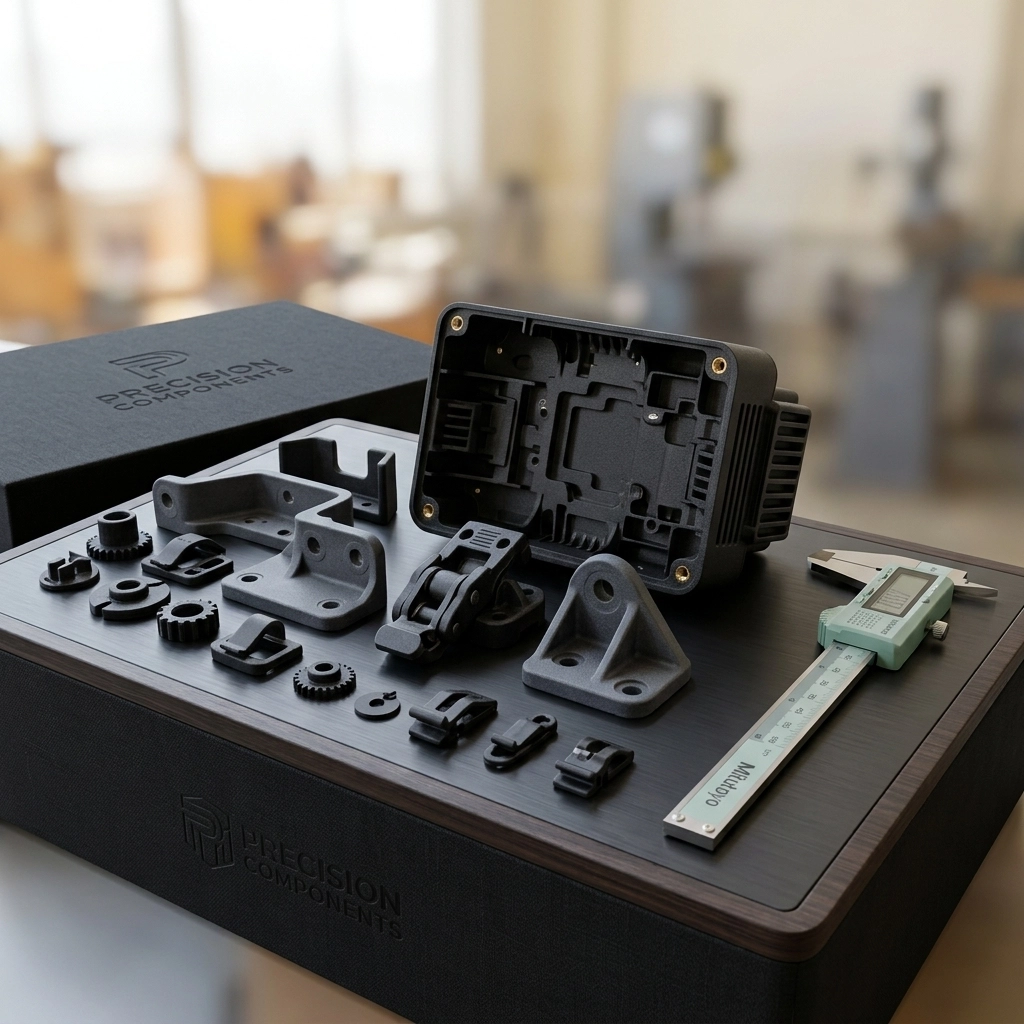
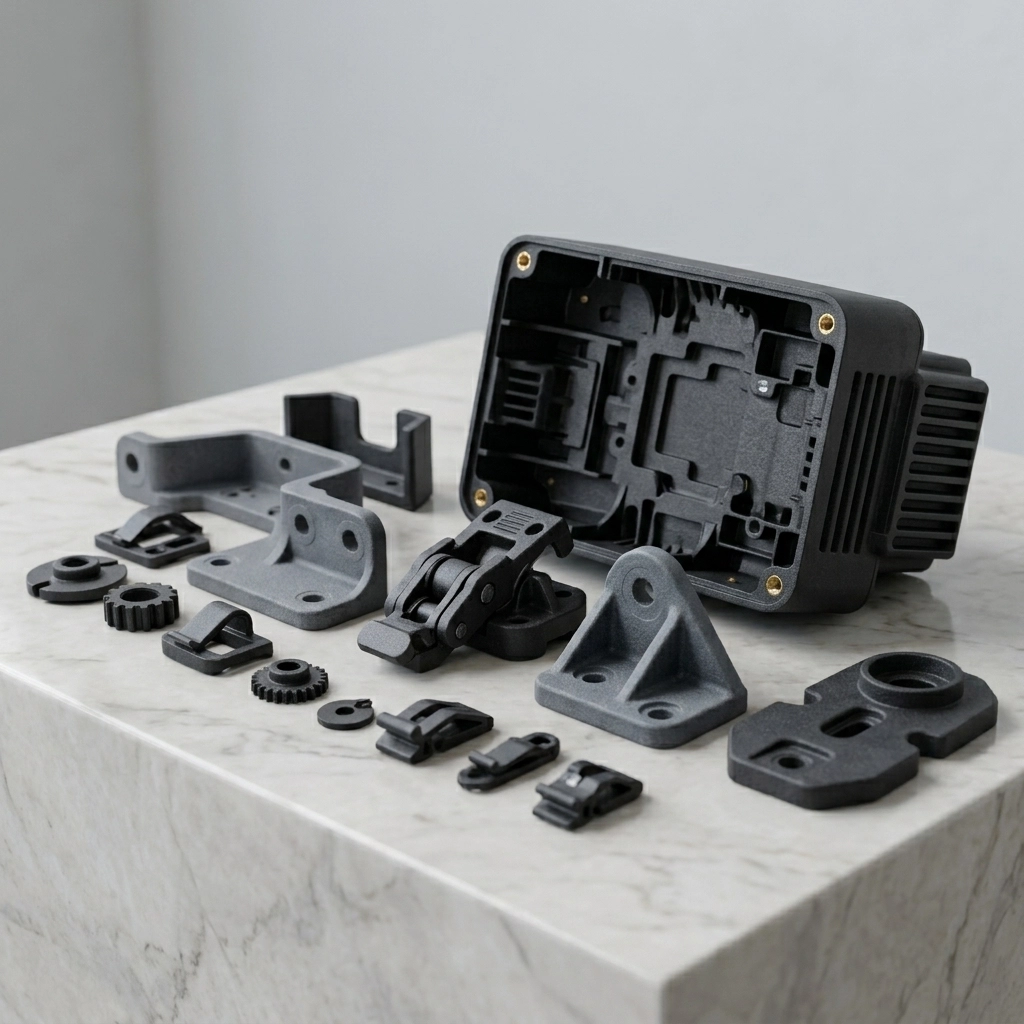
MJF nylon 3D printing service is built around functional polymer parts rather than presentation-only models. It is a strong candidate for PA12 housings, brackets, clips, ducts, guards and compact production assemblies, especially when support removal would be difficult. The surrounding powder supports each layer, so internal channels and complex shapes can be produced without conventional support structures.
That design freedom does not remove the need for review. Thin clips can still break, broad panels can distort, powder can remain inside closed cavities, and a dyed surface can hide texture without making it smooth. We quote MJF from the end-use requirements, not from the file volume alone.
What MJF Nylon Is Good At
MJF fuses polymer powder across a build layer using deposited agents and heat. It is commonly used for parts that need more functional behavior than a brittle display resin can provide. Typical RFQs include:
- prototype housings with clips, bosses and cable routes;
- ducts, manifolds and covers with internal geometry;
- jigs, fixtures, guards and shop-floor aids;
- wearable shells, ergonomic test parts and compact brackets;
- low-volume PA12 parts that may change before tooling is justified.
MJF is less convincing when the buyer expects a glossy molded face straight from the build, needs a perfectly transparent part, or has not defined the temperature, chemical or regulatory environment. Those requirements can move the project toward another material, secondary finishing or a different process.
The MJF RFQ Review: Six Decisions That Affect the Part
1. PA12 is common, but the material still needs a job description
PA12 is widely used because it balances stiffness, toughness and process stability, but “nylon” is not a complete specification. PA11, glass-filled grades and flexible materials have different behavior. Tell us whether the part clips, bends, carries a load, touches skin, sees sunlight, sits near heat or contacts chemicals. Certification and regulated-use requirements must be tied to the exact material and production route rather than assumed from a generic nylon label.
2. Powder removal must be designed into enclosed geometry
The powder bed removes the need for printed supports, but unused powder still has to leave the part. Blind channels, sealed lattices and hollow walls can trap material. Escape openings must be reachable by the cleaning process and should be positioned with the final assembly in mind. If trapped powder is acceptable for a nonmoving internal volume, say so; if a passage must be fully open, identify it as an inspection point.
3. Thin walls depend on length, loading and heat exposure
A short rib and a large cover should not use the same wall rule. Long flat areas can move as the build cools, and a thin snap arm may fail even when it prints cleanly. Ribs, fillets, shorter unsupported spans and controlled wall transitions are often more useful than chasing one minimum thickness value. The exact design limits should come from the chosen machine and material guidance, then be checked against the real geometry.
4. Fit needs clearance, not just nominal CAD dimensions
For mating parts, state whether the fit should slide, locate, snap or stay fixed. Small holes may close in, long parts may shift with cooling, and dye or sealing can affect the final surface. We prefer a short list of critical dimensions over a blanket tight tolerance on every feature. A fit coupon or first-article sample is sensible when an assembly is expensive to remake.
5. The as-printed surface is not an injection-molded surface
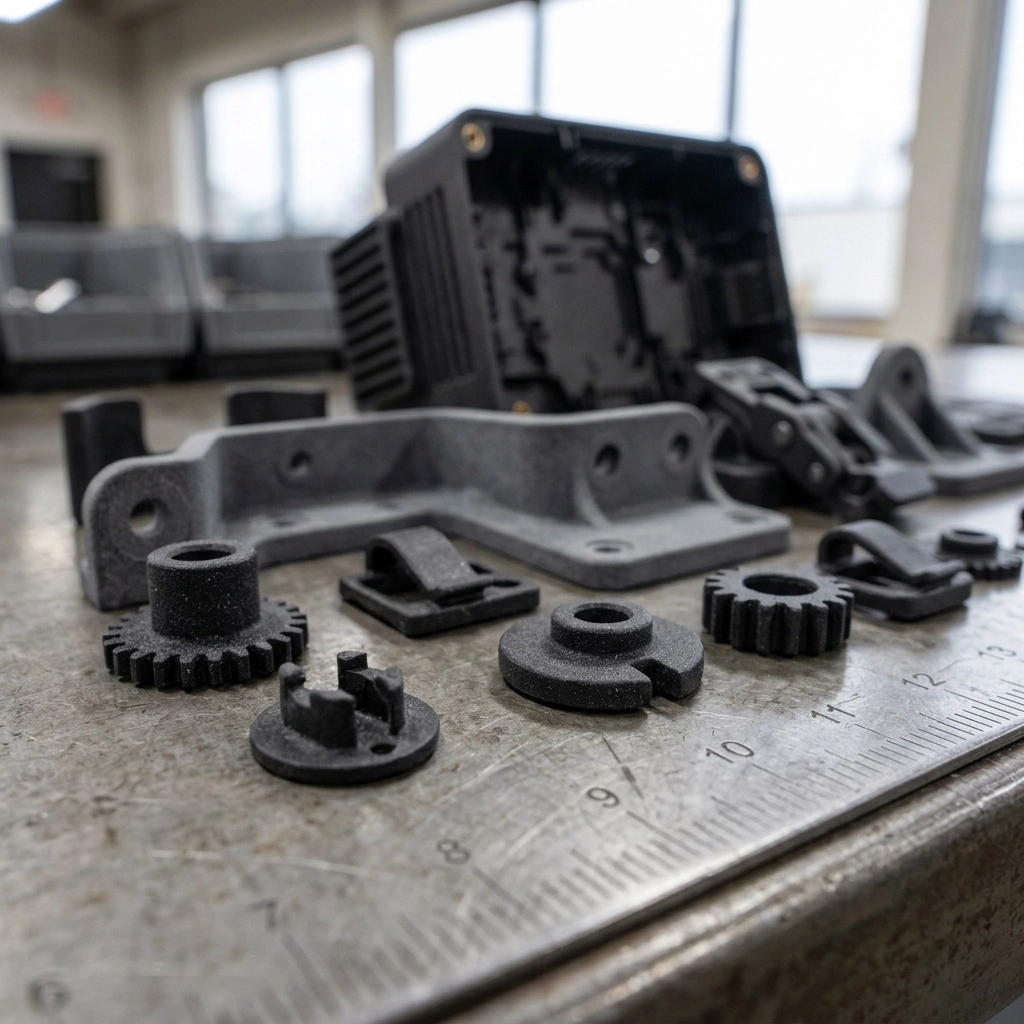
Raw MJF nylon has a fine granular texture. Bead blasting removes loose powder and evens the appearance, while dyeing produces a more uniform color but does not erase the underlying texture. Tumbling, sealing, painting and other finishes can change edges, dimensions and cost. Define which faces are cosmetic and whether color consistency or surface smoothness matters more.
6. Batch price depends on build packing and handling
MJF can place many parts within a powder build, so quantity and nesting influence the economics. Cost is not simply model volume multiplied by a fixed rate. Build occupancy, part spacing, cooling time, unpacking, blasting, dyeing, inspection and sorting all matter. Send the expected annual or repeat quantity when available; it helps us judge whether a one-off layout or a repeatable batch plan makes more sense.
MJF Nylon Surface and Post-Processing Choices
- Cleaned and blasted: practical for fit checks, fixtures and internal-use parts.
- Dyed: useful for a uniform dark appearance without a paint film.
- Sealed or coated: considered when easier cleaning or a different surface response is needed.
- Machined locally: useful for selected bores, threads or mating faces that need more control.
HP’s official comparison of MJF and SLS explains the underlying powder-bed processes and why neither requires conventional support structures. Actual part acceptance still depends on the selected material, machine, geometry and finishing route.
Files and Notes for an MJF Nylon 3D Printing Service Quote
- STEP and STL files with units and final scale confirmed;
- quantity for the sample and expected repeat batch;
- part use, load direction and environmental requirements;
- mating parts, required clearances and critical dimensions;
- open channels or cavities that must be cleared of powder;
- raw, blasted, dyed, sealed, painted or machined finish.
Read our practitioner-focused guide to 3D printing using MJF for more process detail. Compare PA12 behavior in the PA12 nylon guide, or return to the custom 3D printing service hub when MJF may not be the best route.
Common MJF Questions
Can MJF print moving assemblies in one build?
Sometimes, provided the clearances are suitable and trapped powder can be removed. A printed-in-place assembly should be reviewed as a mechanism, not only as separate solid bodies.
Is black MJF nylon printed black?
The supplied appearance depends on the material and finishing route. Many PA12 parts are dyed after cleaning. Confirm whether you need raw gray, dyed black or a coated color rather than relying on a screen rendering.
Should I choose MJF or SLS?
Both are powder-bed fusion routes without conventional support structures. Material availability, geometry, finish, batch size and supplier process control decide the better fit. We compare the file and end use before assigning the process.