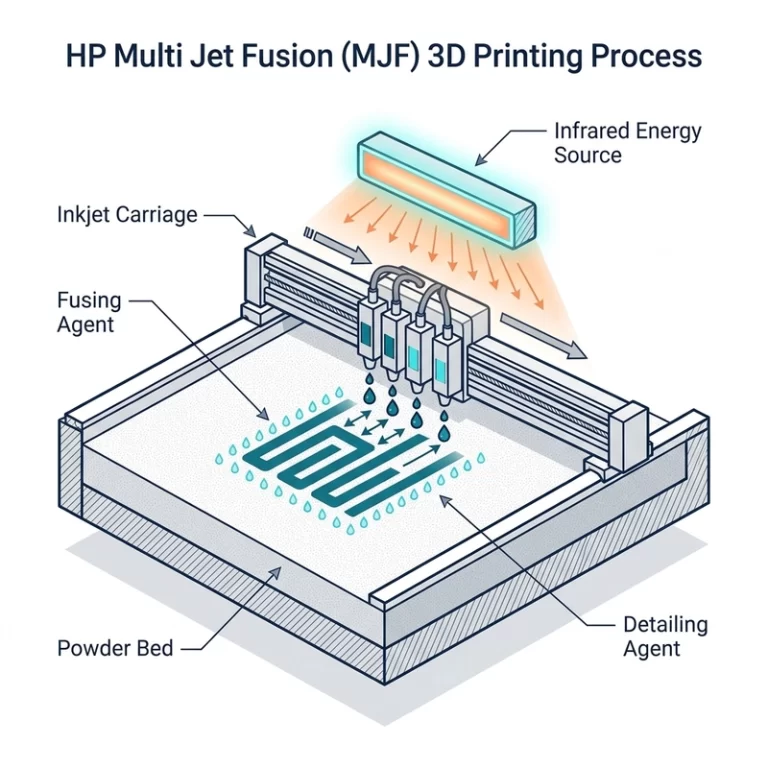
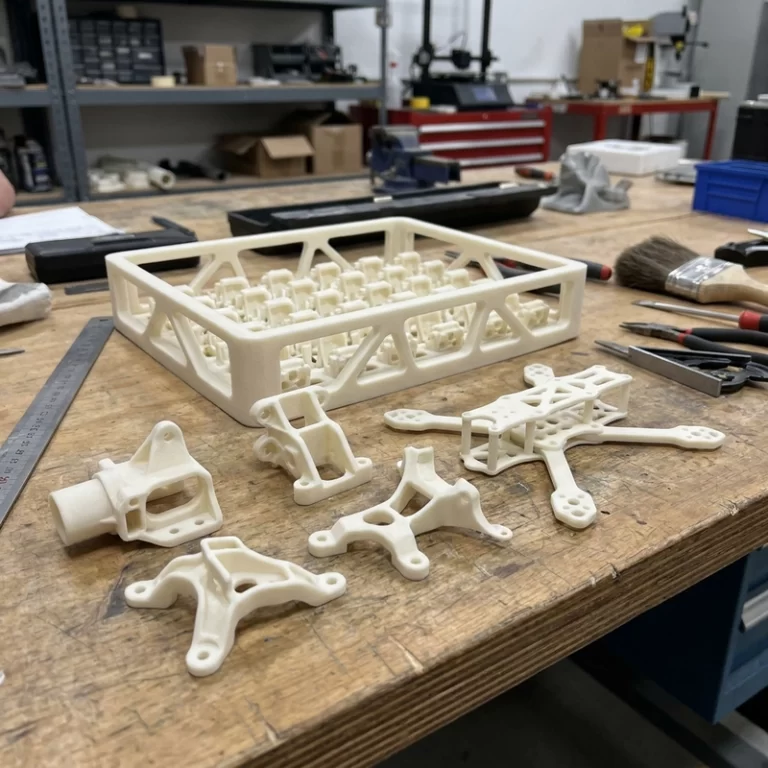
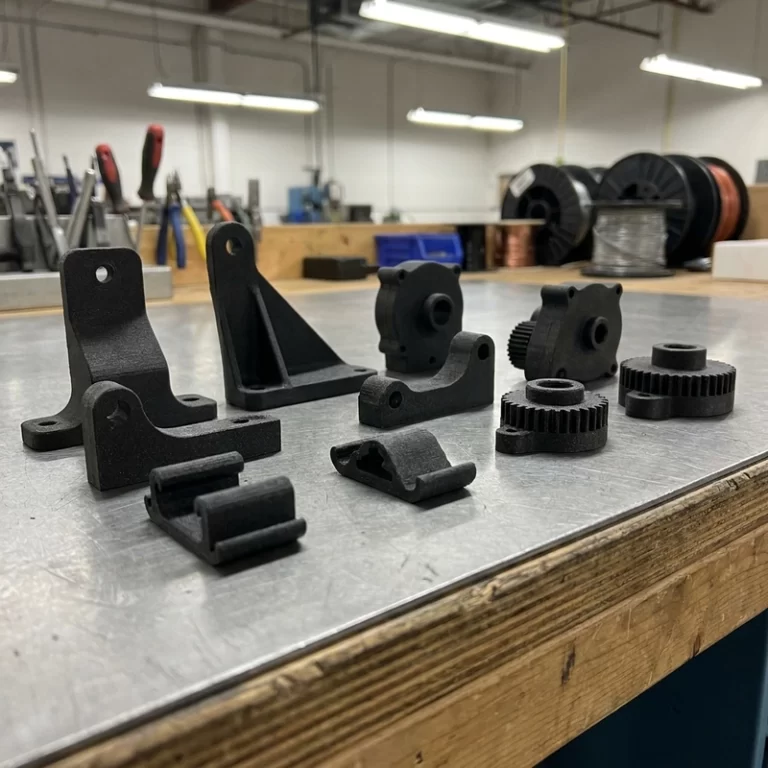
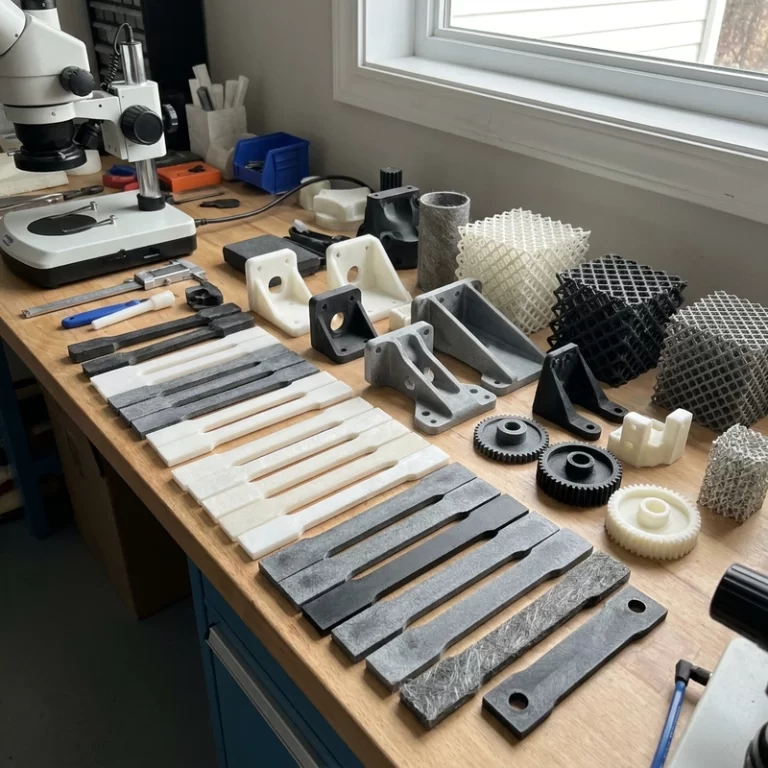
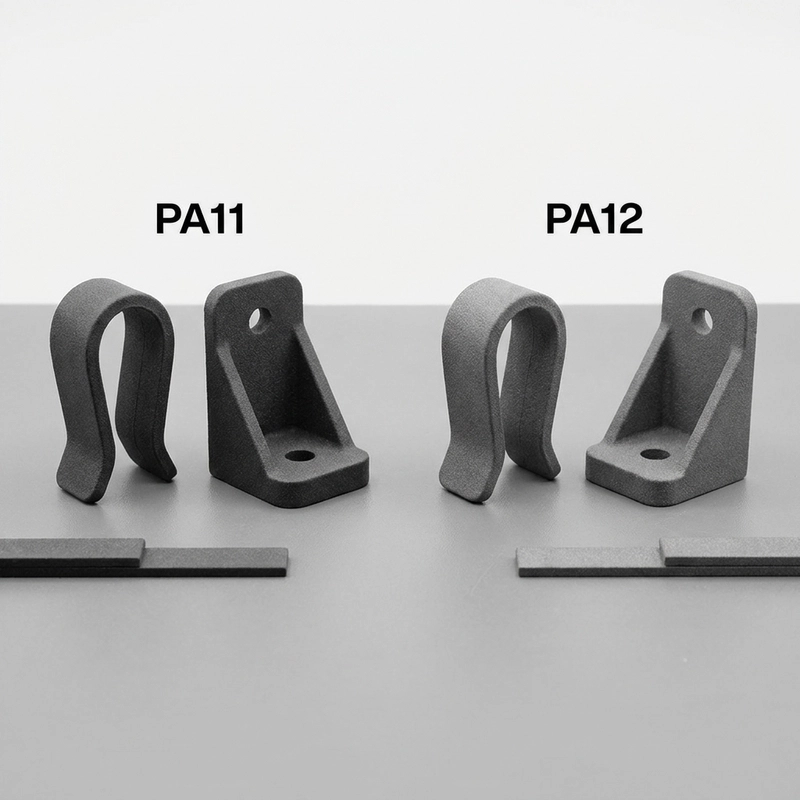
PA11 and PA12 are both used in polymer powder-bed printing, but their performance depends on the exact grade, process and finished-part condition. Some PA11 grades emphasize ductility and impact performance, while PA12 is widely used for dimensional and functional applications. Compare relevant material data and representative parts rather than selecting from the polymer name alone.
Here’s how I decide, based on what the part actually has to do.
PA12: The Default Choice (and Usually the Right One)
PA12 is a common starting point for housings, brackets, ducts, fixtures and prototypes. Confirm the available grade, process and price for the project. Neither widespread use nor a lower quoted price establishes that every PA12 part will meet the required stiffness, fit or cycle life.
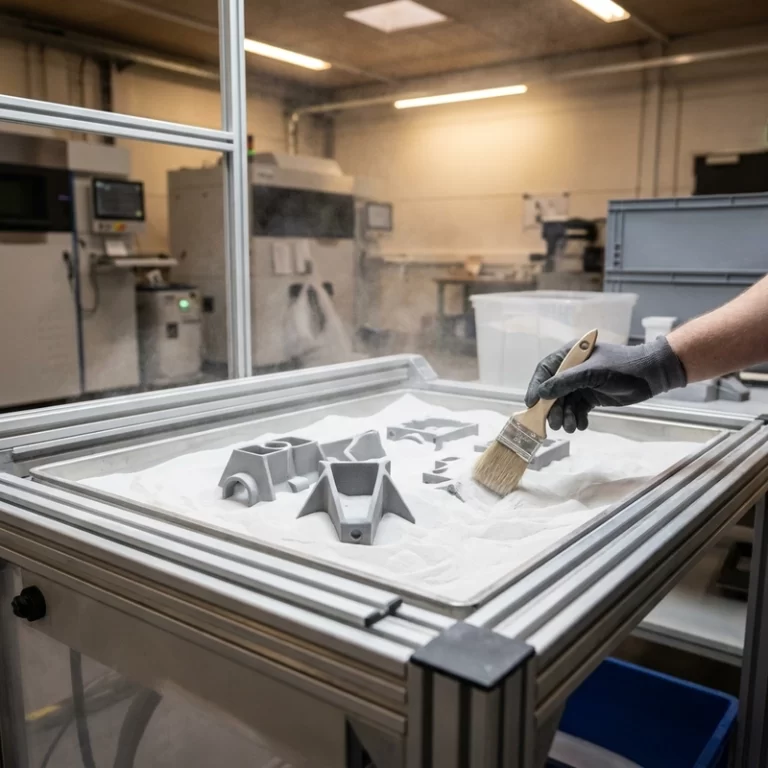
The surface is powdery out of the bed. Bead blasting cleans it up. Dyeing (usually black) gives a more uniform look. Tumbling smooths edges. PA12 is well-documented and most suppliers know how to process it reliably.
For a repeatedly flexed clip or impact-loaded part, review fatigue, geometry, orientation, conditioning and the actual load. PA12 is not automatically unsuitable above a shared cycle count, and a PA11 label does not guarantee durability.
PA11: When the Part Needs to Bend or Take a Hit
Consider an appropriate PA11 grade when ductility or impact behavior is important, then validate the application:
- Snap fits or clips that need to flex repeatedly without cracking
- Parts that take drops or impacts in service
- Living-hinge-style features (within limits—printed nylon is still nylon)
- Protective components or enclosures that need toughness more than stiffness
- Applications where a bio-based material story matters (PA11 is often derived from castor oil, not petroleum)
Compare the actual grade, process availability, quotation and schedule. PA11 requires its own supported process; do not substitute a PA12 profile. Bio-based feedstock claims also need the exact material documentation.
| Decision factor | PA12 | PA11 |
|---|---|---|
| Stiffness / dimensional stability | Check the exact grade and printed orientation | Check the exact grade and printed orientation |
| Impact resistance / ductility | Compare the stated impact test and conditioning | Some grades emphasize impact performance; verify the test conditions |
| Cost and availability | Obtain a project quotation and availability check | Obtain a project quotation and availability check |
| Bio-based content | Check the exact material documentation | Some grades use castor-oil-derived feedstock; verify the grade |
| Print process maturity | Use a supported grade–machine process | Use a supported grade–machine process |
Design Rules Still Apply to Both
Both materials still need suitable feature thickness, radii, powder-removal access and dimensional review. Ductility does not mean a thin wall is printable or durable in every orientation. Validate the actual feature rather than relying on an unspecified failure anecdote.
For material selection broader than PA11/PA12, consider filled nylons (glass, aluminum) or TPU if you need even more flexibility.
Finishing: Test on the Actual Material
PA11 and PA12 finish differently. Dyed PA11 can come out slightly different in color than dyed PA12. Tumbled PA11 may feel slightly different because the base surface is different. If the part is consumer-facing, approve finish samples on the actual material, not on “nylon in general.”
Tumbling can remove material and round edges; coating can add thickness. Either may change the intended fit, while dyeing has a different mechanism. Inspect the finished feature rather than assuming that every finishing process removes clearance in the same way.
RFQ Checklist: PA11 vs PA12
- State the required stiffness, deflection, load and environment before selecting the grade.
- Define clip, hinge or snap-fit geometry, expected deflection and cycle life for testing.
- Sustainability requirement: bio-based PA11 may matter for brand or compliance.
- Compare current grade-specific price, availability and schedule.
- Finish: raw, dyed, tumbled, sealed? Approve samples on actual material.
- Validation: for critical parts, print and test a coupon in the actual orientation before batch.
Use data for the exact grade, process, conditioning and test method, then validate the features that matter. The HP polymer material comparison provides manufacturer-specific context; it is not a performance guarantee for every PA11 or PA12 print.