
Choose from use conditions, not a material name
3D Printing Materials and Finishes for Prototypes and Small Batches
3D printing materials and finishes should be selected together. Sanding changes edges. Dye behaves differently from paint. A machined datum can solve a fit problem that a tighter print setting cannot. The useful question is not “What is the strongest material?” but “What must this part do after printing and finishing?”
A faster way to narrow the options
Start With the Job the Part Has to Perform
A trade name alone does not define a finished part. Mechanical values depend on the exact feedstock, machine, build orientation, process settings, conditioning and test method. Use data sheets to compare qualified combinations, then confirm the actual production route in the quote.
Appearance model
Prioritize fine detail, visible-face placement, surface preparation, color and paint compatibility.
Common starting point: SLAFunctional plastic part
Consider impact, flexing, moisture, temperature, wall design, threads and repeated assembly.
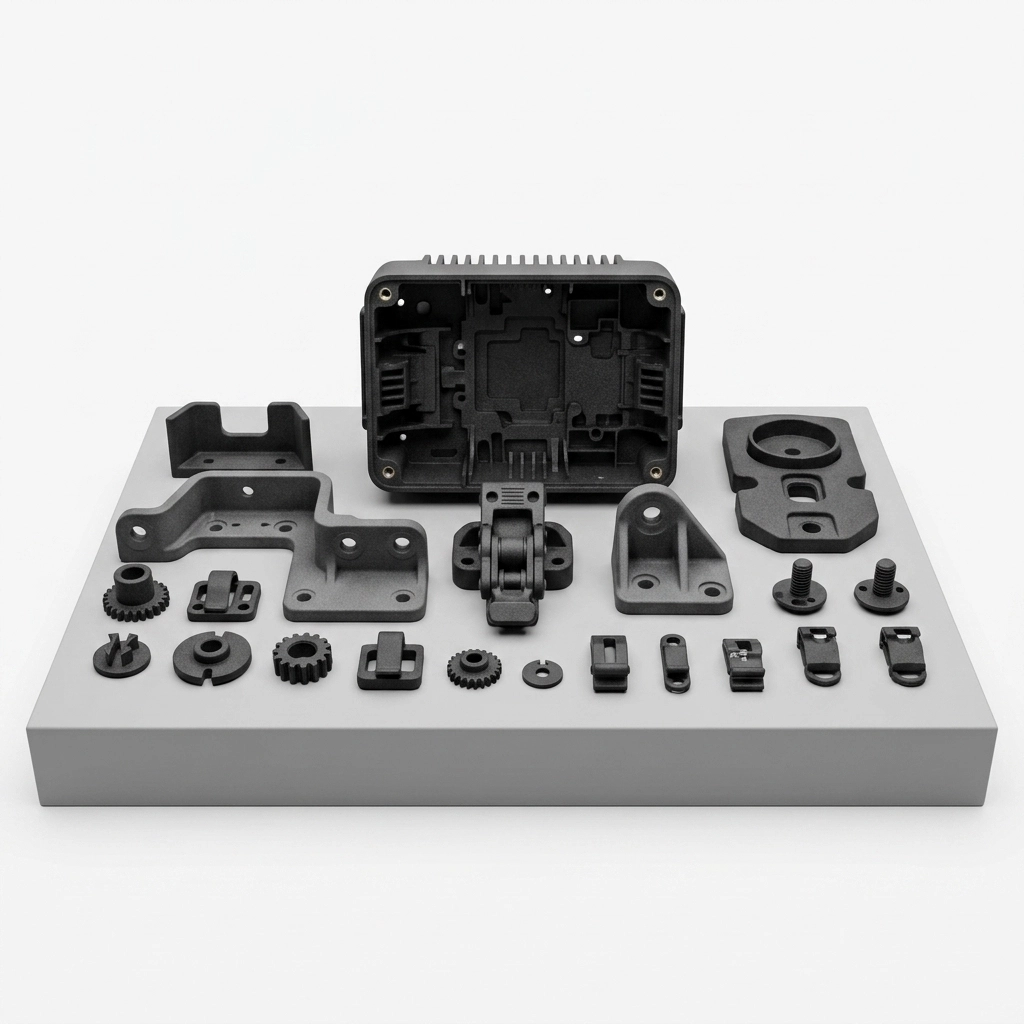
Common starting point: MJF or SLS nylonLarge fixture or enclosure
Check segmentation, load direction, warp risk, insert strategy and whether visible layers are acceptable.
Common starting point: FDMMetal component
Identify alloy, load case, critical datums, thermal route, support access and required machining.
Common starting point: SLM, binder jetting or CNC hybridPolymer routes
3D Printing Materials and Finishes for Resin, Nylon and FDM Parts
Photopolymer resin
Good fit: detailed appearance prototypes, master patterns, figurines and smooth models that will be painted.
Watch: resin grades have different toughness, heat response, creep and aging. General-purpose resin should not be treated as a universal engineering plastic.
Finish routes: support cleanup, sanding, primer, paint, clear coat and selected polishing. Hollow parts need practical drain and cleaning access.
Review the SLA servicePA12, PA11 and filled nylons
Good fit: functional housings, clips, ducts, fixtures and nested low-volume batches without conventional support structures.
Watch: PA12 is a common stable starting point; PA11 is often considered when ductility matters. Filled grades change stiffness, surface and directional behavior. Moisture conditioning can change dimensions and properties.
Finish routes: blasting, tumbling where geometry allows, dyeing, sealing and coating. Dye is not a thick paint layer and does not hide every surface defect.
Review MJF Review SLSABS, PC, PETG, nylon, TPU and other filaments
Good fit: large prototypes, shop fixtures, simple enclosures and parts where cost or size matters more than a molded-looking raw surface.
Watch: the polymer name does not remove layer-direction weakness, cooling distortion or moisture-control needs. Infill percentage is not a complete strength specification.
Finish routes: support cleanup, sanding, filler primer, paint, installed inserts and joining of segmented builds. Vapor smoothing is material- and process-specific, not a default finish.
Review the FDM serviceColor without hand painting every area
WJP Full-Color Models
Full-color printing is useful for presentation models, characters, educational models and visual concepts where color is part of the geometry. It is not automatically the right route for a loaded functional component.
Provide the color file and reference images, then identify the most visible faces. Screen color, texture and the printed result will not be identical under every light source.
Review the WJP full-color service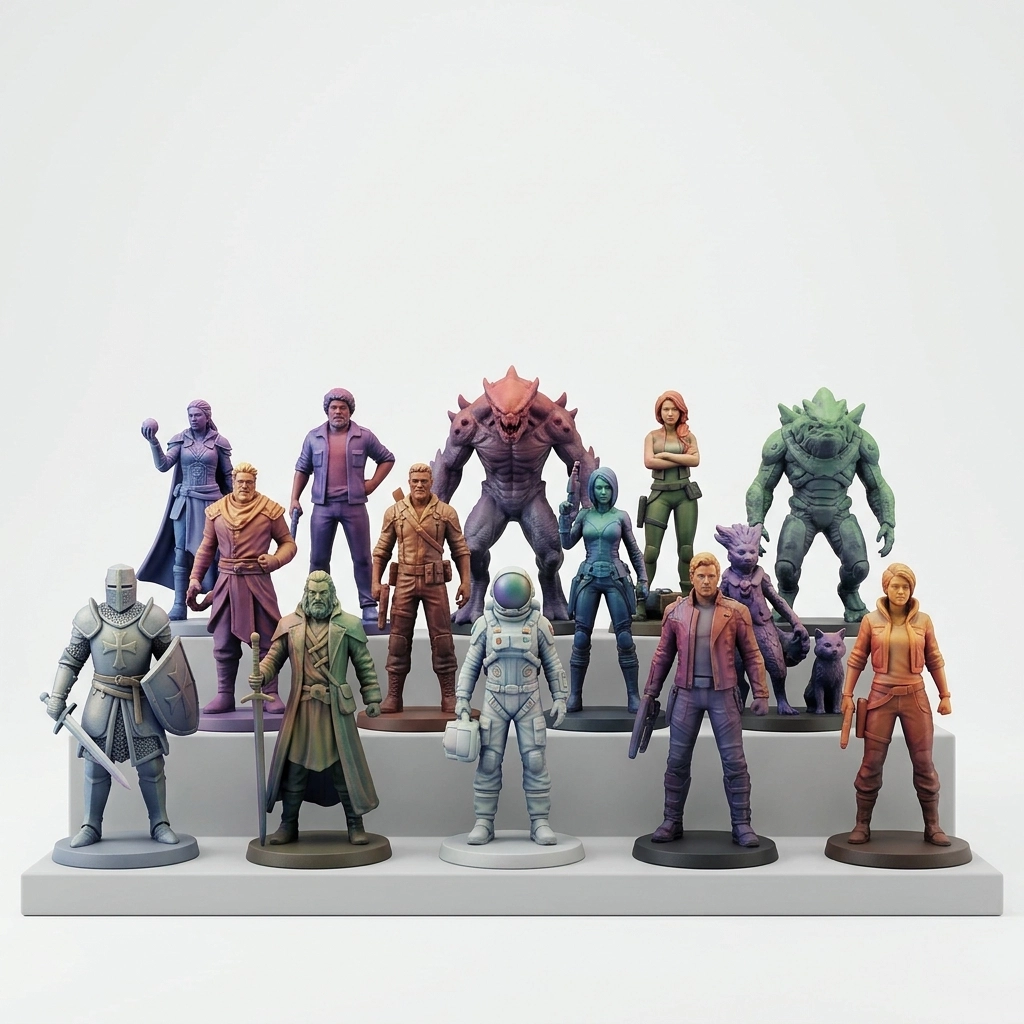
Metal routes
Printed Metal, Sintered Metal and CNC-Finished Interfaces
SLM and binder jetting are different manufacturing routes. Alloy availability, density, shrinkage strategy, support or depowdering access, heat treatment and machining scope must be tied to the selected process.
Finish decisions
What Each Finish Changes
| Finish | Useful for | Design and quoting check |
|---|---|---|
| Raw / cleaned | Fast prototypes and hidden functional parts | Support or powder-contact surfaces remain visible; cleaning access must be available. |
| Sanding / tumbling | Reducing texture and preparing visible surfaces | Edges, text and small features can soften. Internal or recessed areas may finish differently. |
| Dyeing / sealing | Nylon color and reduced surface marking | State the color reference and acceptable variation; geometry and lot condition affect appearance. |
| Primer / paint / clear coat | Appearance models and branded products | Coating adds thickness. Mask fits, threads, contacts and assembly areas before finishing. |
| Machining | Critical metal or polymer datums, bores and threads | Provide accessible datums, stock allowance and a drawing that identifies the machined surfaces. |
| Plating / anodizing | Selected appearance or surface requirements | Compatibility depends on substrate, preparation and destination requirement; confirm the exact route. |
For any engineering grade, request the data sheet for the exact supplier and process combination. Official material libraries such as HP’s MJF materials portfolio and Formlabs material data sheets show why a broad label such as “nylon” or “resin” is not enough.
Information that prevents a blind material choice
What to Include in a Material and Finish RFQ
You do not need to choose the final process before contacting us. The useful input is the requirement that cannot be compromised.
- Part function and expected service environment
- Sample and expected batch quantities
- Critical dimensions and mating parts
- Load direction, impact, flex or temperature exposure
- Visible faces, texture, color and gloss target
- Thread, insert, machining and assembly scope
- Required material or compliance documents
- Destination, deadline and packaging condition
One file, several possible routes
Get a Manual Material and Finish Review
Upload the current model and explain what the part must do. We will identify open questions before confirming a process, material family, finishing scope and sample plan.