
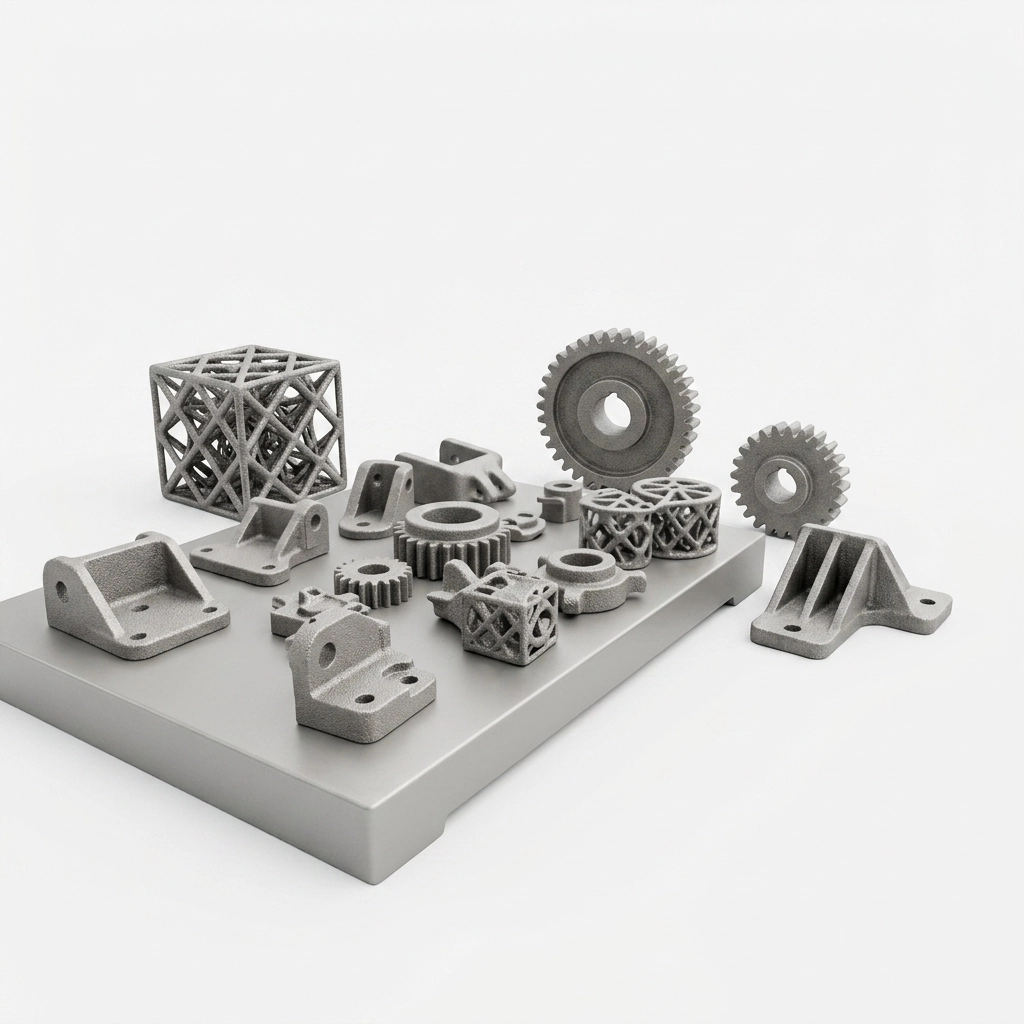
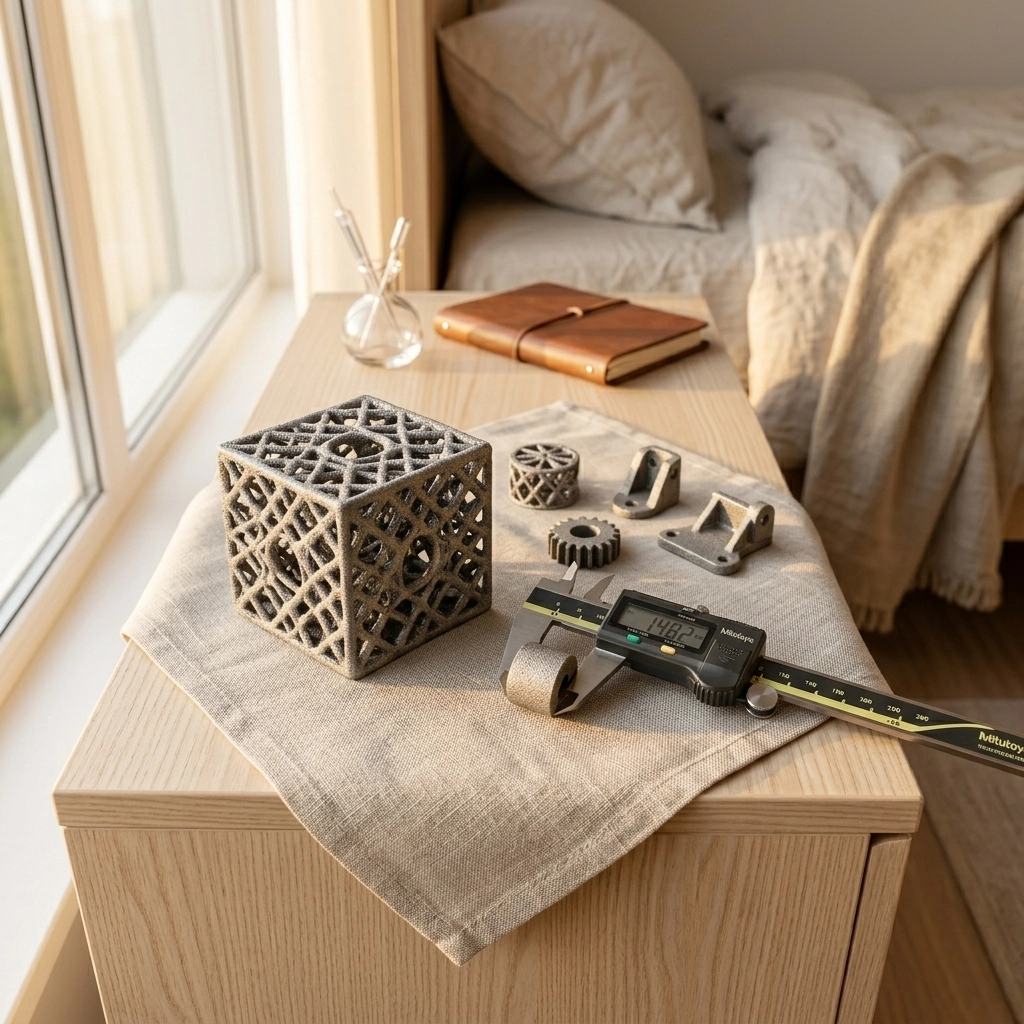
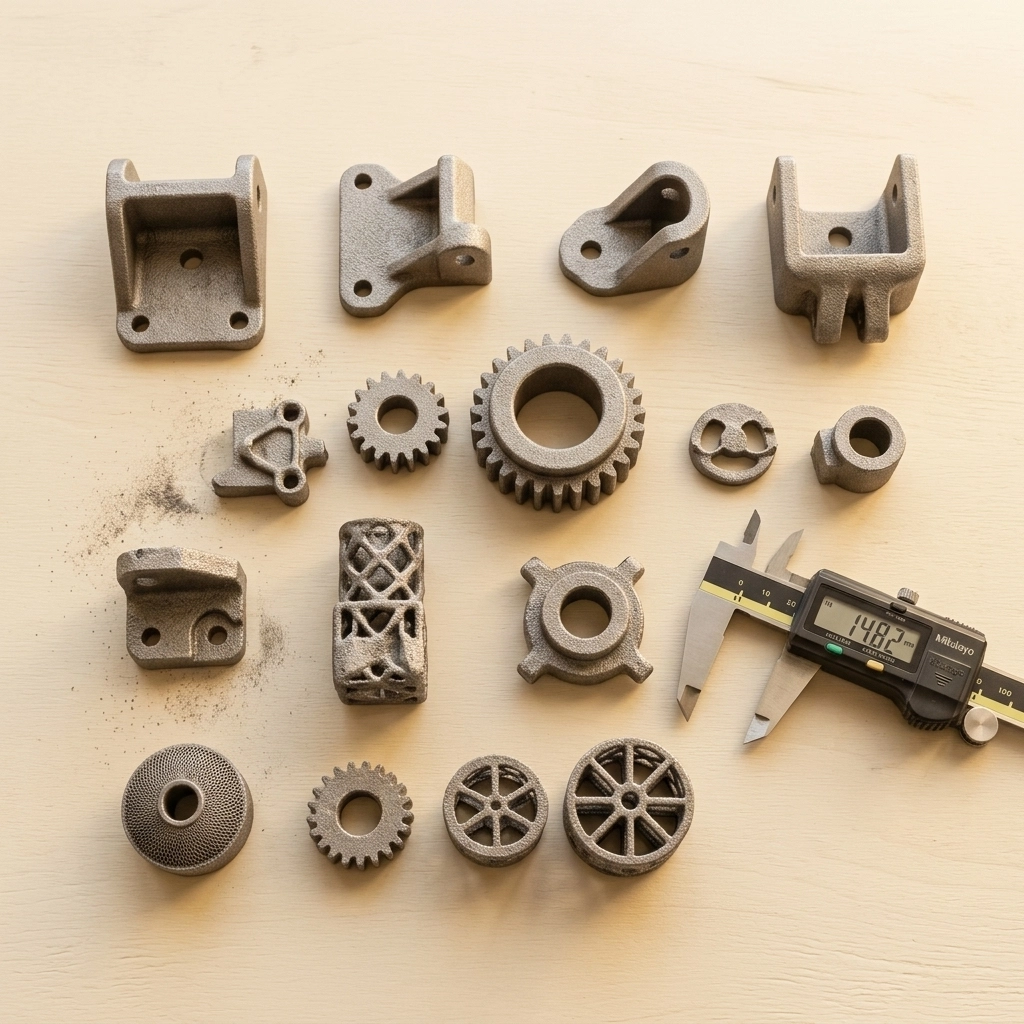
Binder Jetting Metal 3D Printing Service
Metal binder jetting for support-free green parts followed by debinding and sintering. Send STEP files and drawings for review of shrinkage, depowdering, furnace support, machining and inspection.
Description
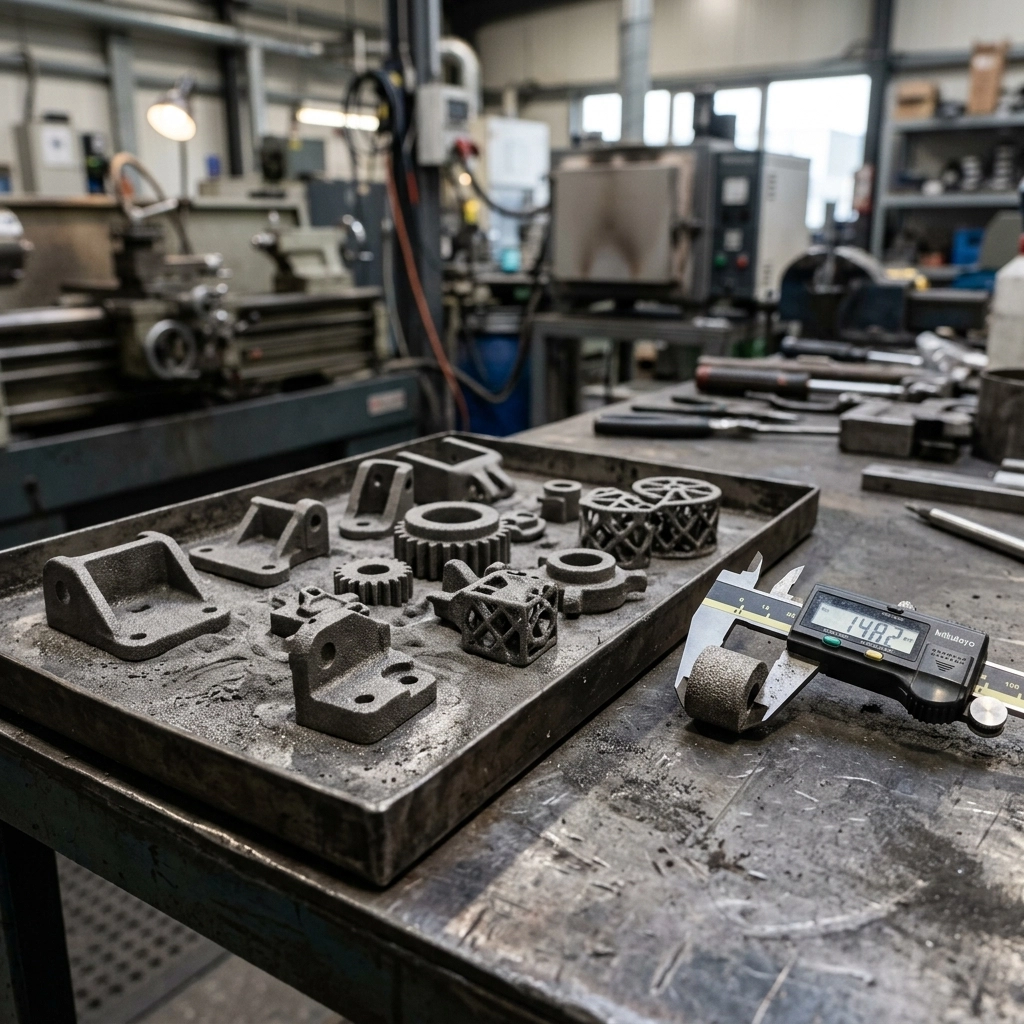
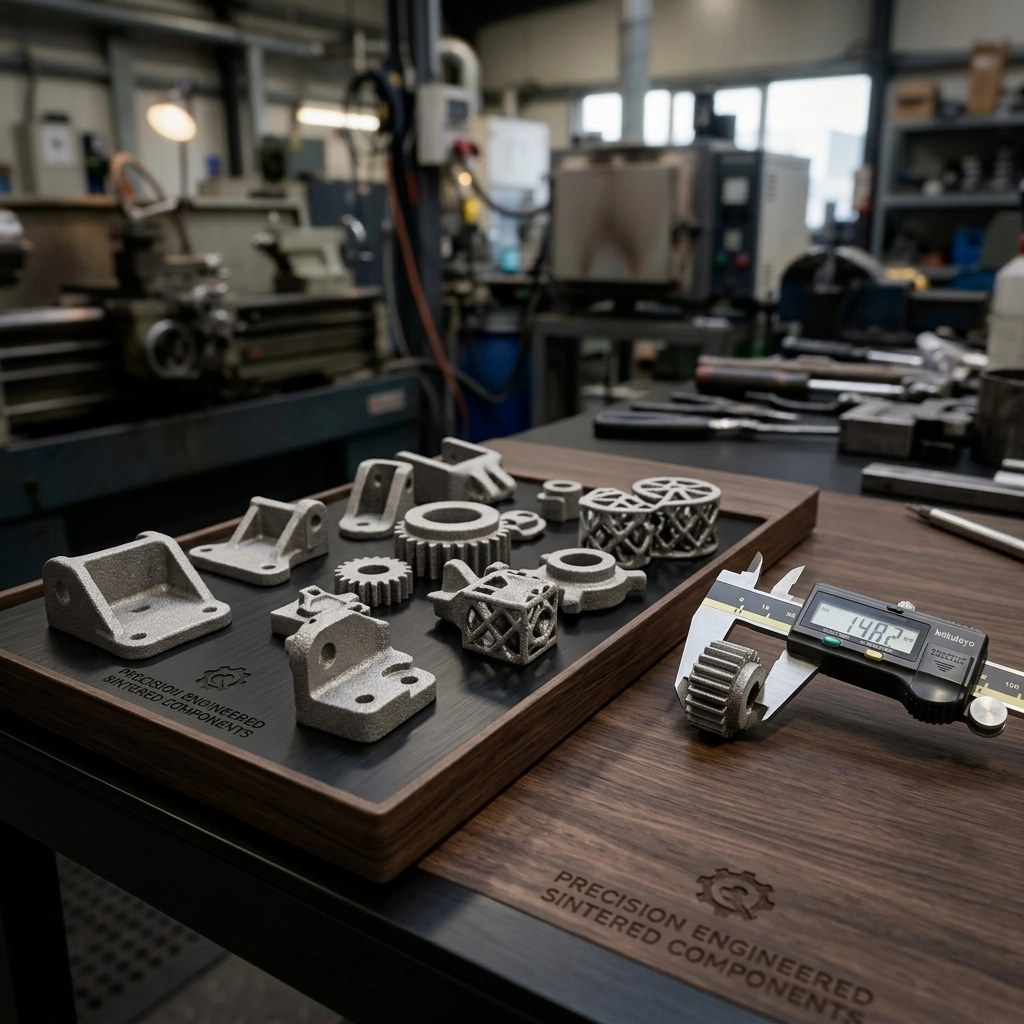
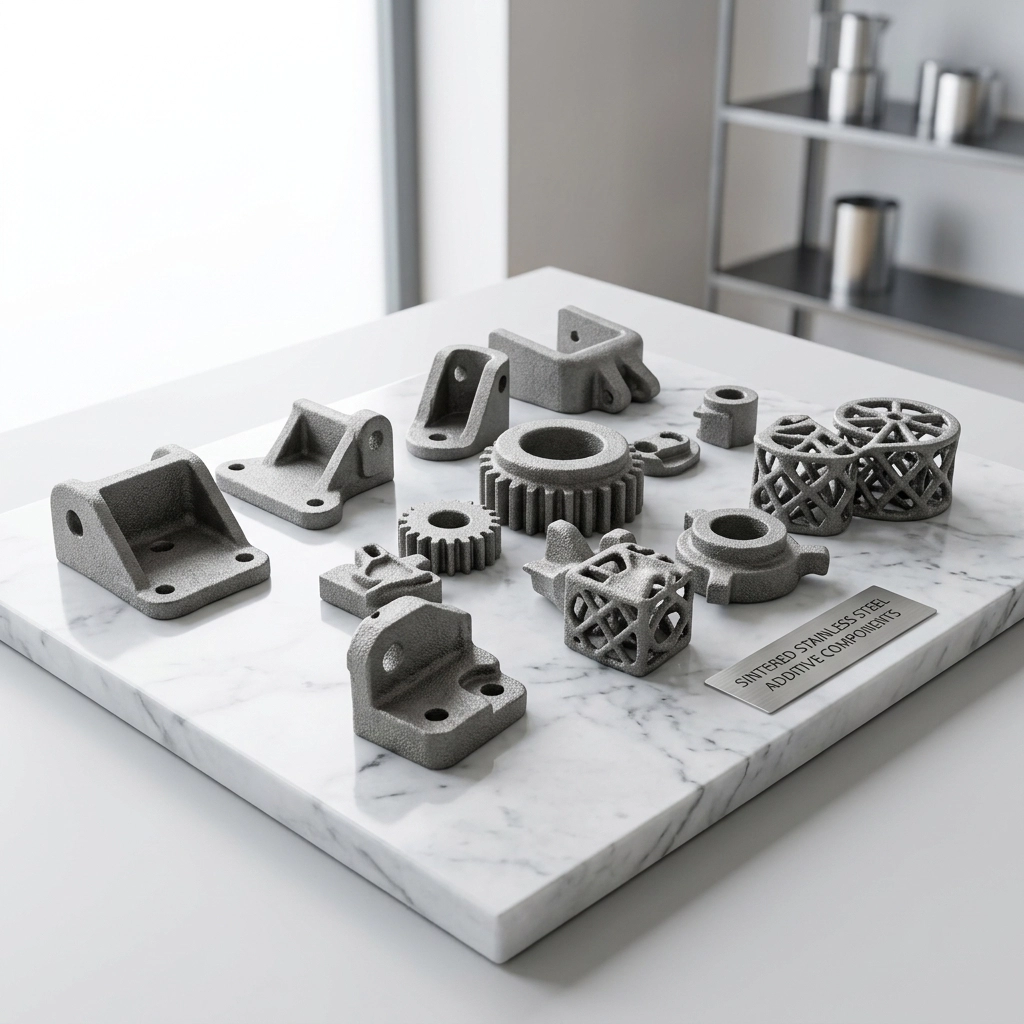
Binder jetting metal 3D printing service does not deliver a finished metal part directly from the printer. The machine deposits binder into a powder bed to create a fragile bound shape. That green part must be cured, removed from the powder, debound and sintered before it becomes the component the buyer measures.
The furnace is therefore part of the geometry process. Dimensions shrink, unsupported regions can sag and different wall masses may respond differently. A quote based only on printed volume misses the difficult part of the route.
Binder Jetting Metal 3D Printing Service Is a Multi-Step Process
- Print: binder selectively joins powder where the part will exist.
- Cure and depowder: the bound green part gains enough handling strength to leave the bed, while loose powder is removed.
- Debind: the binder system is removed according to the qualified material route.
- Sinter: heat densifies the metal particles and reduces the part toward its final size.
- Finish and inspect: machining, polishing, coating or other work is applied where required.
NIST classifies binder jetting as a process that fuses powdered material using a binder. For dense single-alloy metal parts, the printed green shape and the sintered result should be treated as two distinct manufacturing states.
Shrinkage Compensation Is Not Just Scaling the CAD File
Sintering shrinkage is expected, but the correction is tied to material, equipment, furnace cycle, orientation and geometry. A uniform scale factor may be part of process preparation; it does not guarantee that a thin arm, thick hub and broad plate all move identically. Gravity, friction with setters and local density can influence the final shape.
This is why flatness and true position should not be assumed from nominal dimensions. Critical features need to be identified, measured and, where appropriate, corrected through design compensation or secondary machining. A first article is valuable when the geometry has not already been validated on the selected process.
The Green Part Must Survive Depowdering
Before sintering, the bound part has limited strength. Thin pins, long unsupported features and delicate edges may break during powder removal or transfer even if the printer can form them. Internal cavities also need openings and access for loose powder to leave without aggressive handling.
I would not design a fine internal lattice without asking how it will be cleaned and supported through the furnace cycle. A feature that survives printing but cannot be depowdered or sintered without slumping is not production-ready.
Sintering Support Is Different From Print Support
The powder bed carries the green part during printing, so conventional attached print supports may not be required. During sintering, gravity and shrinkage still act on the component. Setters, ceramic fixtures or geometry-specific support strategies may be needed to control sag and movement. These must allow shrinkage rather than locking the part in place unpredictably.
Downward-facing spans, heavy sections on slender legs and broad flat areas deserve early review. Changing orientation or adding a temporary feature can be cheaper than trying to straighten a distorted sintered part.
Density and Properties Need a Real Material Specification
“316L” or another alloy label is only the beginning. The buyer should know the qualified feedstock, final material condition, density requirement, heat treatment and test method. Sintered behavior should not be assumed equal to wrought stock or laser powder bed fusion from a generic internet table.
For a binder jetting metal 3D printing service order, critical or regulated use may require traceability, coupons, chemical verification, mechanical testing or nondestructive examination. Those requirements must appear in the RFQ because they change the production and documentation scope.
Surface Texture and Machining Belong in the Quote
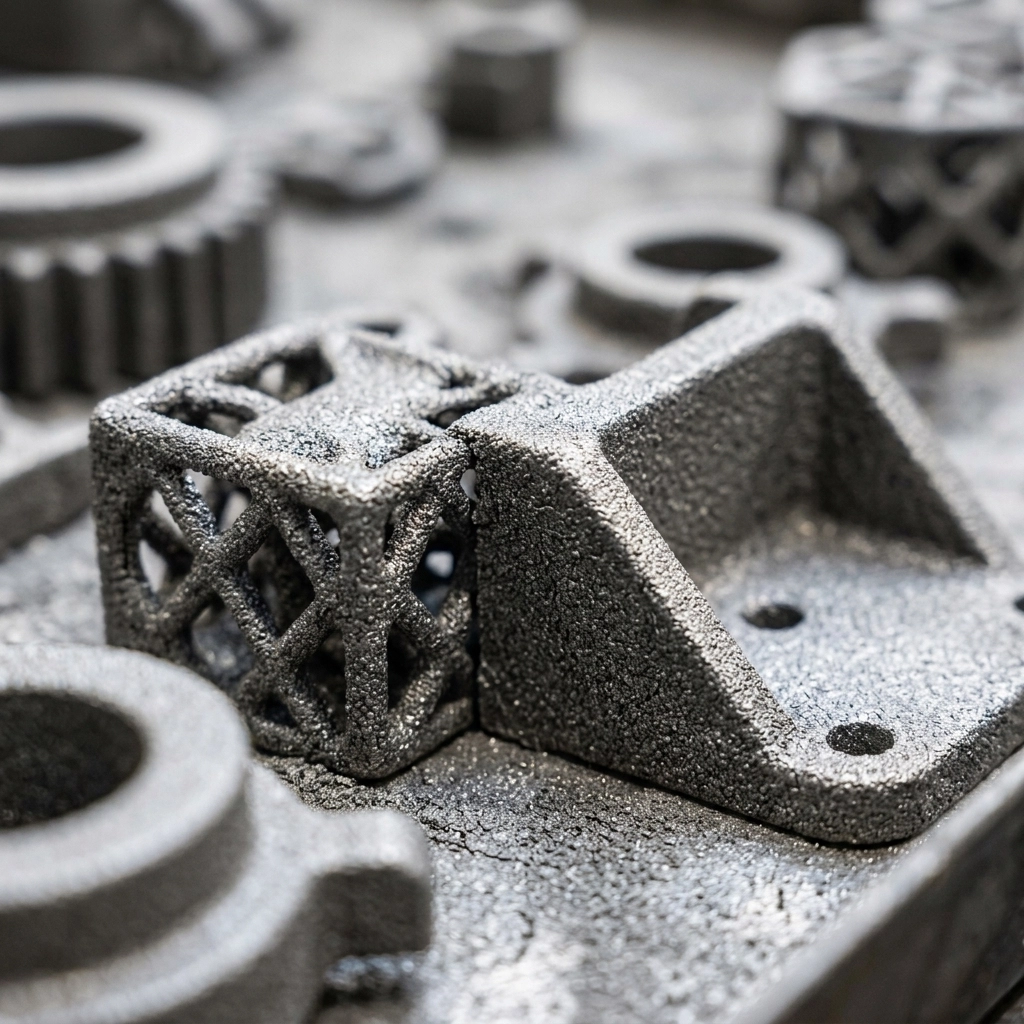
The sintered surface reflects powder, binder deposition and furnace behavior. Polishing can improve accessible areas but may round edges or miss internal features. Sealing faces, bearing seats, precise bores and threads often need machining.
Machining stock must account for sintered variation while still leaving a usable datum and tool path. The CNC and 3D printing hybrid service is relevant when only selected interfaces require tight control.
Finish requirements should name the functional target: roughness, appearance, corrosion protection, sealing or fit. “Smooth” is not an inspection criterion.
Binder Jetting Versus SLM Is a Part-Level Decision
Binder jetting can offer support-free printing and attractive batch throughput, but adds green-part handling and furnace shrinkage. SLM melts metal in the build and commonly uses attached supports, a build plate and its own thermal-stress controls. Material condition, density, geometry, volume, tolerance and qualification needs decide the better route.
Use the SLM versus binder jetting comparison for a direct process discussion, or review the SLM metal service when the part is already intended for laser powder bed fusion.
Binder Jetting Metal 3D Printing Service RFQ Data
- STEP file and drawing with datums, critical dimensions and flatness requirements;
- alloy, final material condition and required property data;
- internal cavities and powder-removal openings;
- surfaces requiring machining, polishing, coating or sealing;
- sample and batch quantity plus first-article approval;
- inspection, testing, documentation and acceptance criteria.
ASTM is developing a dedicated metal binder jetting design guide; its work-item scope identifies the route as a multi-step binder jetting process for metals. It is not yet a finished standard, so project requirements still need a qualified supplier procedure.
Return to the custom 3D printing service hub when the metal process is undecided. For a manual binder jetting metal 3D printing service review, send the model, drawing, alloy, quantity and acceptance needs through the RFQ contact page.