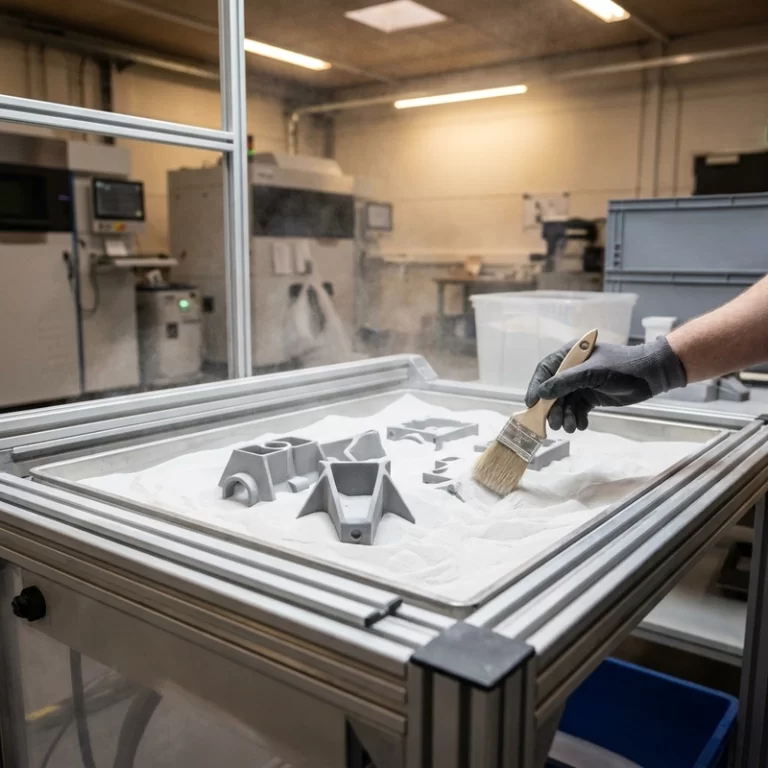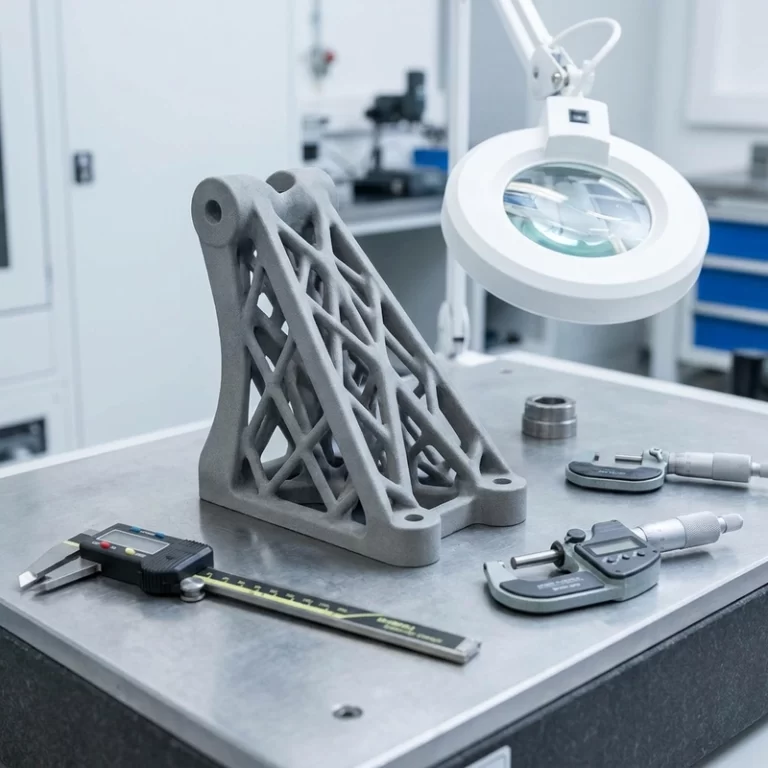
Nylon 3D printing material selection looks simple until the part has to flex, hold a screw, survive moisture, or repeat across a small batch. PA6, PA66, PA12, PA11, and glass-filled PA all sit under the nylon name, but they do not behave the same in printing or in use. I would not choose nylon by family name alone.
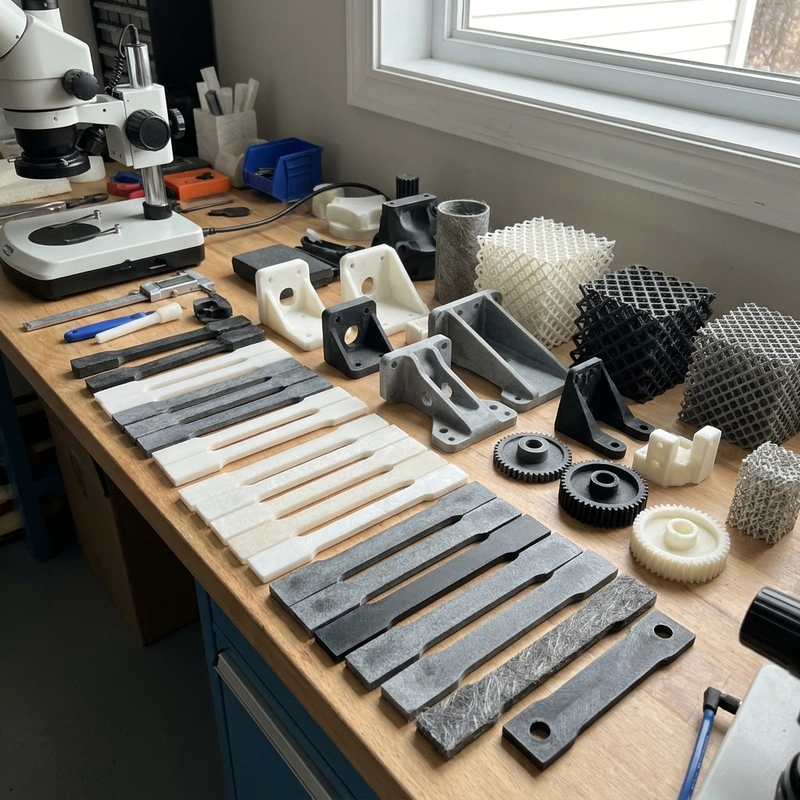
The first split is process. FDM nylon is useful for fixtures and large functional prototypes when drying and enclosure control are handled. SLS and MJF nylon are better for complex small batches, self-supporting powder-bed geometry, and more uniform parts. The same material family printed by different processes can have different surface, strength direction, accuracy, and cost.
That process split is why a material request should name the function, not only the polymer. “PA12 SLS for a snap-fit cover” gives a supplier something to review. “Nylon part” does not say whether the concern is toughness, wear, heat, price, color, surface, or batch repeatability.
Nylon 3D printing material selection by PA grade
PA6 is common, relatively economical, and useful for many functional prototypes. It can offer good toughness and wear behavior, but it absorbs moisture strongly and can be harder to keep dimensionally stable. Source notes put long-term temperature use for PA6 often around 70-80 C, depending on grade and condition. That is not a qualification number. It is a prompt to check the datasheet.
PA66 often brings better heat resistance and stiffness than PA6, with source references around 110-120 C or more for some grades. It can be valuable for fixtures, brackets, and parts near heat. It may also be more demanding in processing. If the printer cannot control moisture and temperature, a better resin name will not rescue the part.
PA12 is the workhorse for SLS and MJF. It absorbs less moisture than PA6, has good dimensional stability, and is widely used for powder-bed prototypes and low-volume production. Source references put PA12 service temperature often around 80-90 C in common cases. PA12 is usually more expensive than PA6 in many markets, but it often saves trouble in powder-bed printing.
Surface also changes with the grade and process. FDM nylon shows bead lines and directionality. SLS or MJF PA12 has a powder-bed texture that may be dyed, tumbled, sealed, or coated. If the part is cosmetic, nylon 3D printing material selection should include the finishing route from the start. A mechanically correct nylon part can still be rejected if the buyer expected molded-plastic smoothness.
PA11, glass-filled PA, and special nylon choices
PA11 is often chosen when impact behavior, flexibility, or bio-based material origin matters. It can be useful for protective parts, flexible functional prototypes, and components that need better ductility than a stiffer nylon. The tradeoff is cost and availability. I would ask whether the mechanical need justifies it before choosing PA11 by default.
Glass-filled PA improves stiffness and heat behavior, but it changes the feel of the part. Filled nylon can be more abrasive, more brittle in some features, and harder on FDM nozzles. Thin clips that work in neat nylon may crack in a filled grade. For brackets, jigs, and structural housings, filled PA can be excellent. For living hinges or snap features, it needs caution.
Cost is another quiet filter. PA6 can be attractive for economical functional prototypes, PA12 can be more predictable for powder-bed production, and PA11 or filled grades may be selected only when the application justifies them. A stronger material that forces slower printing, harder drying, or more finishing may raise the total part cost.
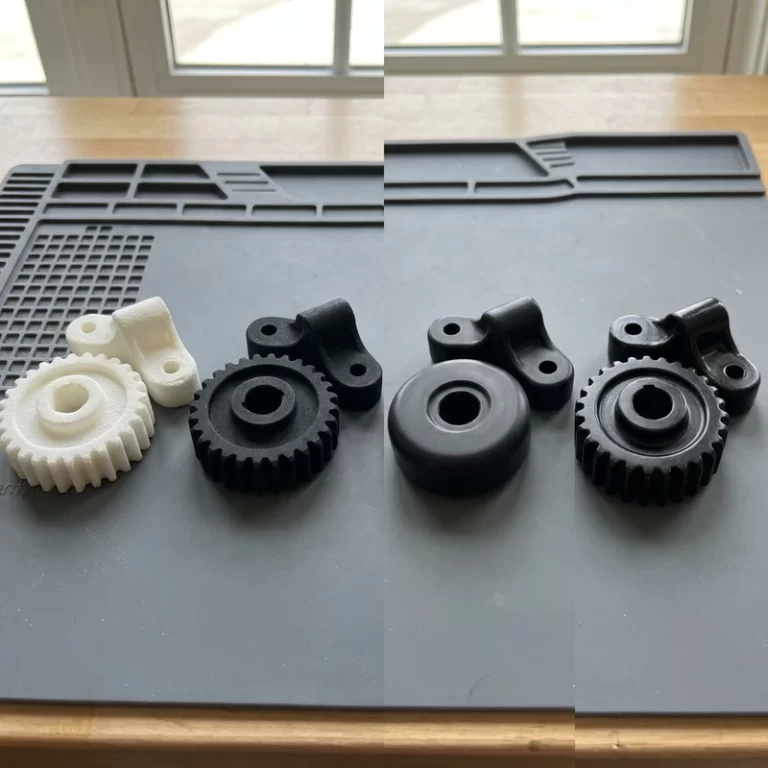
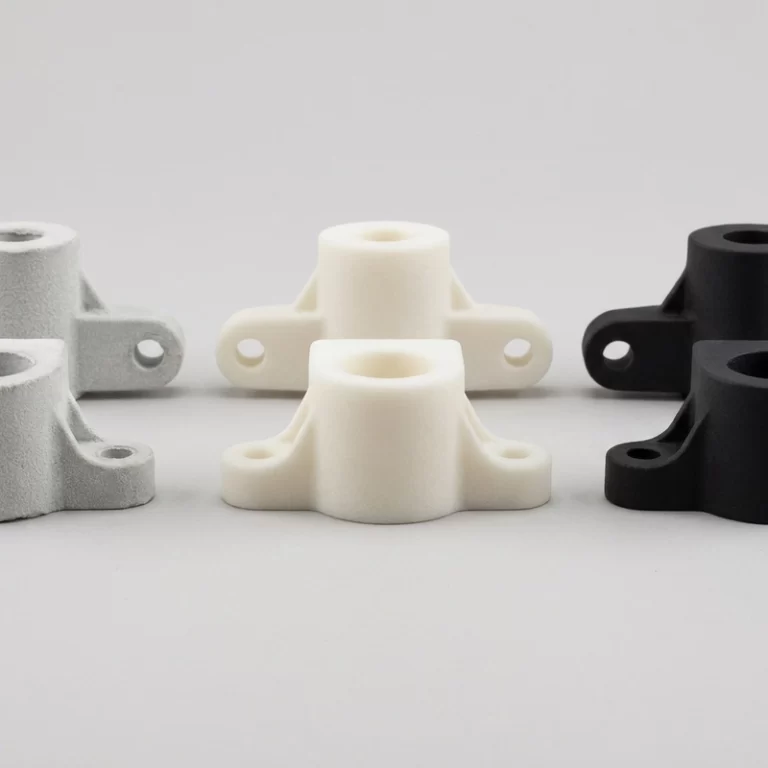
Color and finish should not be left out either. Raw PA12 may be white, off-white, or gray depending on process. Black dye is common for SLS/MJF parts, while brighter colors and coating need more control. Filled nylon may show a rougher or darker surface. If appearance matters, nylon 3D printing material selection should include the visible finish, not only tensile strength.
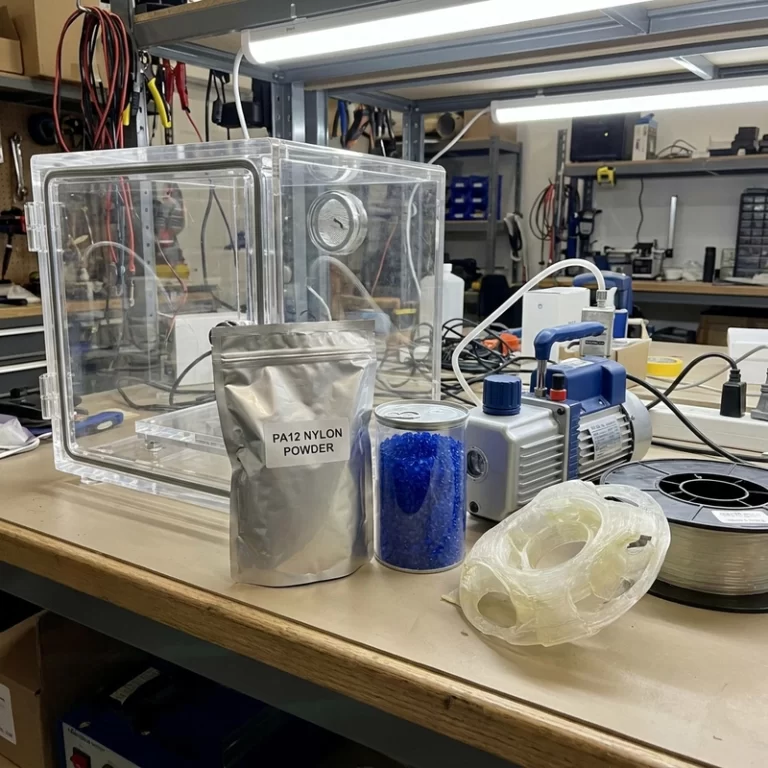
The moisture problem is serious enough to deserve its own check. Zesmir’s nylon 3D printing moisture control article explains drying and storage risks. For powder-bed nylon process rules, pair this with the SLS nylon 3D printing guide.
Nylon 3D printing material selection for function
| Need | Possible nylon route | Check carefully |
|---|---|---|
| General SLS/MJF parts | PA12 | Surface texture, powder removal, tolerance |
| Lower-cost functional prototypes | PA6 FDM or suitable PA blend | Drying, warping, layer strength |
| Higher heat/stiffness | PA66 or filled nylon | Processing window and brittleness |
| Impact and flexibility | PA11 | Cost, availability, finish |
| Stiff fixtures | Glass-filled or carbon-filled PA | Wear, machining, snap features |
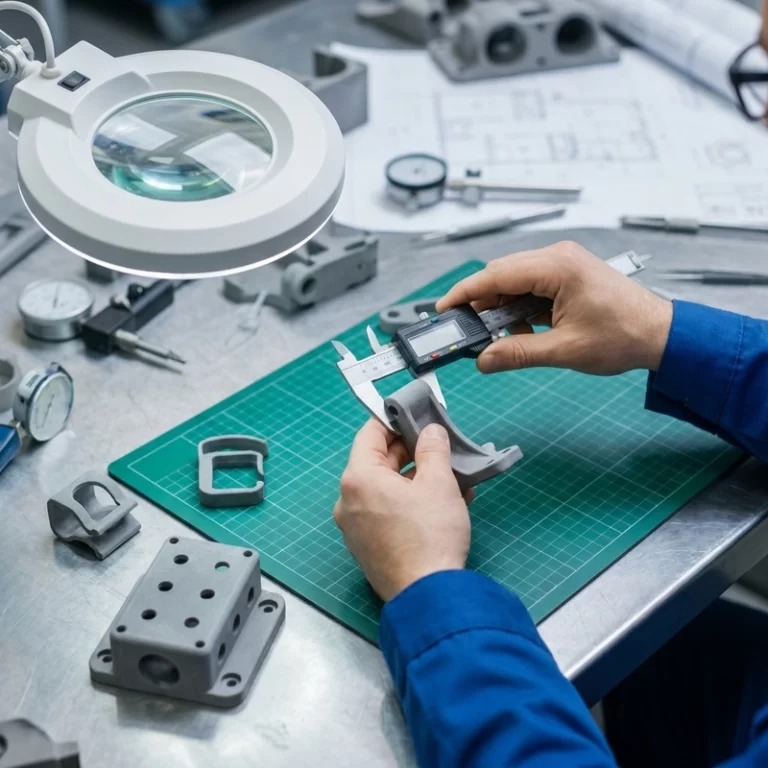
For additive manufacturing terminology and process families, ISO/ASTM 52900 is a useful neutral reference. Material selection is still decided by datasheets, process capability, and the actual part geometry.
I also separate short-term prototype success from long-term use. A nylon clip that works for ten cycles on the bench may not survive a humid warehouse, hot enclosure, or repeated service. If the part will be used beyond demonstration, ask for the expected environment and cycle count before choosing the grade.
RFQ notes for nylon parts
Send the function, load direction, heat exposure, moisture exposure, assembly method, surface requirement, and quantity. Say whether a smoother PA12 appearance, a tougher PA11-like response, a lower-cost PA6 route, or a stiffer filled nylon is acceptable. Nylon 3D printing material selection works best when the supplier knows what the nylon must do after printing, not just what the CAD model looks like.