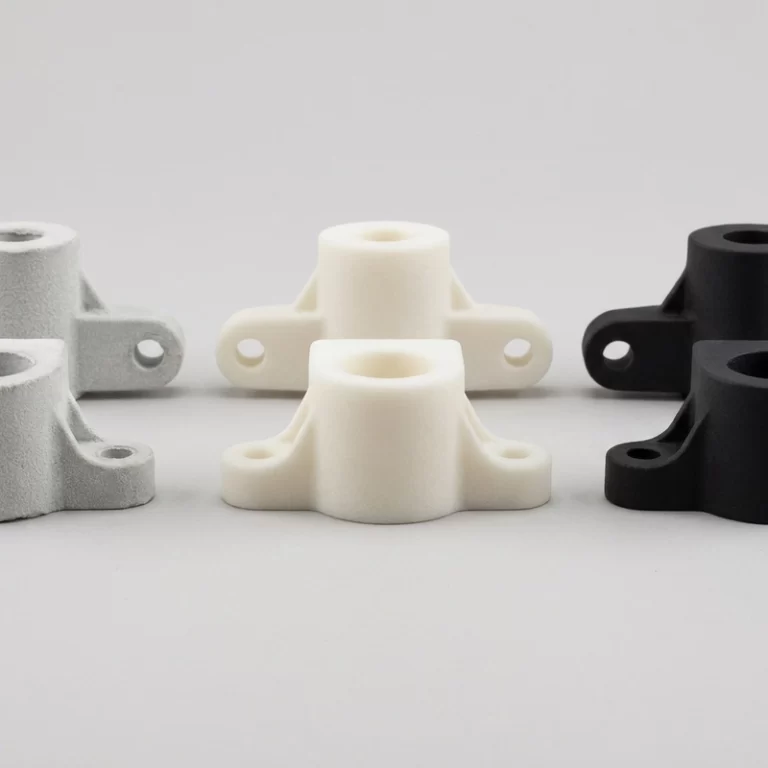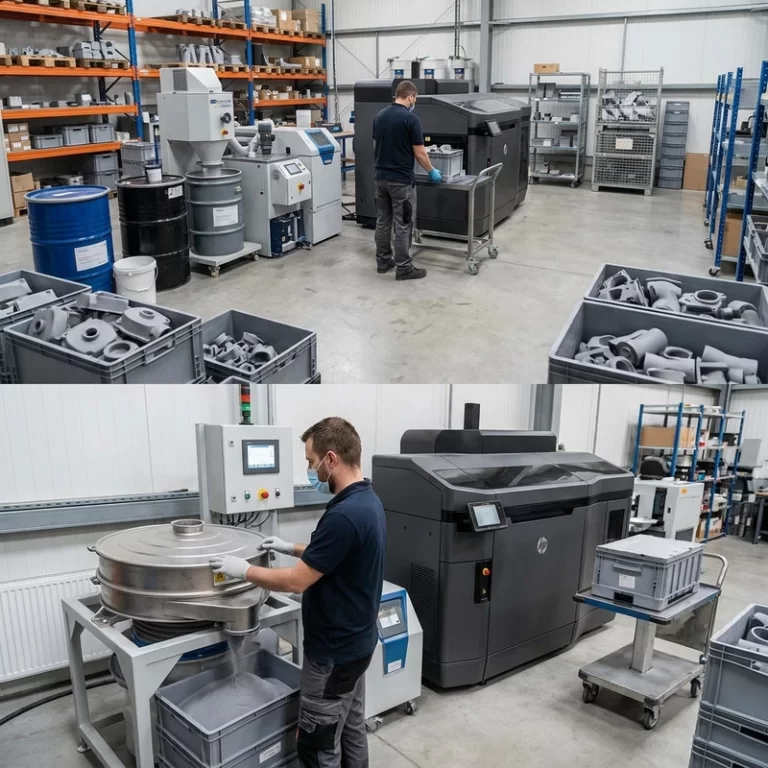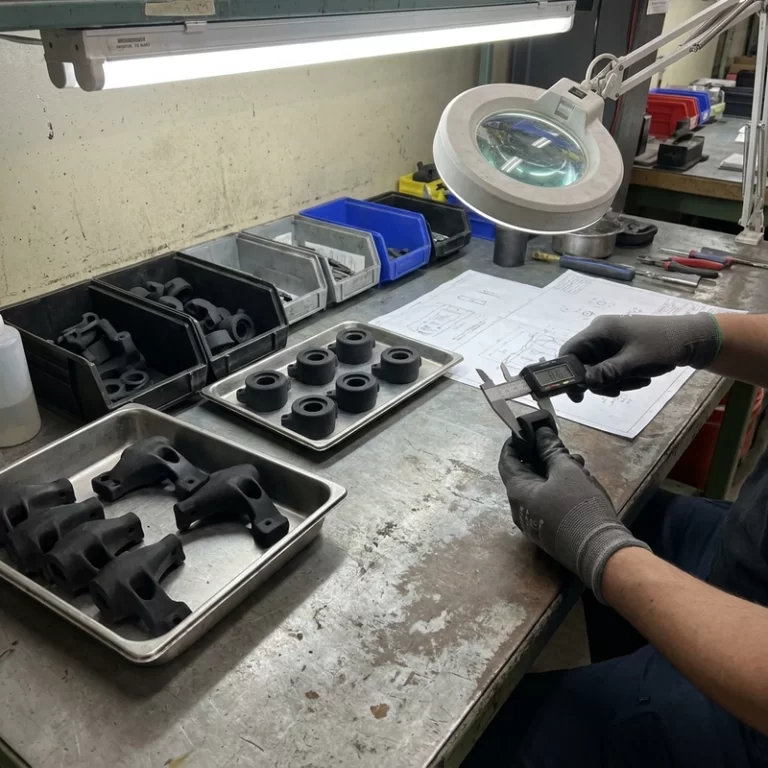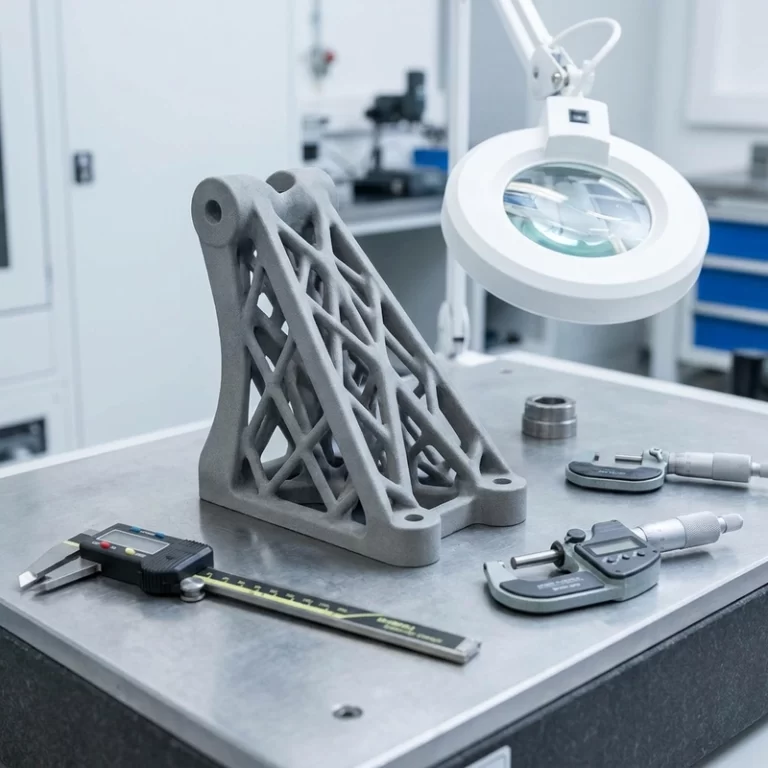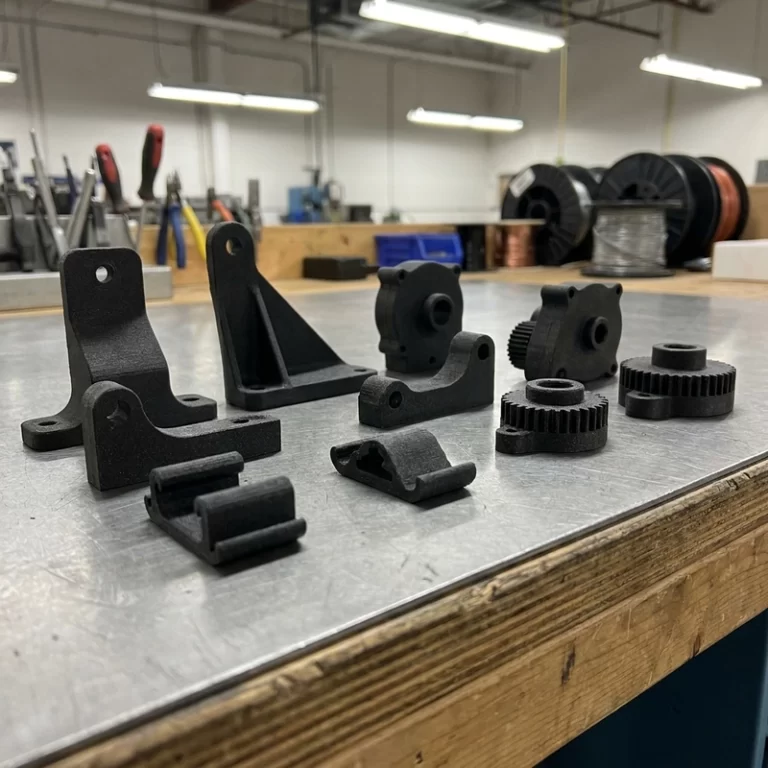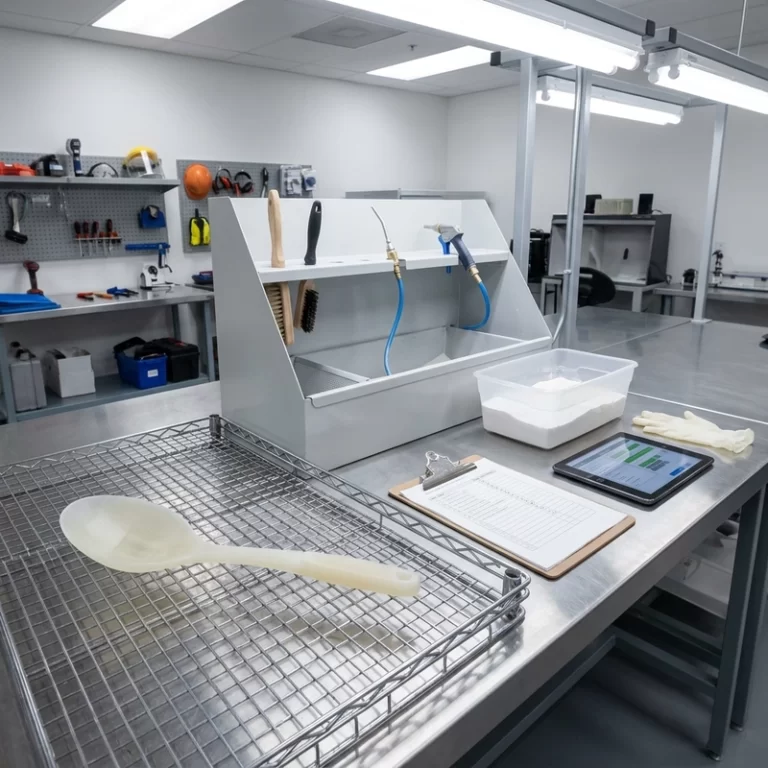
SLS nylon surface finishing is where many PA12 parts move from “printed” to usable. Raw SLS nylon has a fine powdery texture. That texture can be fine for fixtures, hidden brackets, and engineering samples, but it can feel unfinished on a handle, retail sample, product shell, or part that will be photographed.
I do not choose dyeing, tumbling, sealing, or coating by habit. I start with the surface job. Does the part need color, smoother touch, lower friction, cleaner handling, better stain resistance, paint adhesion, or a controlled mating surface? Those are different problems.
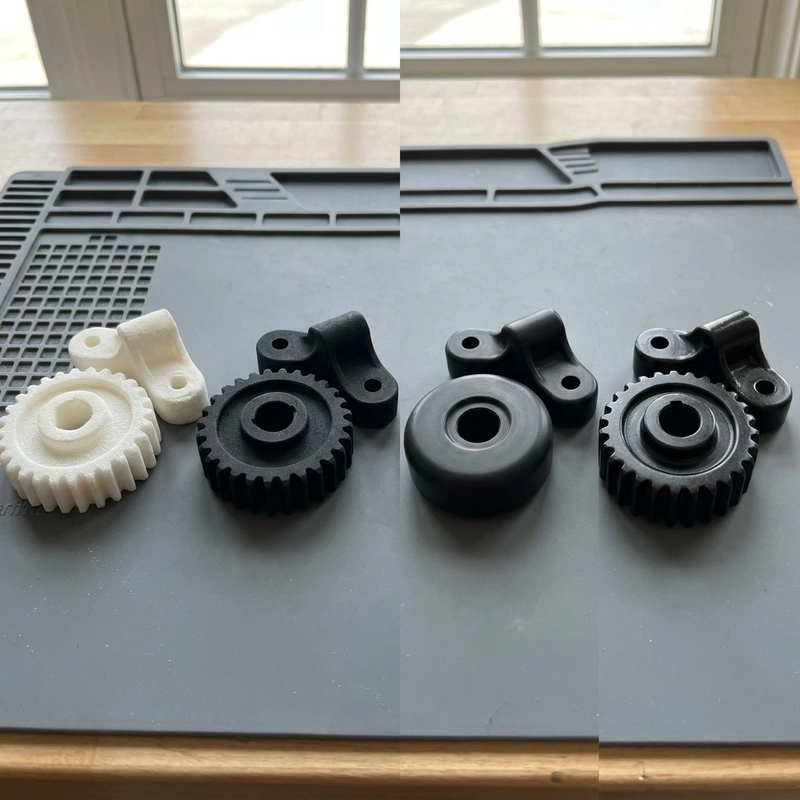
SLS nylon surface finishing cannot fix every design choice
Raw nylon texture comes from the powder bed. Blasting and depowdering remove loose powder, but they do not turn PA12 into injection-molded plastic. Tumbling can soften the grain and break sharp powdery edges. It can also round small details. If the logo, rib, snap edge, or thin text is already marginal, aggressive smoothing may make it worse.
This is why finish should be chosen before the sample is printed. A cosmetic face should not be placed where cleaning tools or tumbling damage will matter most. A sliding face may need a smoother route than a hidden bracket. For dimensions that matter after finishing, I keep SLS nylon dimensional accuracy in the same conversation.
Dyeing changes color, not texture
Black dyeing is common for SLS nylon because it gives a more uniform industrial look and hides some batch color variation. The dye penetrates the surface rather than behaving like a thin paint film, so it can hold up better on handled parts than a weak coating.
Still, dyeing is not smoothing. If the raw part is rough, the dyed part is a rough black part. If powder remains in a blind hole, dyeing does not make the powder disappear. I normally want depowdering and surface cleaning confirmed before color approval, especially on channels, lattice areas, and deep recesses.
SLS nylon surface finishing can change fit
Finishing is not just cosmetic. Tumbling removes small amounts of material. Sealing can add a film. Painting adds more thickness and depends on surface preparation. A clip that fit as raw nylon may feel tight after coating. A sliding part may feel better after smoothing, but a hole may need drilling if the final size matters.
For painted prototypes, the resin article on paint adhesion and support marks is not the same material, but the workflow lesson is similar: clean surface, prepare surface, then judge finish. A nice color over a poor surface is still a poor surface.
A practical finish decision
| Goal | Likely route | Watch for |
|---|---|---|
| Uniform black appearance | Dyeing | Roughness remains visible |
| Smoother hand feel | Tumbling or smoothing | Small details may soften |
| Cleaner handling | Sealing | Film thickness and touch feel |
| High cosmetic surface | Filling, primer, painting | Labor cost and adhesion |
| Accurate hole or face | Local machining | Machining allowance |
For batch work, ask for a finish sample before approving all parts. One raw print can hide how the finish route behaves. I also connect finish choice to powder and batch control, so the earlier note on SLS and MJF nylon 3D printing is worth reading with this one.
How I review an SLS nylon surface finishing sample
I look at the part dry, under normal light, and after handling it for a few minutes. Some finishes look good in a photo but feel dusty, waxy, or uneven in the hand. White raw nylon may show fingerprints and shop dirt. Black dyed nylon may hide color variation but reveal scratches on edges. Sealed parts may feel cleaner but can become slightly glossier than expected.
Edges tell a lot. If tumbling has rounded a latch, a logo, or a thin rib, the finish route may need to be softened or the geometry needs more allowance. If dye collects unevenly around holes or deep pockets, cleaning and depowdering need attention before the batch. I would rather find that on one sample than on 200 parts.
For consumer-facing nylon parts, I also ask how the finish behaves in packaging. A powdery surface can rub against bags or inserts. A painted coating can chip if the base surface is not prepared. SLS nylon surface finishing should be judged through the same handling path the part will actually see: cleaning, packing, shipping, assembly, and use.
A finish map prevents expensive guessing
For mixed-function parts, I like a simple finish map. One face may need to look clean. Another face may need grip. A hole may need to stay close to size. A hidden inner pocket may only need depowdering. If the whole part is treated as one generic surface, the finishing route either costs too much or misses the one area that matters.
That map is especially useful when SLS nylon surface finishing includes both color and mechanical features. Dyeing can help appearance, but a sliding slot still needs a size check. Sealing can improve handling, but a press-fit boss may need inspection after the film is applied. A finishing decision should follow the function of each surface.
ISO/ASTM 52900 helps with process terms, but SLS nylon surface finishing is decided at the part level. Mark visible faces, define the touch requirement, say whether color or smoothness matters more, and measure critical features after the finish, not before it.