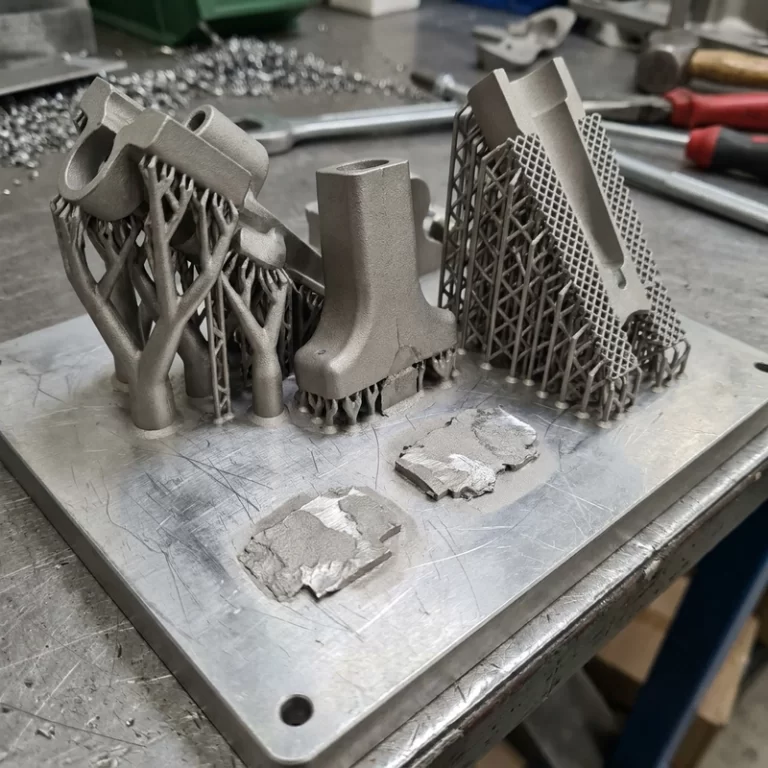
Metal 3D printing industrial applications are strongest when the printed geometry solves a problem that machining, casting, welding, or assembly handles poorly. I look for internal channels, weight reduction, part consolidation, difficult tooling geometry, short-run customization, or a design that would require too many CNC setups.
The trap is using metal printing because it sounds advanced. A simple rectangular aluminum block with a few holes probably belongs on a mill. A titanium bracket with organic load paths, a conformal cooling insert, or a manifold with internal passages may justify additive manufacturing.
Metal 3D printing industrial applications that usually make sense
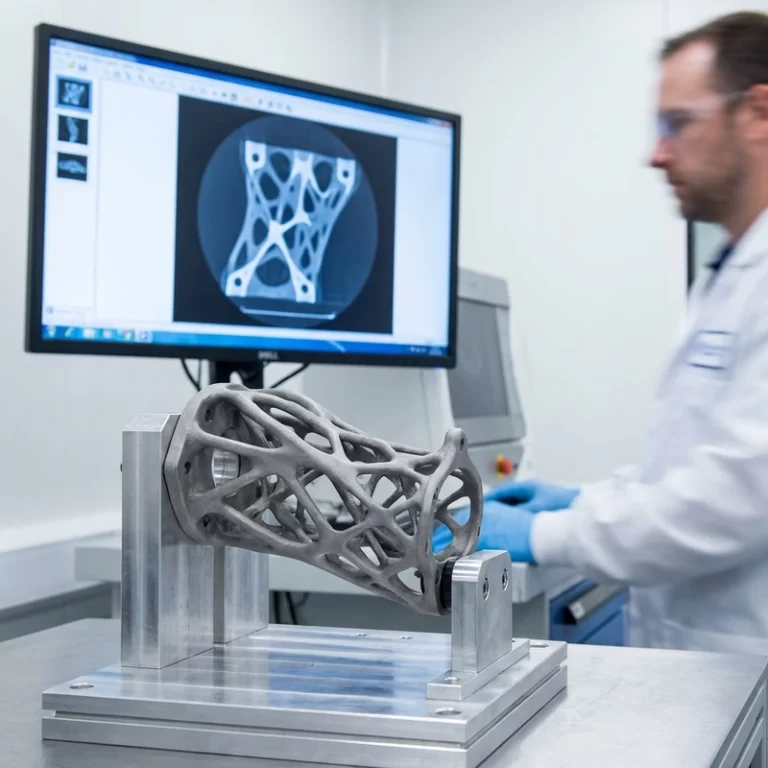
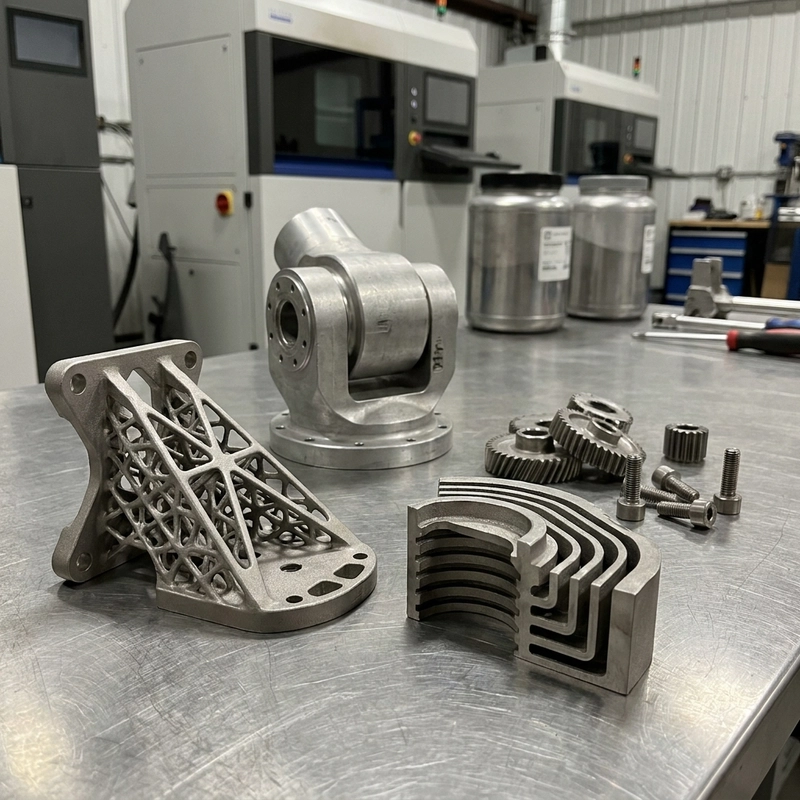
Aerospace brackets, robotic end-effectors, lightweight fixtures, conformal cooling inserts, complex manifolds, heat exchangers, custom tooling, and low-volume stainless or titanium parts are common candidates. The shared reason is not novelty. The shared reason is geometry or volume. Additive manufacturing earns its keep when it removes assembly steps, reduces mass, reaches internal features, or avoids tooling for a small run.
For aerospace-style prototypes, I care about load path, support removal, heat treatment, and inspection. For tooling inserts, I care about cooling channels, steel choice, machining allowance, polishing access, and whether the printed surface touches molded plastic. For robotic parts, I care about mounting datums, cable or air routing, and crash risk.
Where CNC still belongs
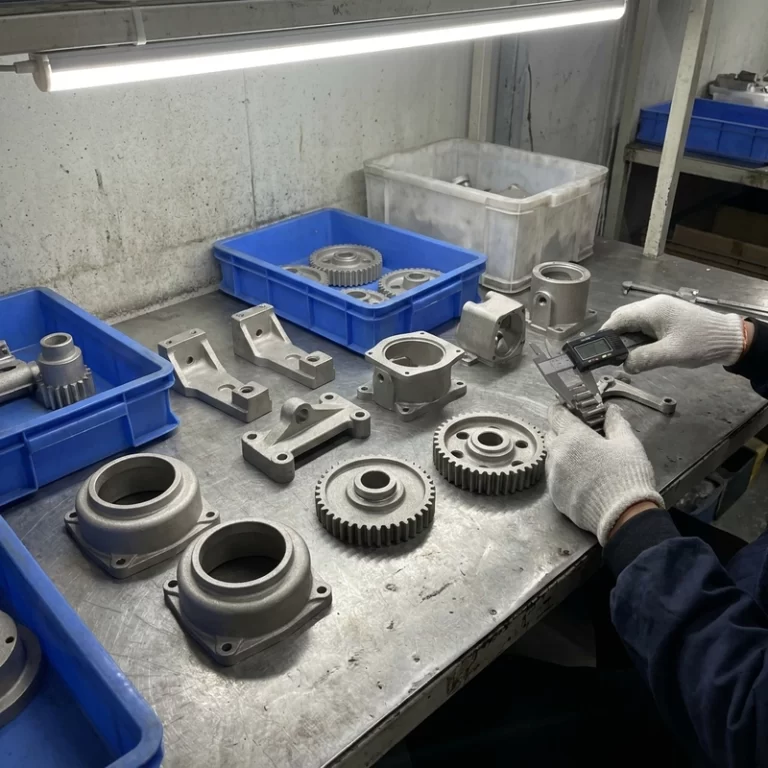
Metal printing does not remove CNC from the shop. It often makes CNC more targeted. Holes, threads, sealing faces, bearing seats, flat mounting surfaces, and datum pads should usually be machined after printing if the part controls assembly or motion. The article on CNC machining after 3D printing explains that hybrid route in more detail.
I normally ask which surfaces are printed as-built and which ones are machined. If the drawing does not say, the quote can look cheaper than the real part. The print may be complete, but the part may not assemble.
Metal 3D printing industrial applications can fail from weak design notes
The most common early mistake is sending only a model and no functional context. The supplier can quote a shape, but they cannot know which hole is a clearance hole, which surface seals, which edge must be polished, or which area must avoid support scars. That missing context becomes rework.
Support strategy is another risk. Metal supports do more than hold overhangs. They conduct heat and restrain distortion. Poor support planning can leave scars, warping, or impossible removal zones. The support article on metal 3D printing support design is worth pairing with any industrial metal project.
Metal 3D printing industrial applications still need qualification
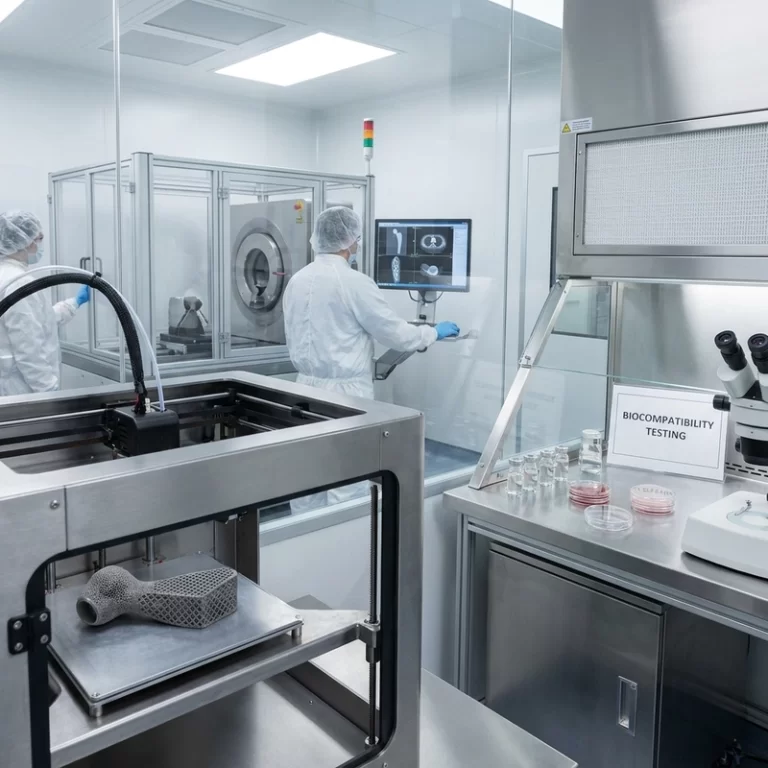
A printed metal part can be a prototype, a tooling aid, a fixture, or a production component. Those are not the same promise. A display bracket may only need the right geometry and finish. A functional bracket may need stress relief, machining, density checks, and mechanical testing. A medical-style model is not a certified implant just because it is titanium or stainless.
I keep the word “application” separate from the word “approval”. Metal 3D printing industrial applications can show where the process is useful, but each part still needs its own drawing, material requirement, process route, and inspection plan. If the article or quote skips those details, I would not treat it as production evidence.
For early development, the most useful sample is often not the prettiest one. It is the sample that proves the risky feature: a cooling channel can be cleaned, a lightweight bracket can be machined at the mounting pads, a gripper can hold its inserts, or a manifold can be leak checked. That is the kind of evidence that moves a metal project forward.
I also watch for parts that use additive manufacturing to avoid a design decision. If a bracket can be split into two simple machined pieces and bolted together, printing it as one complex shape may not be cheaper or stronger. If a conformal cooling channel cannot be cleaned or inspected, the clever channel may become a maintenance problem.
Metal 3D printing industrial applications work best when the design team accepts the whole route: print orientation, support removal, heat treatment, machining, surface finishing, and inspection. If the project budget only covers the print, the final industrial part may still be unfinished.
That is why I ask for the finished-part definition before comparing quotes. A raw printed bracket, a stress-relieved bracket, and a machined-and-inspected bracket are three different deliverables. Metal 3D printing industrial applications only become practical when that deliverable is named clearly.
| Application | Why additive helps | What still needs control |
|---|---|---|
| Lightweight bracket | Material removed from low-load zones | Stress relief and inspection |
| Cooling insert | Channels can follow mold surface | Machining and polishing |
| Robot gripper | Integrated air paths and mounts | Datum machining |
| Manifold | Internal passages in one body | Leak testing and cleaning |
| Custom tooling | Low-volume geometry without tooling | Surface finish and wear areas |
For process and measurement context, NIST additive manufacturing is a useful reference. For buying decisions, the rule is simpler: metal 3D printing industrial applications are good candidates when geometry, function, and quantity justify printing plus post-processing. If the shape is simple and tolerance is the main requirement, CNC should stay on the table.