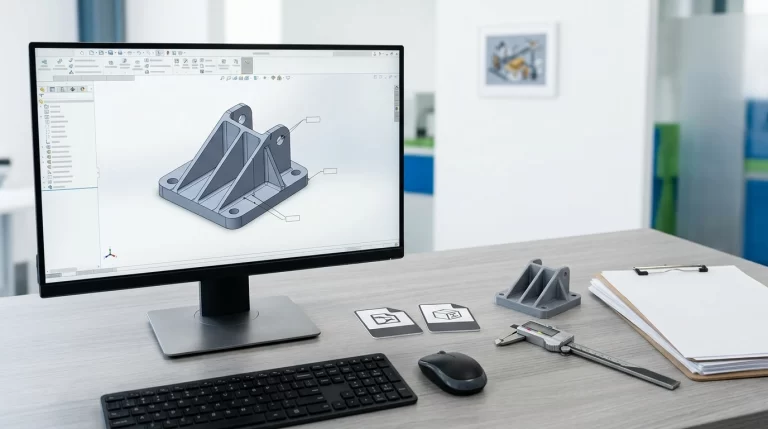
CNC machining vs 3D printing is not a fight between old and new manufacturing. It is a route choice. CNC removes material from a block. 3D printing builds geometry layer by layer. The better route depends on shape, tolerance, material, surface, quantity and whether the part needs internal features.
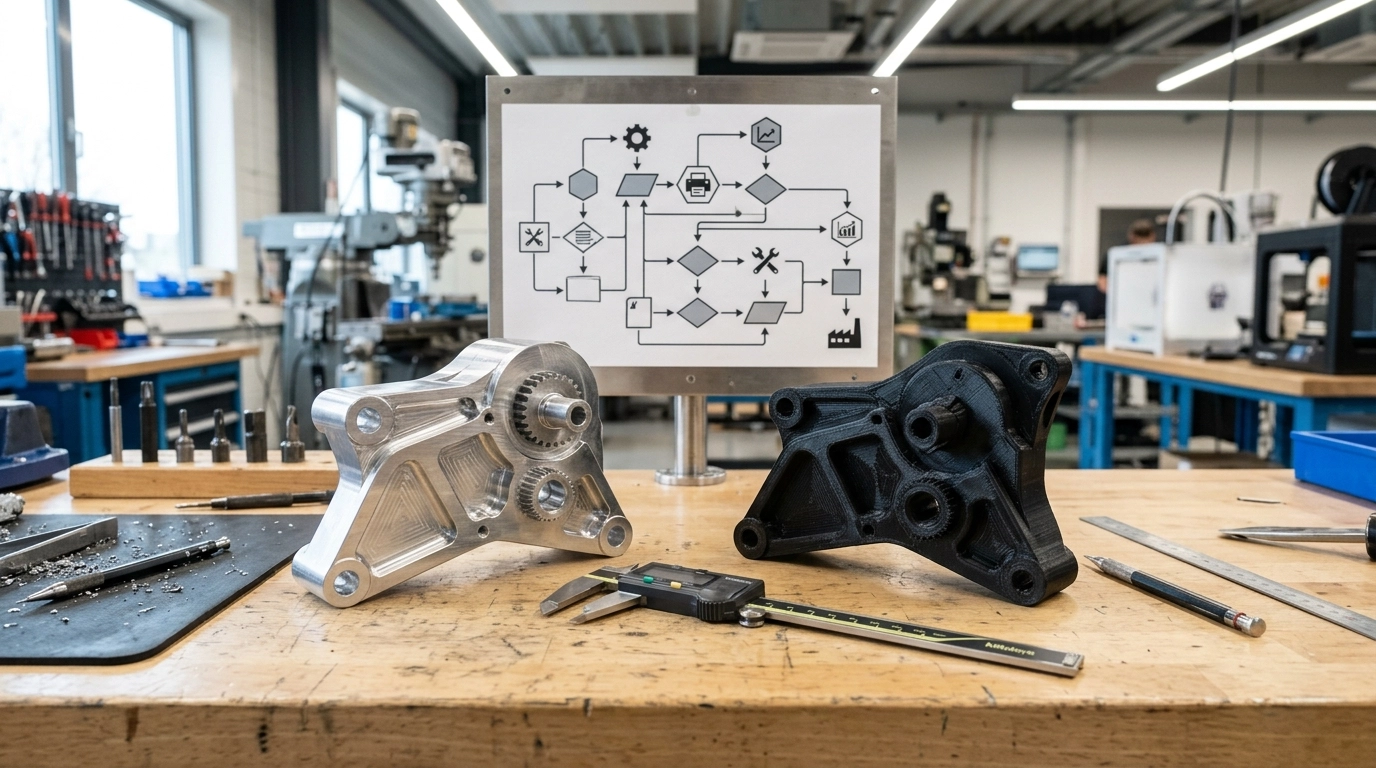
I would not print a simple flat aluminum plate just to say it is additive. I also would not machine a complex internal channel if printing can make it cleaner. The part should choose the process.
CNC Machining vs 3D Printing for Geometry
CNC is strong for precise flats, holes, threads, pockets and known engineering materials. It can hold tight features when the part can be clamped and reached by tools. It becomes expensive or impossible when the geometry has internal cavities, undercuts or organic shapes that tools cannot reach.
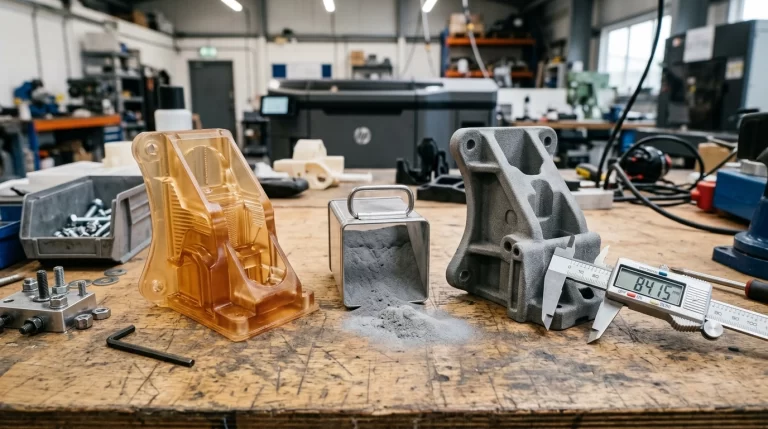
3D printing is strong for complex geometry, lightweight structures, internal channels, low-volume custom shapes and fast design changes. It may need support removal, heat treatment, curing, sanding, or machining afterward. For hybrid thinking, read CNC machining after 3D printing.
Tolerance and Surface Finish
If a part needs precise bearing seats, sealing faces or threaded holes, CNC may be the direct route or the finishing step after printing. If a part needs visual shape more than tight tolerance, printing may be faster. A printed part can be machined, but it needs stock, datums and clamping access.
Engineering plastic 3D printing dimensional accuracy and SLM metal 3D printing overview help explain why printing accuracy and final machined accuracy should not be mixed together.
CNC Machining vs 3D Printing Decision Rule
Choose CNC when the part is simple, tolerance-heavy and made from standard stock. Choose 3D printing when the part is complex, customized, low-volume or geometry-driven. Choose both when printing creates the shape and CNC finishes the functional surfaces. The NIST additive manufacturing resource helps with additive terminology, but the RFQ should still state geometry, tolerance, material and finish.
Material Availability Can Decide the Route
CNC machining has a wide range of stock materials: aluminum, brass, copper, stainless steel and engineering plastics. If the part can be cut from standard stock, CNC may be straightforward. Metal printing uses specific printable alloys and adds powder, heat treatment, support removal and inspection concerns. A buyer should not assume every machined alloy is also easy to print.
For plastic products, FDM, SLA, SLS and MJF all have their own material limits. CNC plastic machining can be useful for flat, precise or high-temperature plastic parts when printable alternatives are not suitable. The route should follow use condition, not the buyer’s first manufacturing preference.
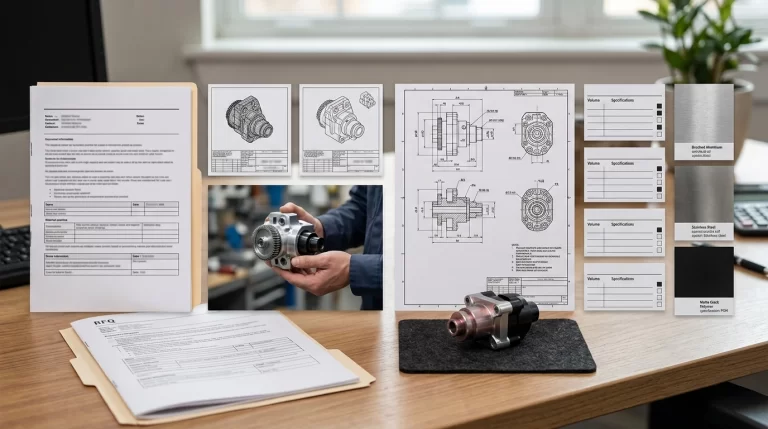
A strong RFQ for CNC machining vs 3D printing includes the file, material target, critical surfaces, tolerance, quantity, cosmetic areas and whether hybrid finishing is allowed. That gives the supplier room to recommend the simplest route that still meets the part’s job.
Quantity changes the answer. One complex prototype may be best printed. Ten precise aluminum blocks may be best machined. A lightweight metal bracket with internal channels may justify metal printing even at low quantity. A buyer should avoid choosing the route before the geometry, material and quantity are clear.
Lead time should include finishing. A printed metal part may need stress relief, support removal and machining. A CNC part may need anodizing, bead blasting or inspection. CNC machining vs 3D printing should be compared as delivered parts, not as unfinished machine outputs.
Datum planning is often the quiet divider. CNC needs a way to hold the part and measure from stable surfaces. Printed parts can create shapes that are hard to clamp later. If the final part needs machining after printing, add pads, stock allowance or reference faces on purpose instead of hoping the machinist can find a clean setup.
Surface callouts should be honest. A bead-blasted CNC aluminum housing and a painted resin prototype may both look good in photos, but they are not the same manufacturing result. If the product will be handled, assembled or exposed to wear, the quote should say which surfaces are cosmetic and which surfaces are functional.
For early design review, 3D printing may answer shape questions quickly. For final mechanical parts, CNC may answer tolerance and material questions better. CNC machining vs 3D printing is not a loyalty test. It is a way to decide which process answers the question in front of the buyer.
Threaded features deserve a separate note. CNC can cut or tap threads directly in many cases. Printed plastic threads may wear, printed metal threads may need chasing or machining, and inserts may be better for repeated assembly. If threads matter, mark them in the file and say how often they will be used.
For appearance prototypes, a printed and painted part may be enough to approve shape. For functional metal or plastic parts, material stock, grain, heat treatment, machining marks and inspection can matter. The buyer should not let a nice prototype photo replace a manufacturing decision.
When cost matters, ask for the process recommendation with reasons. A good answer should mention geometry, material, tolerance, quantity and finish. “CNC is cheaper” or “printing is faster” is too thin without the conditions that make it true.