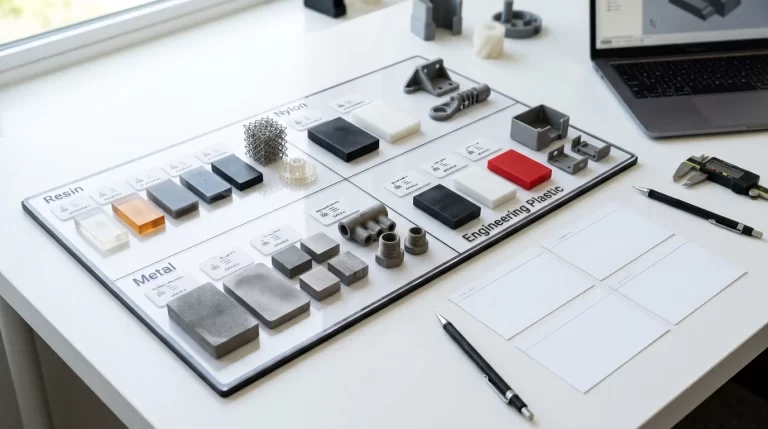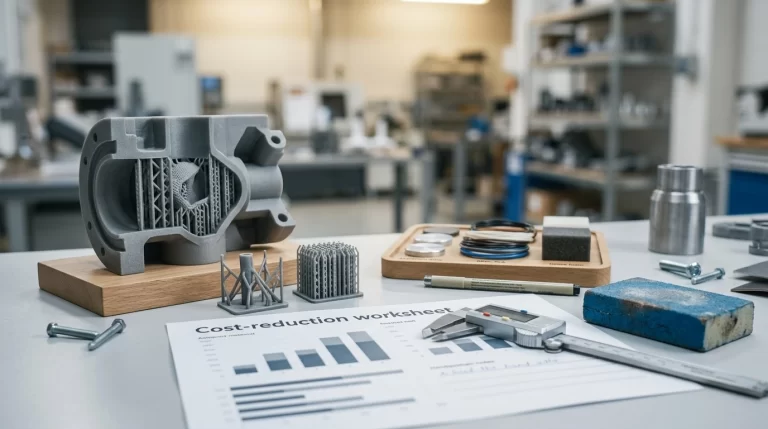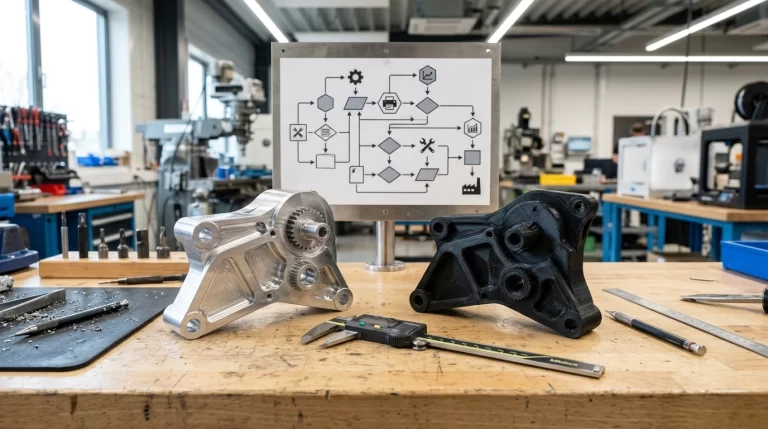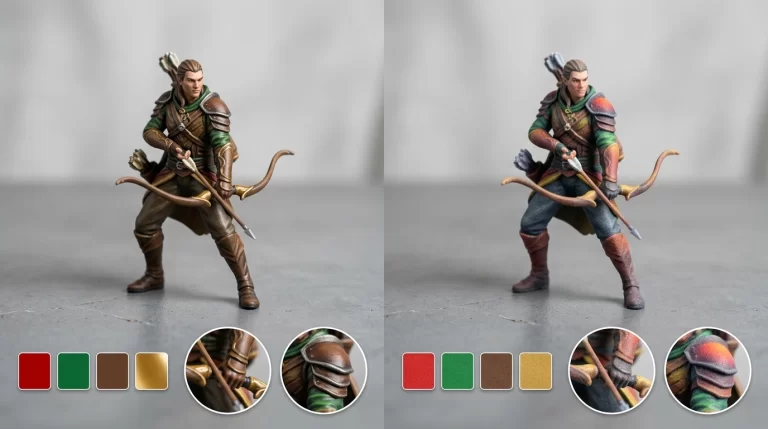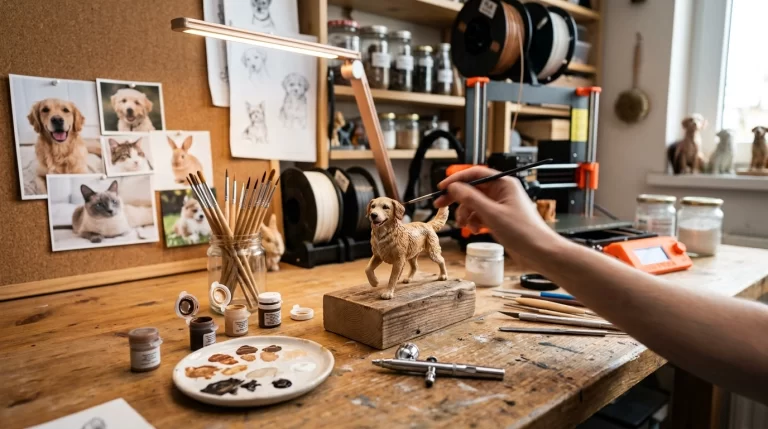
Small-batch 3D printing quality control is not about inspecting every surface with the same energy. It is about checking the things that make the batch acceptable: dimensions, surface, color, fit, quantity, packaging and whether the parts match the approved sample.
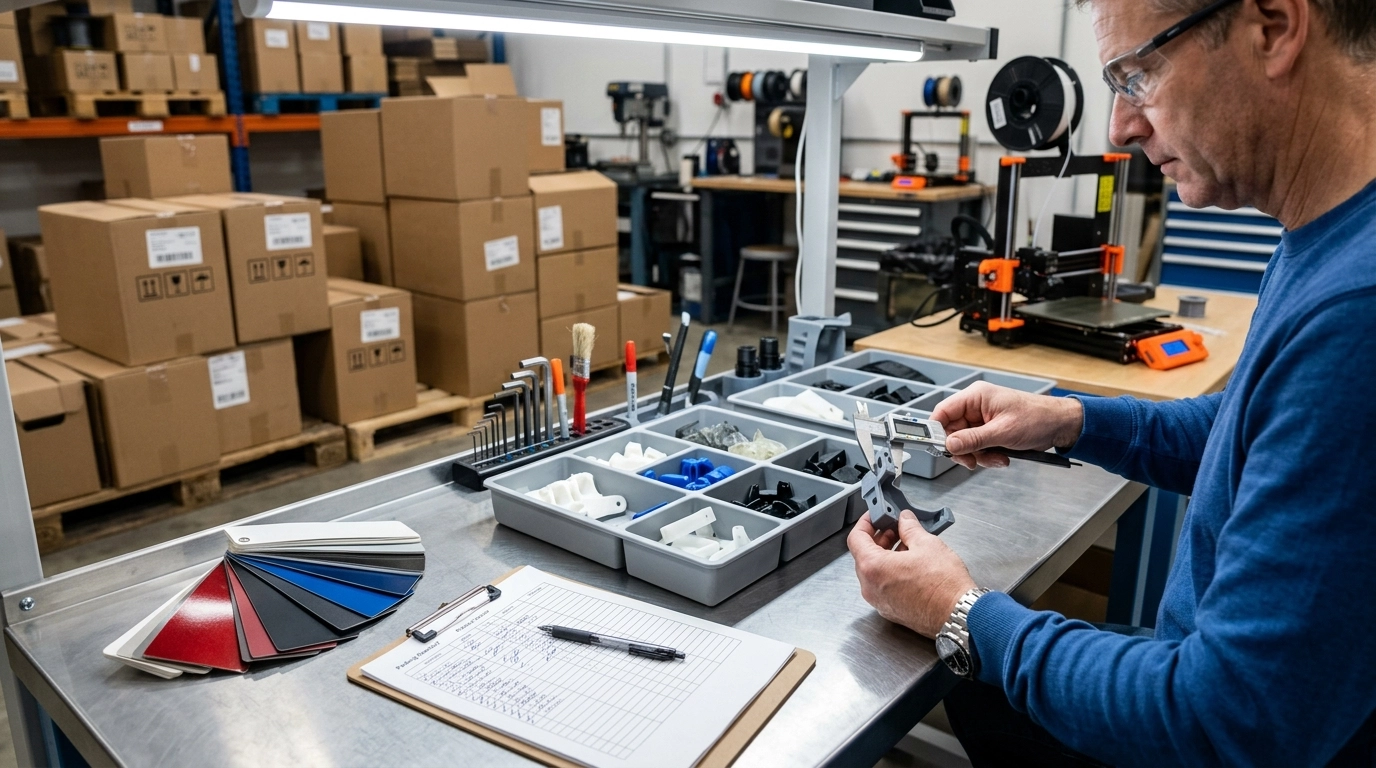
I do not like vague QC notes such as “check quality.” Check what? A nylon fixture, painted figurine and metal insert need different inspection points. The approved sample and the part’s use should decide the checklist.
Small-Batch 3D Printing Quality Control Starts With the Approved Sample
For visual products, compare color, surface, paint edge, logo, base, fragile details and packaging. For functional parts, check critical holes, mating faces, inserts, moving features and load direction. If a feature was never approved on the sample, it should not become a surprise requirement after the batch is finished.
For dimensional thinking, use 3D printing accuracy parameters. For process-specific batch checks, MJF 3D printing quality control is useful when nylon powder-bed parts are involved.
Visual Defects and Finish Checks
Support marks, sanding scratches, paint dust, color drift, gloss variation, powder residue and chipped edges should be checked against the agreed finish level. A raw functional part does not need cosmetic perfection. A retail gift does. The standard should be written before inspection starts.
If painted resin is involved, resin print paint adhesion explains why surface preparation affects final quality. Paint problems are often process problems, not only cosmetic complaints.
Small-Batch 3D Printing Quality Control Before Shipping
Before shipping, confirm quantity, labels, packing method, carton count and photo record. For export orders, packaging inspection is part of QC. A correct part in weak packaging is not a finished order.
The ISO 9001 quality management overview is useful background for process records, but small-batch QC can stay practical. Define the sample, inspect the critical points, protect the parts and keep enough records that the buyer can understand what was checked before shipment.
Photo Records Help Small Batches
For custom products, photo records are useful. Take photos of the approved sample, batch overview, critical details, packed parts and carton labels. These photos do not replace inspection, but they make communication clearer. If a buyer is overseas, visual records can prevent small questions from becoming large delays.
Sampling level should fit the risk. A batch of simple brackets may need dimensional spot checks. A batch of painted figurines may need more visual review. A batch of moving parts may need fit or motion checks. Small-batch 3D printing quality control should follow the part’s failure risk, not a generic checklist.
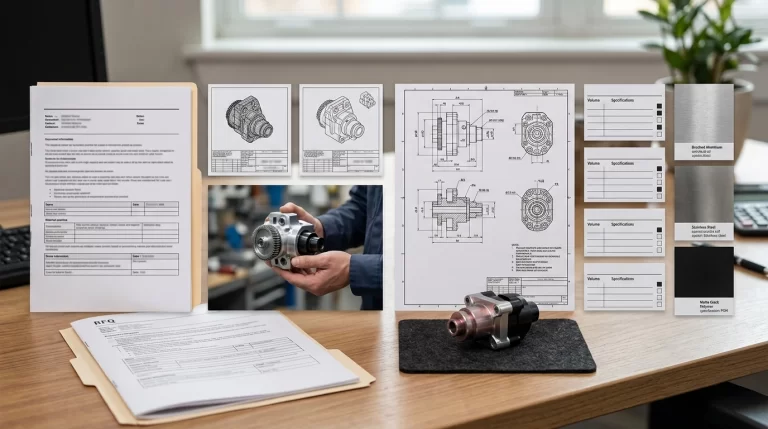
For RFQs, the buyer should state what matters before production: cosmetic faces, critical dimensions, color, assembly fit, packaging and acceptable variation. QC is much easier when the standard is visible before the parts are made.
When the batch includes several versions, keep them separated through inspection and packing. Color variants, left/right parts, different names or different bases can be mixed if labels are weak. A simple tray layout or packing checklist can prevent a correct part from going into the wrong box.
Small-batch 3D printing quality control should also feed back into the next order. If support marks were close to the limit, change orientation. If packaging rubbed paint, change the insert. If a hole needed manual cleanup, adjust the file or add a post-process step. Good QC is not only a gate; it is how the next batch gets easier.
Inspection should match the process. SLA parts may need checks for support scars, over-cure, warping and brittle thin details. MJF or SLS nylon parts may need depowdering, dye consistency and hole cleanup checks. Painted figurines need color, dust, gloss and packaging review. A generic QC sheet misses too much.
When tolerance matters, agree on the measuring condition. Raw, cured, dyed, painted, assembled and packed are different states. Measuring too early can create false confidence. Measuring too late can make correction expensive. Small-batch 3D printing quality control should define when the check happens.
The buyer does not need a factory manual for every order, but the quote should say what will be checked and what proof will be shared. A few clear photos, key dimensions and packing records can make an overseas small batch feel much less blind.
Do not let sample approval and QC drift apart. If the approved sample has a matte finish, the batch should not quietly become glossier. If the approved nylon part had a cleaned hole, the batch should include the same cleanup. Small-batch 3D printing quality control starts with respecting the sample, not inventing a new standard during packing.
Rework rules should be clear before inspection starts. Can a paint mark be touched up? Can a tight hole be drilled? Can a warped part be rejected outright? Without those rules, QC becomes a debate at the end of production. With them, the supplier can sort, repair or remake parts consistently.
For overseas buyers, inspection photos should show enough context. A close-up defect photo is useful, but an overview photo, label photo and packed-carton photo tell the buyer whether the batch is organized. QC communication is part of delivery.