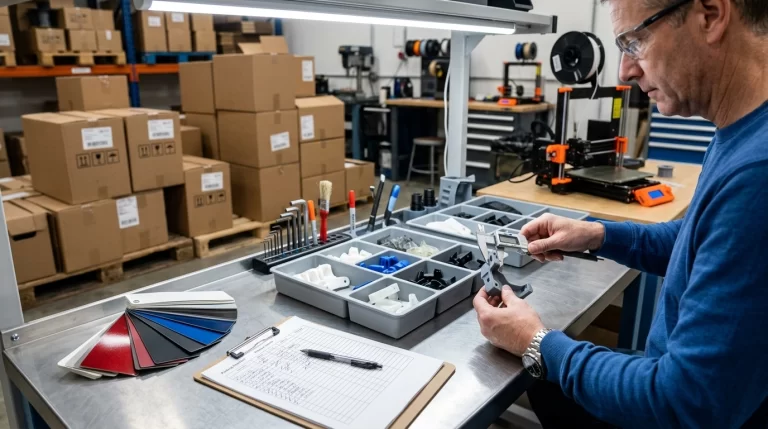
SLA vs MJF 3D printing is usually a choice between smooth visual detail and tougher nylon function. SLA can make clean appearance prototypes and figurine masters. MJF can make strong PA12-style functional parts without support scars. The right process depends on how the part will be handled, assembled and finished.
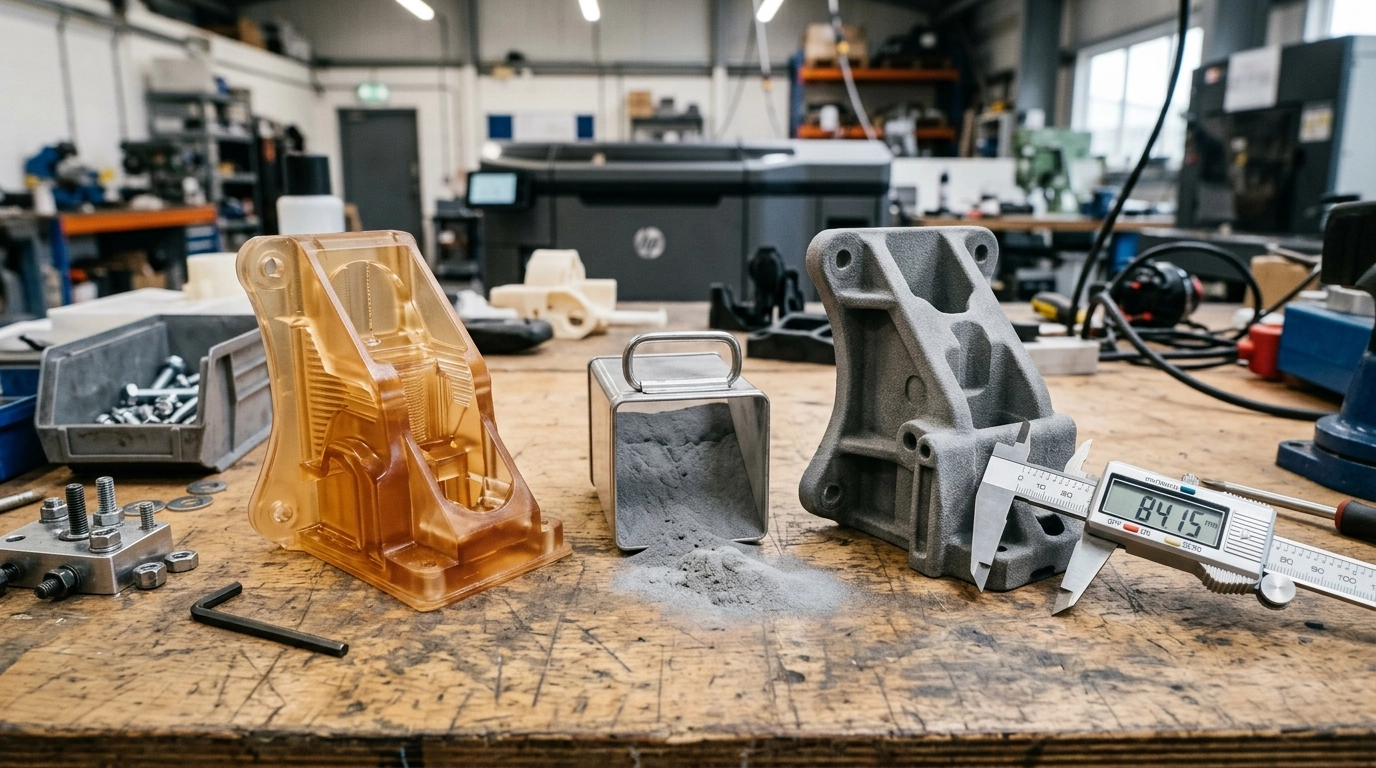
I would not use MJF just because the word “nylon” sounds strong, and I would not use SLA just because the surface looks good. A display part and a working hinge are different jobs.
SLA vs MJF 3D Printing for Surface and Detail
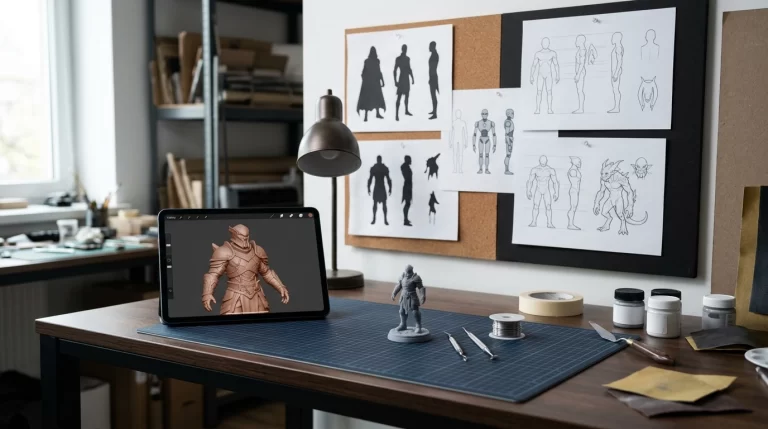
SLA is usually better for fine surface detail, smooth prototypes, resin figurines and visual models. It can show small features well, but support marks, curing and resin brittleness need attention. If the part will be painted, surface preparation becomes part of the quote.
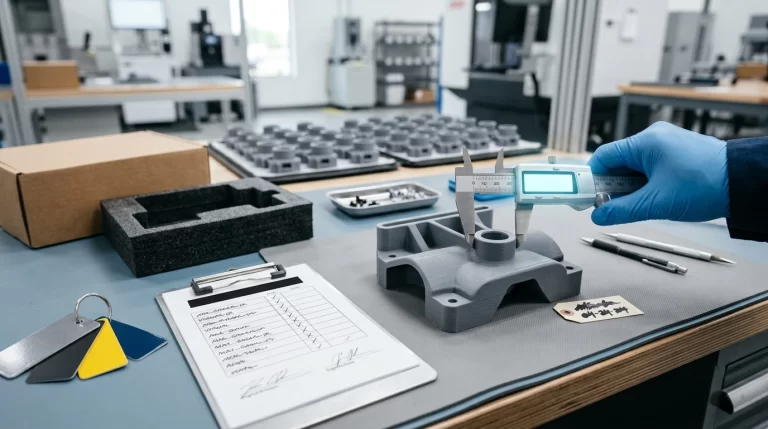
MJF nylon has a more powdery surface, but it can handle functional geometry well. It is useful for housings, clips, brackets, fixtures and parts that need toughness. The finish can be dyed, sealed or tumbled depending on the requirement.
For SLA background, see SLA resin 3D printing guide. For nylon workflow, compare with SLS nylon 3D printing guide and MJF 3D printing quality control.
Batch and Assembly Behavior
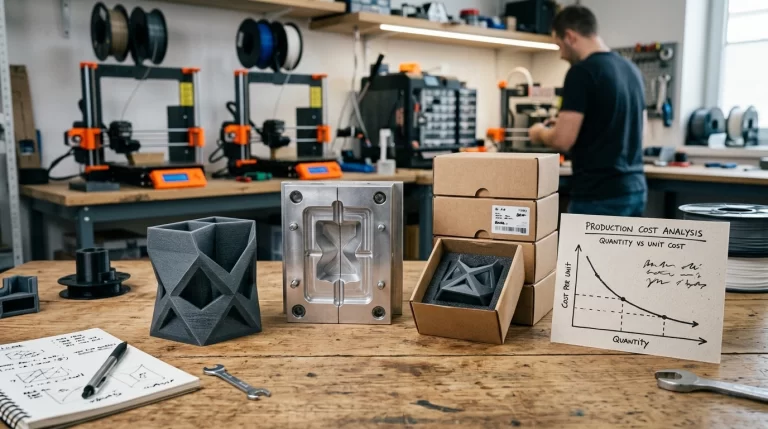
MJF can be attractive for small batches because parts can be nested without traditional support structures. That helps complex functional parts. SLA may be better for a small number of high-detail appearance pieces. The cheaper route depends on geometry, finish and quantity, not only material price.
SLA vs MJF 3D Printing Decision Rule
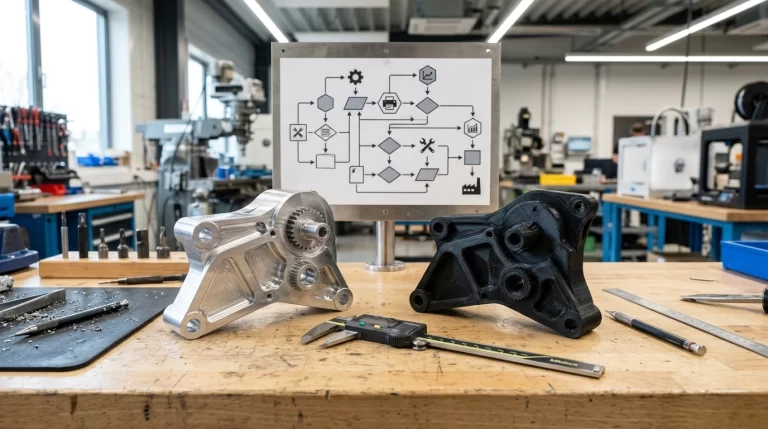
If the buyer needs smooth detail and paint, start with SLA. If the buyer needs nylon toughness, repeated handling and support-free internal geometry, start with MJF or SLS. If the part needs both smooth cosmetic surfaces and functional areas, discuss splitting the part or changing finish expectations. The NIST additive manufacturing page is useful for neutral process context, but the sample part should decide the final route.
SLA vs MJF 3D Printing for Cost and Lead Time
Cost can move in unexpected directions. SLA may be cheaper for one smooth appearance sample. MJF may become stronger when multiple functional parts fit well in a powder-bed batch. But if MJF parts need dyeing, sealing, tumbling or strict inspection, the finishing route still matters. If SLA parts need heavy sanding and painting, the print price is not the full price.
Lead time also depends on post-processing. Resin parts need washing, curing, support removal and finish. MJF parts need cooling, depowdering and surface treatment if required. A buyer comparing quotes should ask what is included after printing, not only the machine build time.
A clean RFQ for SLA vs MJF 3D printing should state whether the part is visual or functional, whether surface feel matters, how many pieces are needed, what color is expected and whether the part must assemble with another component. Those details often decide the route faster than a material datasheet.
Small holes and thin walls deserve special attention. SLA may reproduce small detail clearly, but resin brittleness and support marks can matter. MJF nylon may be stronger, but small holes can need allowance or post-processing. If the part is a housing or clip, send the mating part and say which features must fit.
For gift products, SLA often wins when paint and smoothness matter. For product development, MJF often wins when the buyer needs to test handling, assembly and repeated use. The best quote may include both: SLA for appearance sample and MJF for functional test.
Orientation risk is different too. SLA support contact can leave marks on visible faces if the part is not planned carefully. MJF avoids support structures, but powder removal from narrow channels and small cavities still needs attention. The buyer should ask where cleanup risk sits, not only which machine is faster.
Color expectations should be realistic. SLA parts are often painted when appearance matters. MJF nylon is commonly grey or dyed black, with other finishing routes depending on the supplier. If the product needs a bright retail color, finishing should be quoted as part of the comparison.
When the project has both beauty and function, split the question. Use SLA vs MJF 3D printing to decide what each prototype is supposed to prove: appearance, fit, strength, flexibility, handling or assembly. One sample rarely answers every question well.
Moisture and heat should not be ignored for nylon routes. MJF parts can be useful for functional testing, but storage, dyeing and use environment can affect behavior. SLA resins have their own limits around brittleness, UV exposure and heat. The quote should not treat either material family as magic.
A practical comparison table can be short: visible surface, functional strength, small detail, color route, quantity and post-processing. SLA vs MJF 3D printing becomes clearer when the buyer scores the product need instead of arguing from process names.
If the part is part of a larger assembly, send the mating files. SLA and MJF can both produce a nice-looking part that fails because the clearance was guessed. Assembly context is often more useful than a long material wish list.