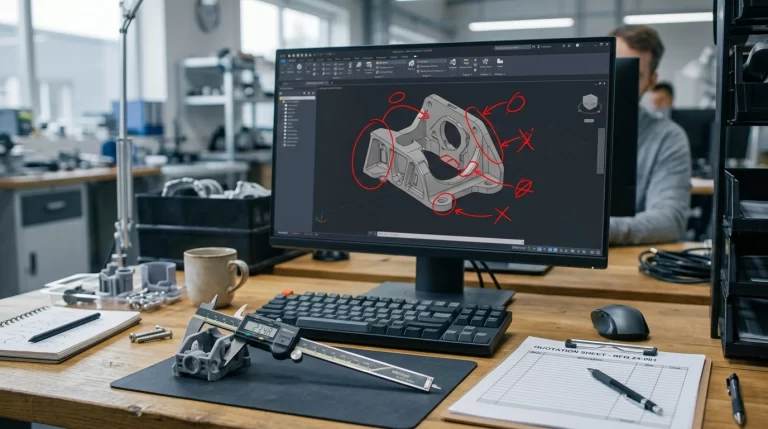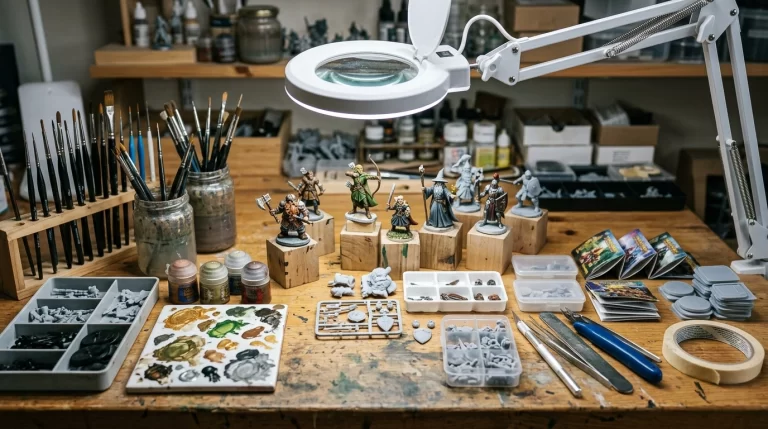
Sample approval before bulk 3D printing is where a custom project either becomes controlled production or turns into a long argument about expectations. A sample is not just a nice photo for the buyer. It should lock size, material, surface, color, fit, packaging and the details that cannot be judged from CAD.
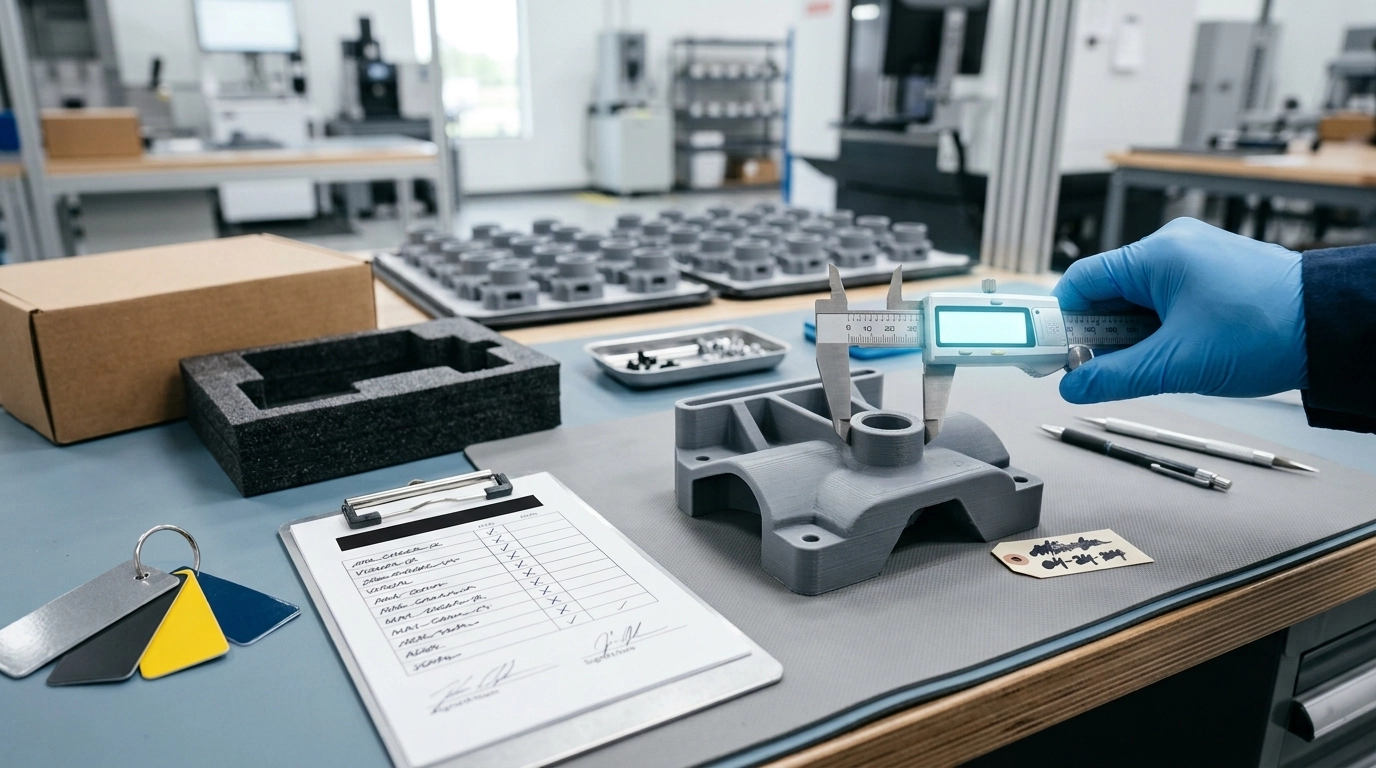
I do not like approving a sample only by saying “looks good.” That phrase is too soft. Looks good at what distance? Under what light? Is the color approved? Are support marks acceptable? Does the part fit the mating component? Can the packaging protect the weak features? Those questions sound picky until the batch is already printed.
Sample Approval Before Bulk 3D Printing Should Define the Reference Part
The approved sample should be treated like a reference, not a random prototype. Mark the version, material, process, surface finish and date. If the sample has hand sanding, primer, paint or clear coat, record that. If the sample is raw print only and the batch will be painted later, do not confuse the two.
For figurines and custom gifts, the reference sample should define visible detail: face shape, hair, clothing folds, logo, base, color tone and acceptable small tool marks. For engineering parts, it should define fit, hole size, mating surface, moving clearance and any post-processing. The article on 3D printing accuracy parameters is useful when the sample has functional dimensions.
Check Finish, Color and Fragile Details Before Quantity
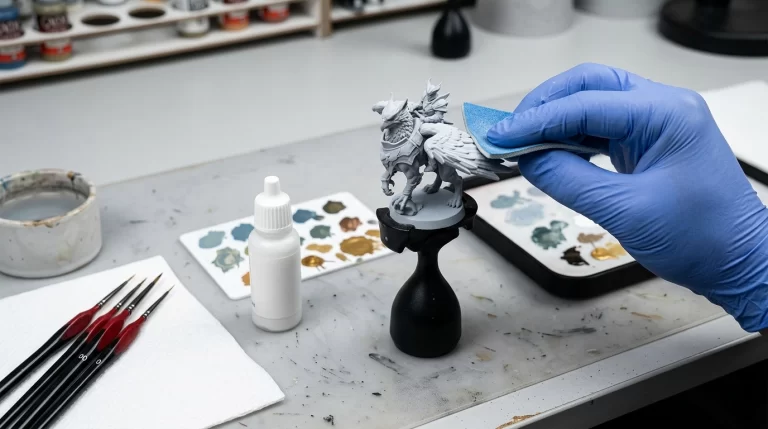
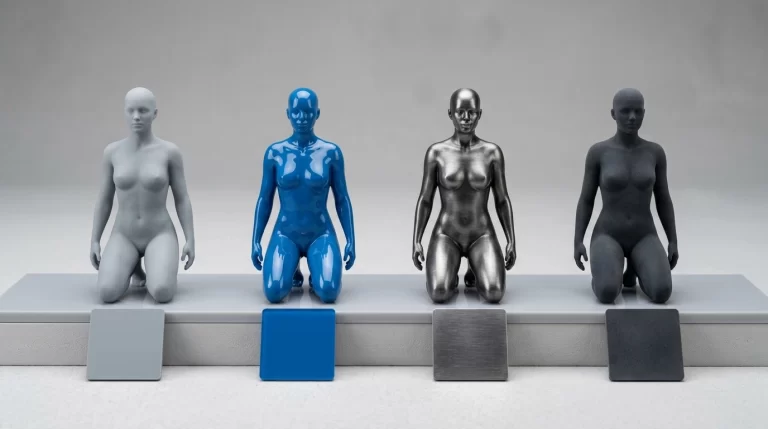
Surface finish is often where bulk orders drift. A resin sample may look smooth after careful sanding, but the batch needs the same workflow to match it. A dyed nylon sample may show color variation if wall thickness, powder condition or dyeing time changes. Painted parts can shift when primer, basecoat, masking or clear coat changes.
Color should be approved with a reference under normal light. A phone photo alone is weak evidence. If the buyer has a Pantone target, painted sample, brand color card or product photo, send it early. For painted resin parts, resin print paint adhesion explains why sanding, primer and support mark repair matter before color is judged.
Fragile details need a separate look. Fingers, ears, hair tips, small logos, clips, thin hooks and sharp corners may survive the sample bench and break during packing. If those features are important, approve both the printed part and the protection method.
Sample Approval Before Bulk 3D Printing Needs Fit Testing
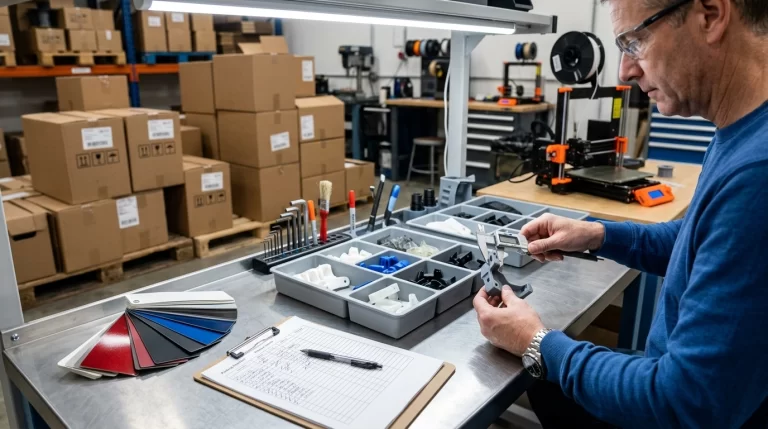
If the part assembles with another component, test the real assembly before bulk production. Do not approve fit from a screenshot. 3D printed holes, slots and pins can shift with orientation, material shrinkage, finishing and measurement timing. A part can be visually correct and still fail assembly.
If tolerance is tight, define which surfaces are critical. If post-machining is allowed, say where. If sanding is not allowed on a visible surface, say that too. The article on 3D printing surface roughness is a good reminder that the printed surface and the finished surface are not always the same thing.
Packaging Is Part of Sample Approval
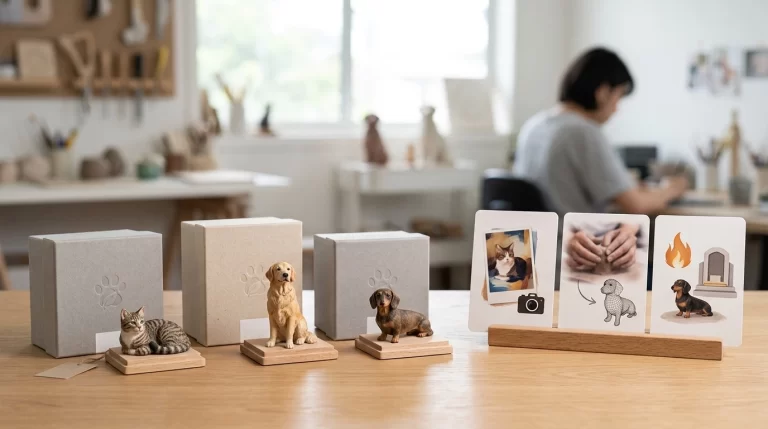
For export orders, I would not separate sample approval from packaging. A small figurine, memorial gift, display model or painted part can be damaged by rubbing, pressure or vibration. Foam insert, individual bag, inner box, outer carton and label position may all need approval before production.
The ISO/ASTM 52900 additive manufacturing vocabulary can help keep process terms clear, but the production sample needs more practical notes: approved file version, sample photos, finish reference, packaging photo, quantity plan and inspection points. Sample approval before bulk 3D printing should make the batch boring. Boring is good here. It means fewer surprises.
A useful approval email can be short but specific: “Approve this sample for size, material, painted color, matte finish, logo placement and foam insert. Please keep the same file version for the first 100 pieces.” That kind of note gives production something to follow. It also protects the buyer because the supplier cannot quietly change the finish or packing method without discussion.
If the sample is not approved, the rejection should name the reason. “Too rough on the left side” is useful. “Not premium enough” is not. Good sample approval before bulk 3D printing is not about being difficult; it is about making the next batch measurable.
I would also keep one boring document beside the approved part: file name, revision, material, color reference, finish, packing method and anything the buyer accepted as normal. If the sample has a small support scar on the back and the buyer accepts it, record that. If the logo edge must stay sharp, record that too. Memory is weak after the second or third reorder.
When the bulk order starts, compare the first production pieces against the approved sample before the whole build is finished and packed. That is the last cheap place to catch drift. Sample approval before bulk 3D printing should not sit in a folder as decoration; it should be used on the bench while the batch is still adjustable.