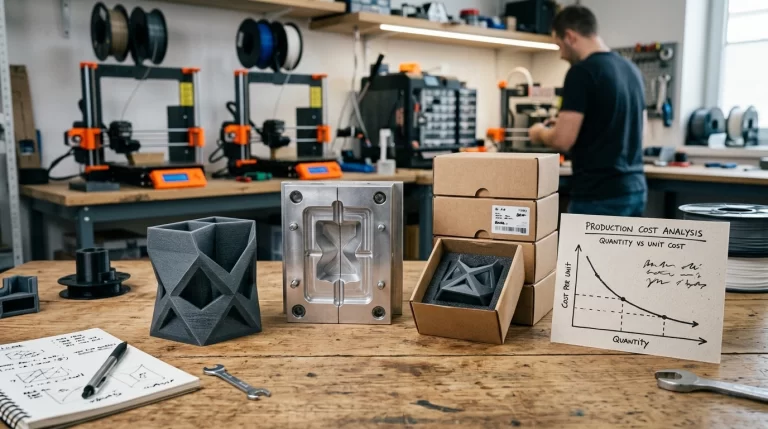
3D printed parts packaging can decide whether a good batch arrives as good products or as a complaint. Small details, painted surfaces, transparent resin, thin clips, moving joints and sharp cosmetic edges all need protection. Packaging is not just the box at the end of production.
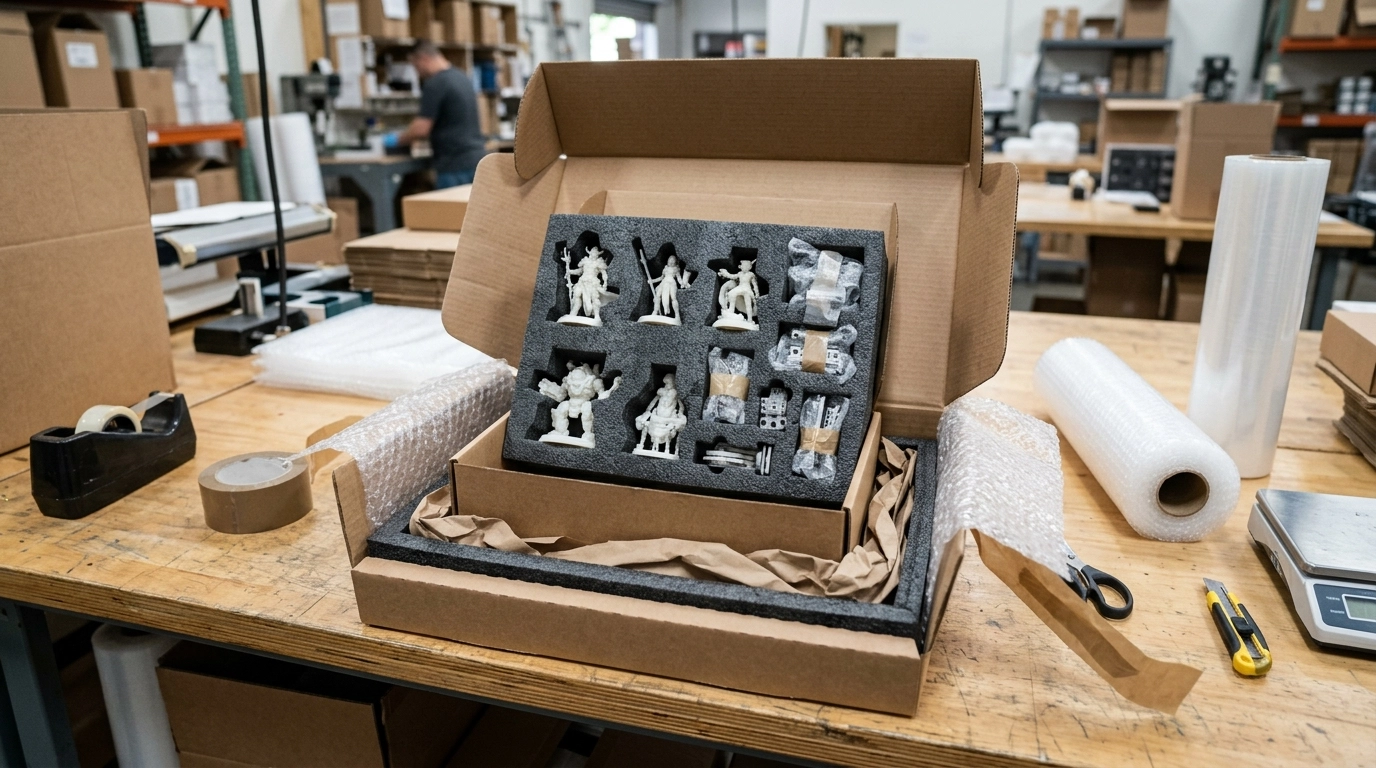
I like packaging to be approved with the sample. If the part has fragile ears, fingers, antennas, thin walls or glossy paint, the packaging design should be part of the product approval.
3D Printed Parts Packaging Starts With Fragile Features
Look at the part and mark what can break or rub. Thin tabs, pointed details, snap clips, small bases, raised logos and painted faces need space. A tight bag may scratch paint. A loose box may let parts collide. Foam, blister, tray or inner carton should match the geometry.
If the part has moving features, 3D printed moving joints is relevant because movement gaps and small pins can be damaged in shipping. For surface-sensitive parts, 3D printing surface roughness helps explain why finish can be more fragile than the base material.
Export Shipping Adds More Risk
Export cartons may face vibration, stacking, humidity and repeated handling. The outer carton protects against shipping abuse. The inner packaging protects the part from itself. A painted figurine needs different protection from a nylon bracket. A transparent resin part may need scratch protection. A small retail gift may need presentation packaging plus shipping packaging.
Carrier guidance such as DHL packing advice is useful background, but it cannot replace part-specific packaging review.
3D Printed Parts Packaging for OEM Orders
For OEM orders, approve one packed sample. Check how the product sits in the insert, how easy it is to remove, whether paint rubs, whether the label is correct and whether carton quantity makes sense. 3D printed parts packaging should be quoted early because foam, boxes, labels and labor can change both cost and lead time.
3D Printed Parts Packaging Should Match the Sales Channel
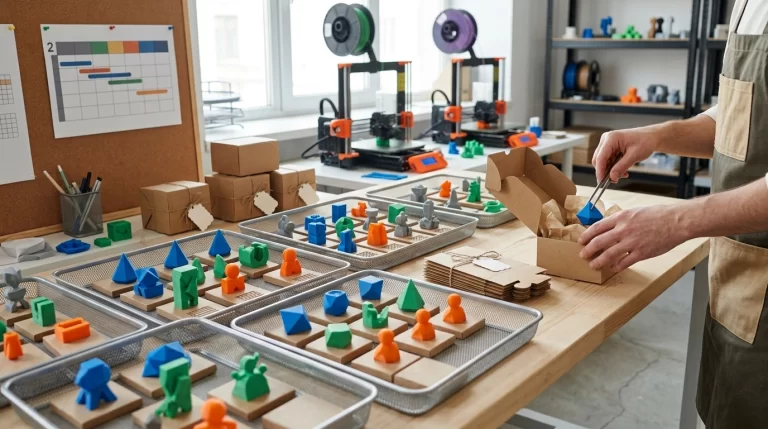
A prototype shipped to an engineer can use practical protection. A retail gift needs presentation. A museum souvenir may need a printed card. A corporate award may need a clean box and foam insert. The same part can need different packaging depending on how it will be sold or used.
Labeling matters too. If the buyer needs SKU labels, barcodes, color marks or batch numbers, those should be included in the quote. A supplier can pack parts neatly and still miss the buyer’s warehouse requirement if labeling is not discussed.
For fragile custom parts, I would photograph the approved packing method before shipping the batch. That gives both sides a reference if damage happens later. 3D printed parts packaging is not glamorous, but it protects all the work already spent on modeling, printing and finishing.
Packaging should also consider moisture and surface contact. Some nylon parts can tolerate handling better than painted resin. Transparent or glossy parts need scratch protection. Metal parts may need separation to avoid rubbing. A one-size packaging rule is usually weaker than part-specific review.
For RFQ, ask whether the supplier should quote bulk packaging, individual packaging, retail packaging or drop-shipping style protection. Those are different jobs. 3D printed parts packaging can be simple, but it should never be undefined.
The packing test should use the finished part, not a raw sample. Paint, coating, polished resin, dyed nylon and metal finish all react differently to rubbing and pressure. A box that works for an unpainted prototype may scratch the product after the final surface is applied.
Carton planning matters for bulk orders. Too many parts in one carton can crush lower layers. Too few parts can waste shipping volume. If the product is sold through distributors, carton labels and inner quantities should match the buyer’s warehouse process. Packaging is part of logistics, not only protection.
For fragile figurines, I like approval photos that show the part in the insert, the closed inner box, the outer carton and the label. That record is simple, but it gives everyone the same picture of how 3D printed parts packaging is supposed to look before the shipment leaves.
Do not forget unpacking. A part can be protected so tightly that the customer damages it while trying to remove it. Tabs, finger gaps, soft wrapping and clear opening direction can matter for delicate resin figures, polished models and small assembled products.
Packaging cost should be compared against replacement cost. A cheaper insert may save a little per unit and still be wrong if it increases breakage, scratches or customer complaints. 3D printed parts packaging is usually cheaper to fix before shipping than after a damaged batch reaches overseas buyers.
For mixed-version orders, labels are quality control. Color, size, left/right part, personalized name and SKU should stay visible through packing. A correct part in the wrong box is still a failed shipment from the buyer’s point of view.
Drop tests are useful when the product is fragile, but they should be realistic. Test the actual box, insert, product finish and carton arrangement. A drop test on a raw prototype does not prove the retail package is ready.