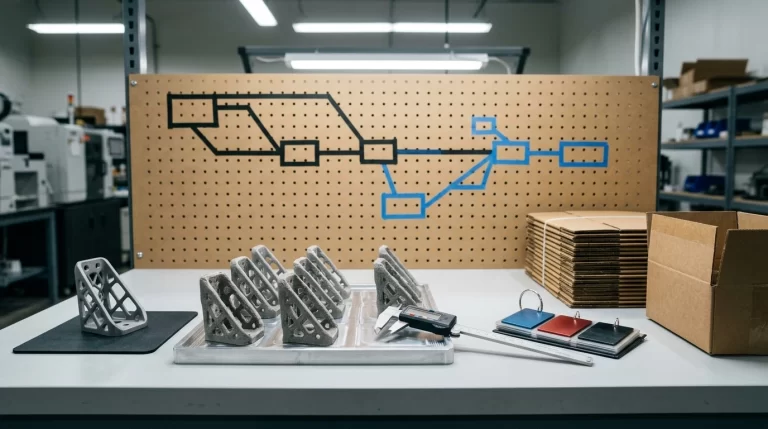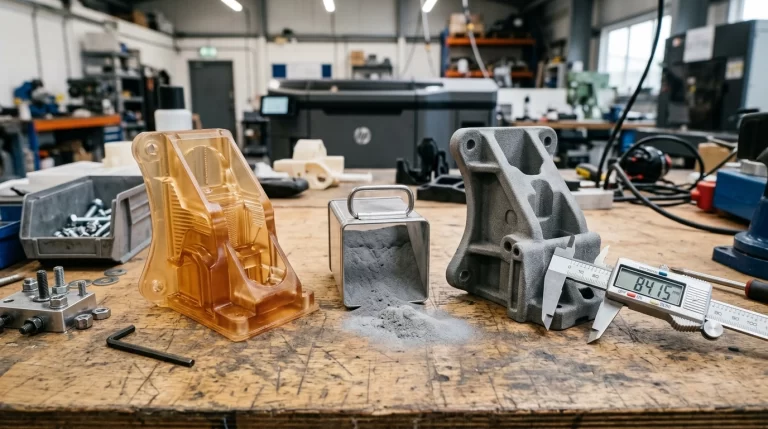
Why 3D printing quotes change is usually less mysterious than buyers think. The first price is often based on the file and notes available at that moment. After file review, the supplier may find thin walls, support risk, finishing labor, trapped powder, missing scale, unrealistic tolerance or packaging work that was not visible in the first email. That does not mean the first quote was dishonest. It may mean the first quote was incomplete.
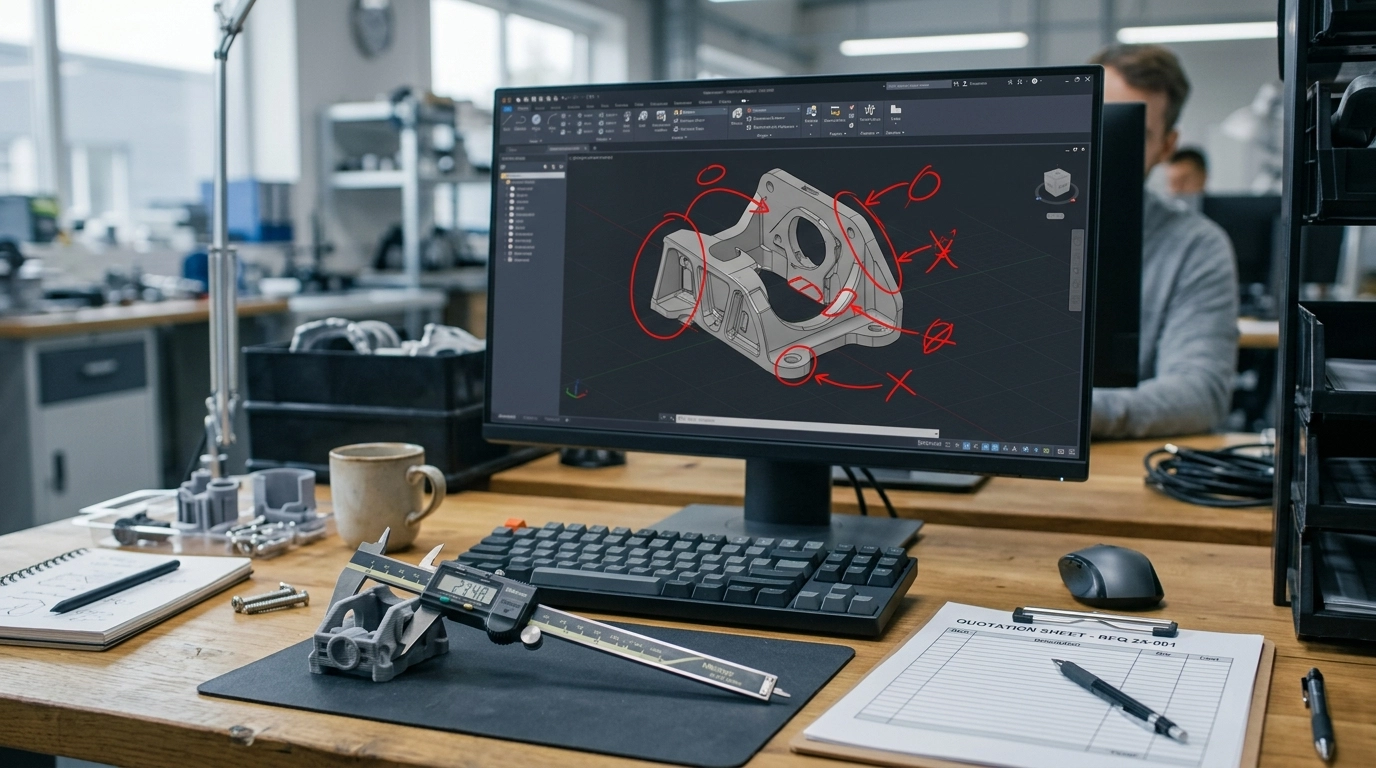
I do not like surprising buyers with a revised quote. But I also do not trust a number that ignores the model’s actual manufacturing problems. The useful question is not “why did the price move?” The useful question is which detail changed: geometry, material, tolerance, finish, quantity, packaging or schedule.
Why 3D Printing Quotes Change After Geometry Review
Geometry is the first place a quote can move. A file may have open mesh edges, very thin walls, tiny raised text, unsupported overhangs, deep pockets, sharp fragile tips or internal cavities that cannot be cleaned. The part may still be printable, but it may need repair, splitting, thickening, support changes or a different process.
Scale problems are common too. A buyer may send a figurine file without final height. A product shell may arrive in inches but open as millimeters. A model may be hollow because it came from rendering software, not manufacturing CAD. When the supplier asks for confirmation, the quote pauses. When the confirmed size changes material volume, machine time and packaging size, the price changes.
This is why the guide on 3D printing file preparation matters. A clean RFQ file does not need to be perfect, but it should make unit, size, wall thickness and design intent visible.
Material and Process Assumptions Can Be Wrong
A quote based on SLA resin will not behave like a quote based on SLS nylon, MJF nylon, FDM engineering plastic or metal printing. Sometimes the buyer asks for the cheapest route, then explains later that the part needs impact resistance, heat resistance, moving clearance, outdoor use or a smooth painted finish. That new information changes the process choice.
Material names can also hide intent. “Nylon” may mean a tough functional prototype, a dyed black appearance part or a powder-bed batch with no support scars. “Resin” may mean a white figurine for painting, a transparent part, a high-detail master or a brittle display sample. If the use case is missing, the first quote may choose the wrong material assumption.
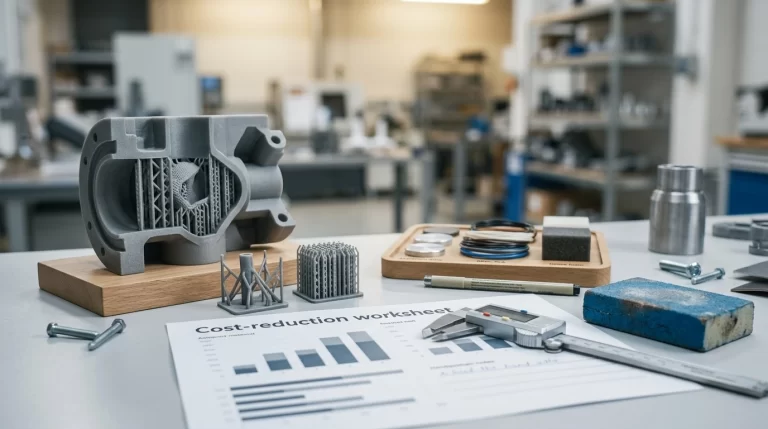
For material route decisions, the article on engineering plastic 3D printing material selection gives a useful starting point. For cost-sensitive decisions, compare it with 3D printing cost reduction.
Why 3D Printing Quotes Change When Tolerance Gets Specific
A general quote may assume normal process tolerance. A revised quote may include controlled inspection, machining allowance, reaming, tapping, fixture setup or CMM measurement because the buyer later identified critical dimensions. That is not a small detail. A decorative prototype and a fixture with four mating holes may use the same printer but a different quality plan.
High tolerance everywhere is one of the most expensive phrases in an RFQ. If only two surfaces matter, mark those two surfaces. If a hole can be drilled after printing, say so. If a visible surface cannot be touched after printing, say that too. The supplier can then quote accuracy where it matters instead of protecting against every possible interpretation.
Finishing, Painting and Packaging Are Not Free Extras
Many quote changes happen after the buyer adds finish requirements. Raw print, sanded surface, primer, paint, clear coat, dyeing, polishing, sealing, metal plating, threaded inserts, gluing and assembly all add work. For figurines, painting can become the main cost driver. For engineering parts, machining or inserts may matter more than print time.
Packaging can move the price too. A strong part tossed into a bag is different from a fragile gift product packed in foam, inner box and export carton. Thin details, painted surfaces and transparent parts need more protection. If retail packaging, labels or individual bags are required, that should be in the RFQ before the first quote.
Support design can be another hidden cost. A part with heavy support on visible surfaces may need sanding and repainting. A metal part may need support removal and machining. A powder-bed part may need depowdering access. The article on 3D printing support design explains why the lowest print price is not always the lowest finished-part price.
How to Avoid a Quote Surprise
Send the best file you have, confirm units and size, state quantity, describe use, mark critical dimensions, name the finish, explain packaging and say whether a sample must be approved before batch production. If you are not sure which material or process fits, say what the part must survive. That gives the supplier room to recommend a route instead of guessing.
Google’s own guidance on helpful, reliable content is written for search, but the same idea works for RFQs: be useful, specific and honest. A useful quote request gives enough context for a real manufacturing answer. A vague one gives a number that may not survive file review.
Why 3D printing quotes change often comes down to missing manufacturing context. The price becomes steadier when the file, the finish, the tolerance and the delivery expectation are all visible from the start. A quote that changes after honest review is frustrating. A batch that fails because nobody reviewed the hidden work is worse.
That is why 3D printing quotes change less often when the first RFQ names the real product, not only the file.