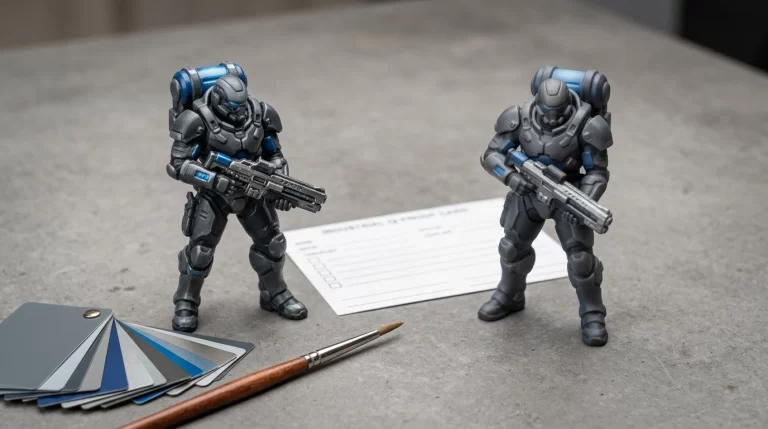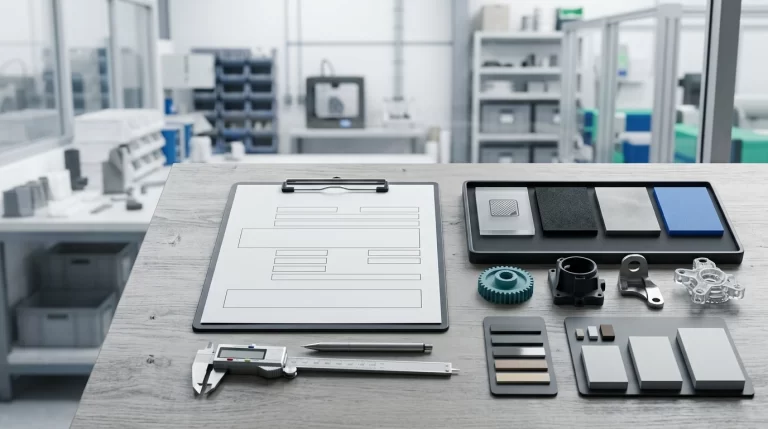
Custom 3D printing RFQ mistakes usually look small in the first email and large after the quote has been revised three times. Missing units, unclear quantity, no finish requirement, only a screenshot, no use condition, impossible tolerance, no packaging note. None of these mistakes is dramatic. Together they slow a project down.
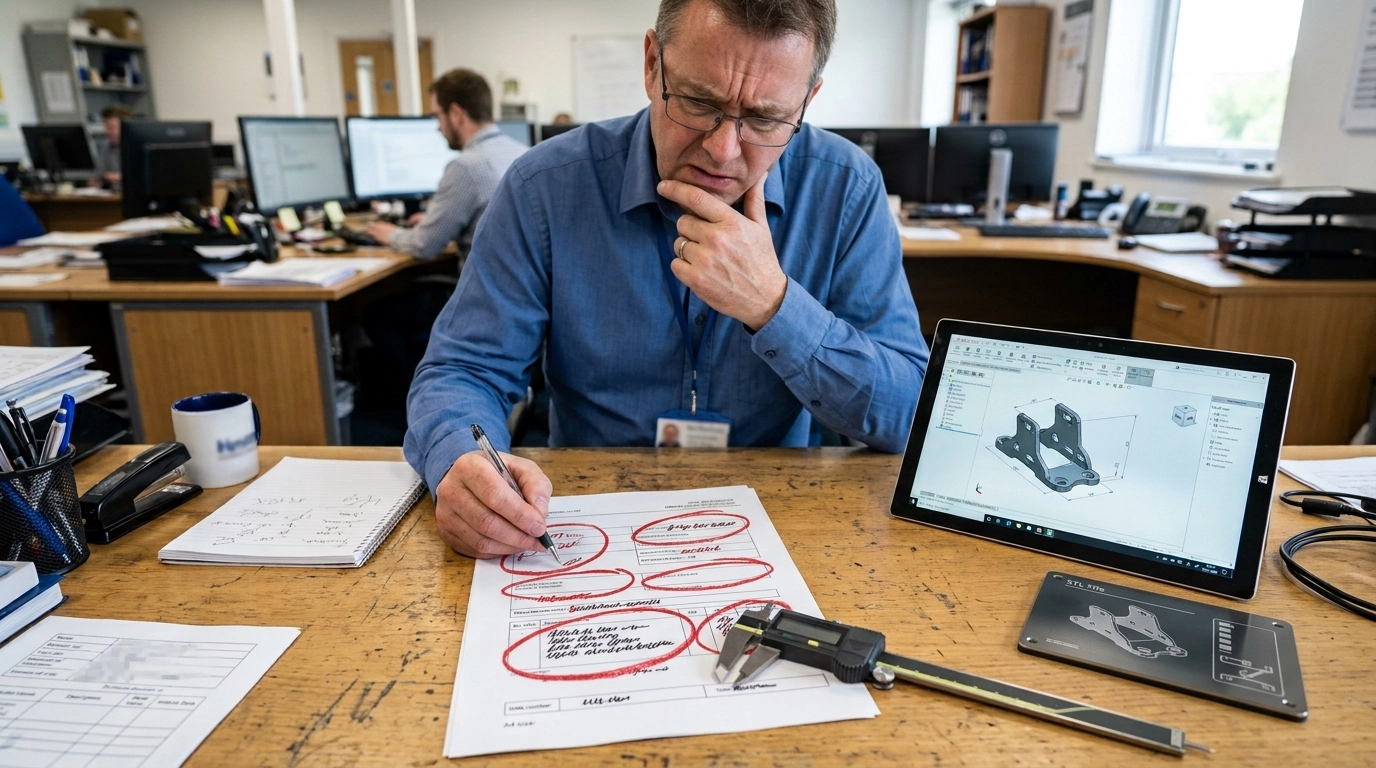
A good RFQ does not need to be beautifully written. It needs to answer the questions that affect manufacturing. If the supplier has to ask for every missing detail, the quote time becomes email time.
Custom 3D Printing RFQ Mistakes Start With Bad Files
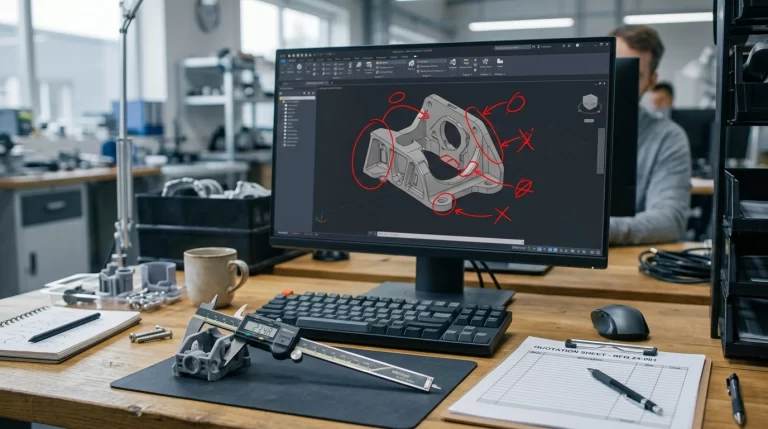
A screenshot is not a manufacturing file. It can show shape, but it cannot show exact dimensions, wall thickness, mesh health or hidden features. STL, STEP, OBJ, 3MF or scan data can all be useful, but they should be named honestly. A sculpted mesh and a mechanical STEP file do not carry the same design information.
Another file mistake is sending the wrong version. A buyer may send an early STL, then attach a revised drawing later. The quote may be based on the old file unless the revision is clearly marked. Version names matter. “final.stl” is not a reliable version system when there are three final files in the same folder.
For a cleaner file package, read 3D printing file preparation. It covers the kind of details that save time before slicing or quoting starts.
No Quantity, No Use Case, No Real Quote
One piece and five hundred pieces are not the same quote. One prototype may be printed directly. A small batch may need nesting, finishing fixtures, QC sampling and packaging. A larger gift order may need sample approval before production. Quantity affects the route, not only the final multiplication.
Use case matters just as much. A display model can be brittle if it only sits on a shelf. A snap-fit part needs toughness. A hot environment changes material choice. A painted gift needs surface preparation. A part used outdoors needs a different conversation from an indoor prototype. If the RFQ only says “strong material,” the supplier is guessing.
The article on engineering plastic 3D printing material selection is a useful internal link here because material choice should come from use condition, not habit.
Custom 3D Printing RFQ Mistakes Around Finish
Finish is often added too late. Raw print, sanding, painting, dyeing, polishing, coating, tapping, inserts, gluing and assembly can all change cost and lead time. A buyer may ask for the cheapest print price, then later request retail-ready paint. That is not the same project anymore.
If color matters, send a reference. If surface roughness matters, say which faces are visible. If a part will be packed as a gift, say how it should arrive. Finish and packaging should not be hidden in the last email before payment.
Tolerance and Deadline Need Context
A strict tolerance note without critical features is hard to quote. Mark the holes, faces or mating areas that matter. Give the mating part if possible. Do not demand tight control on every surface unless the product truly needs it.
Deadlines also need context. If the event date, sample approval date or shipping cutoff is fixed, say that early. The supplier may adjust process, finish or packing plan around the real deadline. Google’s helpful content guidance is about publishing, but the same spirit applies to RFQs: useful, specific information beats vague volume. Custom 3D printing RFQ mistakes disappear when the request tells the part’s job, not just its shape.
A clean RFQ can still be brief. Attach the files, state the final size, quantity, material target, finish, use condition, critical dimensions and deadline. If you do not know the material, say what the part should survive. If you do not know the finish, send a reference photo. The supplier can work with uncertainty when the uncertainty is named.
The worst custom 3D printing RFQ mistakes are not technical. They are silent assumptions. The buyer assumes the supplier knows the product use; the supplier assumes normal finish; the buyer expects retail packing. Writing those assumptions down early is faster than correcting the quote later.
Confidentiality is another detail buyers sometimes leave too late. If the model is a new product, character design, memorial photo, client part or unreleased gift line, say how the files should be handled before sending them around. A serious RFQ can be practical and still respect sensitive artwork or engineering data.
When the supplier asks follow-up questions, treat that as a useful signal. Questions about scale, wall thickness, finish, tolerance, packing and use condition usually mean the quote is being checked against reality. The expensive custom 3D printing RFQ mistakes often happen when nobody asks anything and everyone pretends the file told the full story.
Another RFQ problem is mixing sample and production goals in one sentence. A sample may be for shape review, while the batch needs final paint, packaging and inspection. Ask for the sample purpose clearly. If the first piece is only for checking size, do not approve its raw surface as the final retail standard by accident.