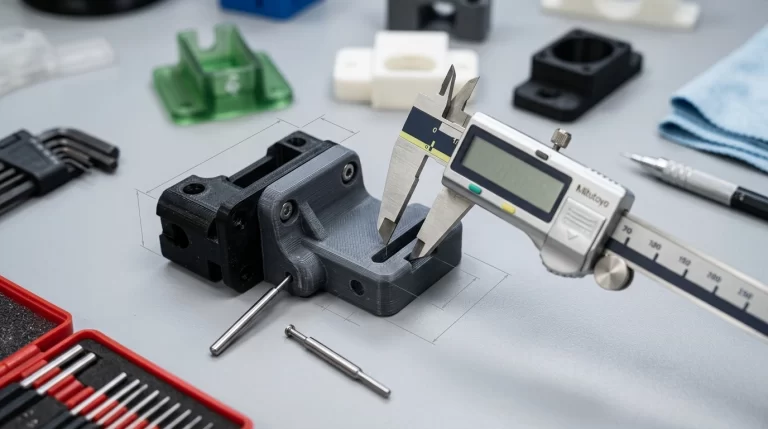
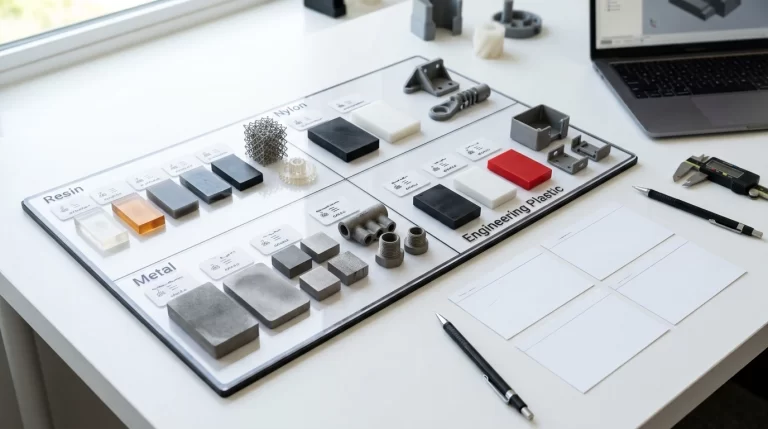
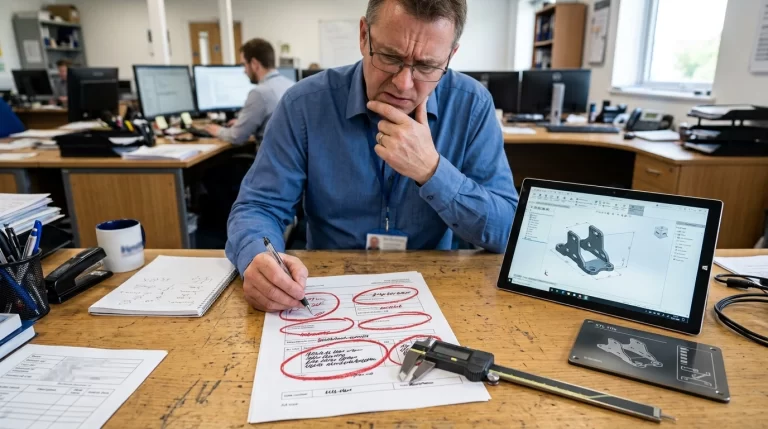
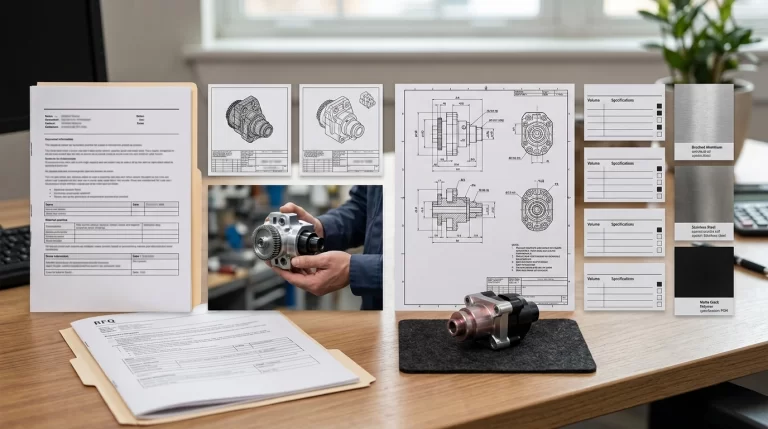
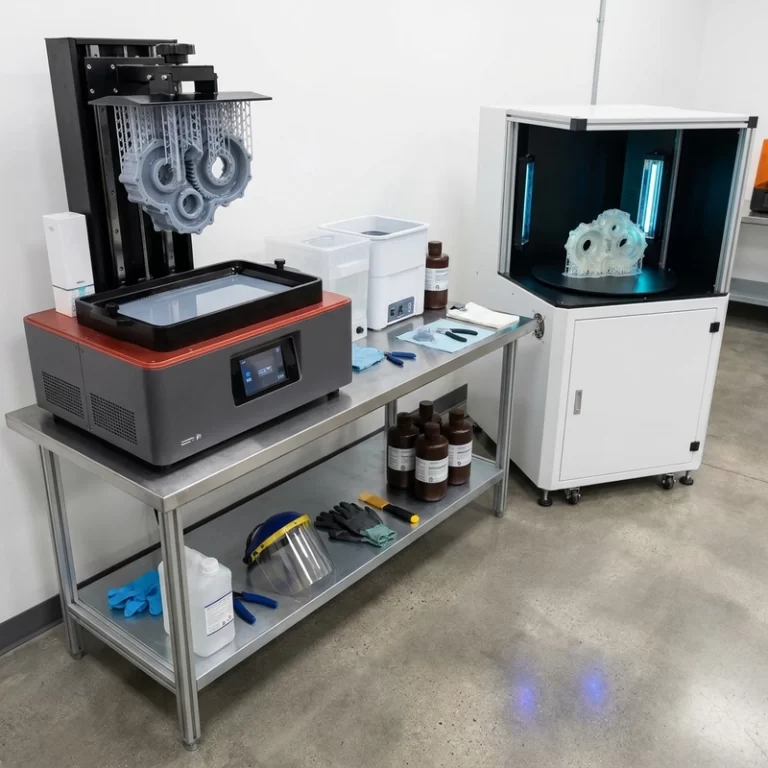
For a painted SLA prototype, a CAD file and a note saying “smooth finish” rarely tell a supplier enough. Mark three things before requesting a quote: the faces people will actually see, the areas where support contact would be difficult to hide, and the holes or mating surfaces where primer and paint could interfere with fit. These notes let the supplier review orientation, finishing work, and assembly risk together. They do not replace a geometry and material review.
Decide what the prototype must prove
An appearance sample and an assembly sample answer different questions. The first is judged by color, gloss, surface continuity, and visible edges. The second has to show whether buttons, windows, bosses, fasteners, and two housing halves fit. One part may be asked to do both jobs, but a coat of paint can change the result of a fit check. A painted display piece also cannot establish the fatigue life of a final molded clip.
State in the RFQ whether the part is for appearance review, a light assembly check, or both. If it must survive repeated opening or screw cycles, describe that separately. If you are still deciding between resin and machined plastic, first compare SLA and CNC ABS for a painted housing prototype. The notes below are for a project in which SLA is already under consideration.
Mark the cosmetic faces of a painted SLA prototype
On a screenshot or annotated PDF, color the surfaces visible during the intended review. The front cover, an uninterrupted curve, a display surround, or a logo area may be “A-surfaces.” Whether the side, back, or inside needs the same treatment depends on how the part will be shown. A-surface and B-surface are project labels here, not a universal defect standard.
Then explain what appearance means for this part. On a gloss finish, are you most concerned about waviness across a broad face, a joint line, or rounded-off edges? On a matte finish, is the concern texture consistency or preservation of small lettering? A physical color chip or an agreed reference photo communicates more than “make it perfect.” It also gives both sides a better basis for sample approval.
Show where support marks would be unacceptable
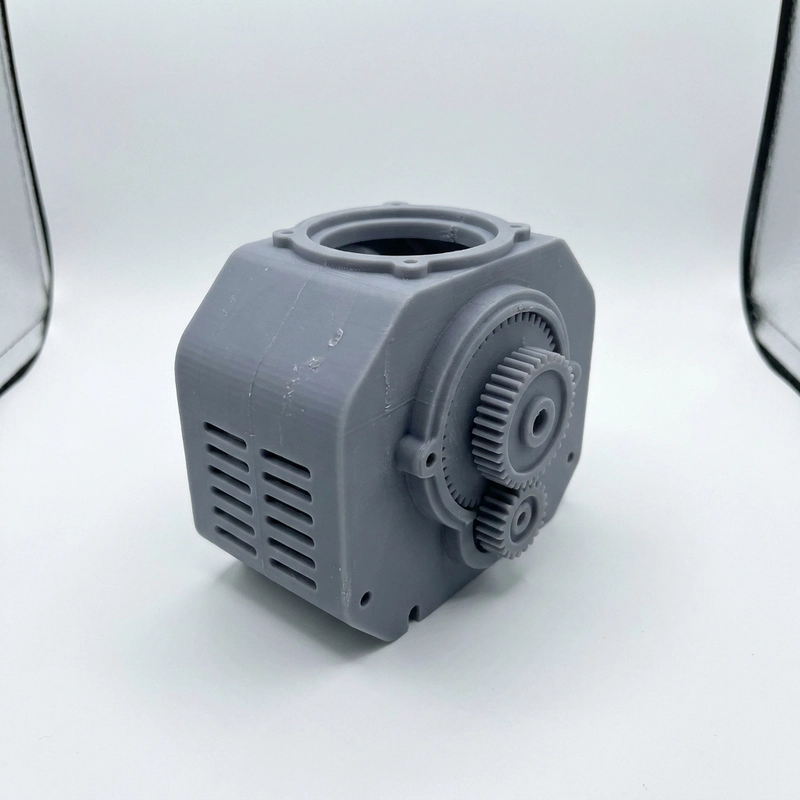
SLA parts often need supports. Removing a support can leave a contact mark, and cleaning that mark takes work—particularly near shallow text, crisp edges, or a broad cosmetic face. Formlabs’ SLA finishing guidance discusses support-mark removal and suggests orienting parts to reduce contact on important surfaces. That is general process guidance, not a promise that every geometry can be printed with a flawless front face.
You do not need to design every support point for the supplier. Mark a priority instead: “Avoid visible support contact on the front continuous surface and logo; supports on accessible internal faces are acceptable after cleanup.” If the shape makes that impossible, ask the supplier to explain the tradeoff before quoting. A different orientation, a split part, or local repair may each change cost and appearance.
Separate no-paint faces from visible painted faces
Primer and paint build a coating. Whether a hole, locating boss, thread, button guide, bonding face, or housing joint may be coated depends on the assembly. Highlight those features in a second color. For each, say whether it must remain unpainted, may be masked locally, or may be coated but must be checked with the mating component afterward. Do not apply one assumed coating allowance to every feature.
A hole that needs to match the enclosure color is not necessarily a hole that can accept paint on its functional surface. If a fit matters, provide the mating part or at least identify the relationship and critical dimensions. The file review can then consider masking, finishing sequence, local rework, or a separate unpainted fit sample. Those choices are project-specific.
A one-page marking sheet for the RFQ
The markup does not have to become a full inspection specification. Add one annotated page to the 3D file:
| Mark on the drawing | What the buyer should say | What it helps review |
|---|---|---|
| Cosmetic faces | Surfaces, edges, and details visible in the approval view | Orientation and finishing scope |
| Acceptable cleanup zones | Internal or hidden areas where support removal is acceptable | Support access and manual work |
| No-paint or fit-sensitive zones | Holes, slots, mating planes, threads, and locating features | Masking and assembly checks |
| Appearance reference | Color sample, gloss, texture, or comparable physical sample | Coating plan and approval basis |
Also include quantity, intended use, whether assembly is required, any critical dimensions, and whether you want to review an unpainted part before the painted one. If the color or resin grade has not been chosen, say so rather than allowing a guess to become the approved specification. For the broader file package, see what to send before asking for a 3D printing quote.
Approve geometry and paint at the right stages
An unpainted print can reveal shape, openings, and obvious support marks early. Primer may expose surface defects that still need repair. The final color coat is the stage for judging actual color, gloss, and visual consistency. Formlabs’ basic SLA finishing steps distinguish washing, drying, curing where required, support removal, and optional sanding, priming, and painting. The exact route depends on the resin and coating system; a primed-part photo should not be described as the final painted result.
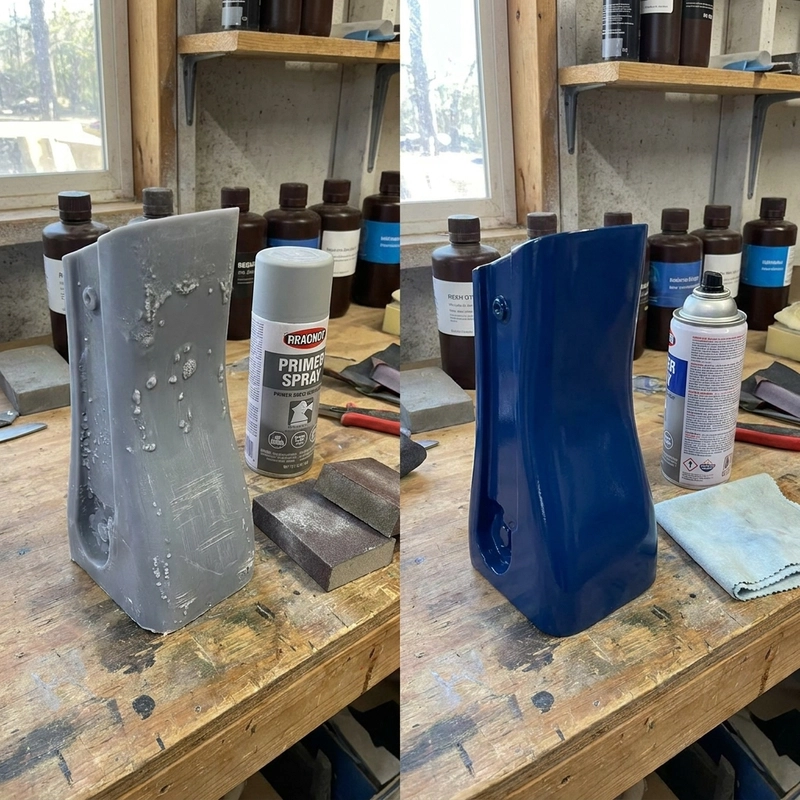
Keep cosmetic approval and assembly approval as separate lines on the sample sign-off. The first concerns the agreed visible faces, color, and surface condition. The second concerns whether the actual parts assemble: does the button move, does the fastener enter, and do the housing halves close? A polished photograph answers only the first question.
Questions buyers often ask
Must I specify a resin grade before requesting a quote?
If an approved grade is required, include its datasheet. Otherwise, explain what the sample must show and ask for a proposed material. “ABS-like” resin is not the same as injection-molded ABS, and the name alone does not establish impact, heat, or repeated-assembly performance.
Can I require zero supports on every A-surface?
You can identify faces where support contact should be avoided. Whether all contact can be kept off them depends on the geometry and build orientation. If it cannot, the supplier should propose a workable compromise before the finish is approved.
Is an STL file enough for an initial RFQ?
It can support an initial review, but an STL does not tell the supplier which face must be glossy or which hole must still fit after paint. Add an annotated screenshot, target color, quantity, and assembly purpose. Put critical dimensions on a separate drawing or state how they will be checked.
For the manufacturing route and file-review scope, see Zesmir’s SLA resin 3D printing service.
For a painted SLA prototype, a marked-up drawing is more useful than “make it smooth.” If you have CAD files, appearance references, or mating-part information, send them through Zesmir’s manual RFQ page. The manufacturing and finishing route can then be reviewed against the actual part rather than assumed from a single tolerance or material name.