
Drawing-Based Manufacturing Review
CNC Machining Service for Precision Prototypes and Low-Volume Parts
Our CNC machining service reviews metal and engineering-plastic parts from the drawing outward. Send a STEP file, 2D drawing or marked screenshot; we will check the material, quantity, critical features, finish and inspection needs before preparing a practical quote.
- Prototype parts
- Housings & panels
- Jigs & fixtures
- Repeat low-volume parts
Practical File Review
A CNC Machining Service Quote Starts With the Real Part
A price based only on overall length, width and height is rarely enough. The number of setups, tool access, deep pockets, thin walls, small cutters, threads, flatness requirements and finishing route all affect how a part can be made.
We therefore separate ordinary dimensions from the features that control assembly or function. A bore that locates a bearing, a sealing face, a threaded interface and an exterior cosmetic surface do not need the same acceptance plan.
If the design is still moving, a marked screenshot is enough for an early discussion. Once dimensions are controlled, send the solid model and drawing together so model geometry, units, tolerances and revision can be checked against each other.
Typical Work
Parts We Can Review for CNC Machining
The categories below describe common project shapes, not a promise that every geometry fits the same machine or process. Tool access, workholding, material and part size are checked from the file.
Prototype Housings and Panels
Metal or plastic enclosures, front panels, covers, heat-sink bodies and structural housings that need controlled interfaces or a finished appearance.
Jigs, Fixtures and Tooling Parts
Assembly aids, nests, inspection fixtures, drill guides and replacement tooling components where location features and practical access matter.
Brackets and Structural Parts
Mounting brackets, adapter plates, links, blocks and equipment components for prototypes or repeat low-volume builds.
Shafts, Bushings and Turned Features
Round components and parts with diameters, shoulders, grooves or threads. Final feasibility depends on material, size and drawing requirements.
Threads, Bores and Mating Faces
Features that control fastening, bearings, seals, alignment or assembly. These should be called out clearly rather than left inside a general tolerance note.
Low-Volume Repeat Parts
Stable parts that need a sample approval, documented revision and repeatable finish before a larger order is released.
Process Planning
CNC Milling, Turning and Multi-Setup Parts
The route is selected from the geometry rather than from a marketing label. Complex parts may need several operations, special workholding or a change to the design before they become economical.
| Route | Good fit | Review points |
|---|---|---|
| CNC milling | Housings, plates, brackets, pockets, slots, drilled and tapped features. | Tool reach, internal radii, setup direction, thin walls, workholding and cosmetic faces. |
| CNC turning | Shafts, bushings, spacers and rotational parts with controlled diameters. | Diameter-to-length ratio, grooves, threads, runout, secondary milling and cutoff condition. |
| Multi-setup machining | Parts with features on several sides or interfaces that must relate to one another. | Datum strategy, accumulated setup error, fixture access and which features are genuinely critical. |
| Prototype to repeat batch | New components that need a first article before repeat production. | Revision control, approved sample, inspection scope, finish standard and packaging between batches. |
About tolerance: a 0.05 mm requirement may be practical on selected features, but it is not a blanket tolerance for every dimension, material and part size. Mark the critical callouts on the drawing so feasibility and inspection can be confirmed before production.
Material and Finish
Specify the Grade, Not Only “Metal” or “Plastic”
Material names affect cutting behavior, strength, appearance, stock availability and finishing. The exact grade should be written into the RFQ and confirmed before material is purchased.
Aluminum Alloys
Often considered for housings, brackets, panels, fixtures and heat-management parts. Alloy, temper, finish and cosmetic expectations still need confirmation.
Steel and Stainless Steel
Useful for structural, wear-resistant or corrosion-related needs. Grade, hardness, heat treatment and surface finish can change the machining route.
Copper and Brass
Possible for electrical, thermal, decorative or precision components when the exact alloy and required surface condition are known.
Machined Plastic Parts
POM, ABS, PC, nylon and other engineering plastics can be reviewed by grade. Moisture, stress, heat and dimensional stability may matter more than the generic polymer name.
Surface Finishing
Anodizing, blasting, polishing, plating, coating and painting are discussed against the material and visible surfaces. Color and texture need an agreed reference.
Inspection Requirements
State which dimensions, threads, fits and cosmetic areas require records. Inspection scope and any requested report are confirmed with the quote.
Manual RFQ Workflow
From Drawing Review to Approved Parts
The first contact stays short. Detailed manufacturing questions are collected after we see enough information to understand the part.
Share the project
Upload a model, drawing, screenshot or reference photo. File upload is optional for the first message.
Review feasibility
We check material, access, critical geometry, quantity, finish and missing drawing information.
Confirm the quote
Open assumptions and inspection requirements are clarified before cost and lead time are committed.
Approve a sample
For a new design, the first part can be checked before the repeat quantity is released.
Finish and deliver
Approved parts move through finishing, final checks, packaging and export delivery as agreed.
Prepare the RFQ
What to Send for a Useful CNC Machining Service Review
You do not need to complete a long engineering form before contacting us. Start with what is available; we will ask for the missing items that actually affect your part.
3D model or screenshot
STEP, STP, IGES, X_T or another usable solid model is preferred. A marked screenshot is enough for an early discussion.
Controlled 2D drawing
Include units, datums, tolerances, threads, fits and critical dimensions when the drawing is available.
Material and use
State the grade when known and explain load, heat, corrosion, wear, electrical or appearance requirements.
Prototype and repeat quantity
Separate the first-sample quantity from the expected repeat order so the production route can be reviewed sensibly.
Finish and visible faces
Mark cosmetic surfaces and provide color or texture references when appearance is important.
Inspection and destination
Identify report needs, mating hardware, packaging concerns and the delivery country once the project moves to quote.
Choose the Right Route
CNC-Only, 3D Printing or a Hybrid Part?
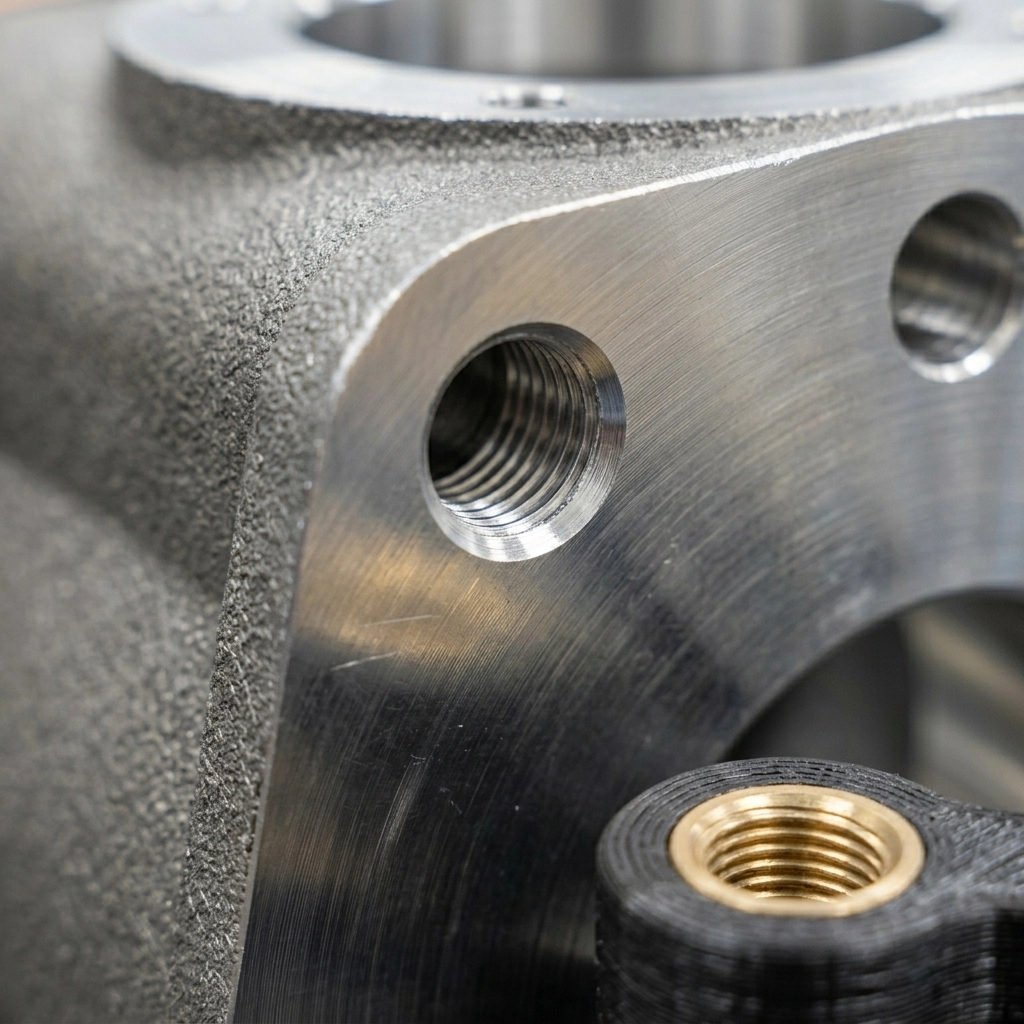
Machining is not automatically the best route for every shape. We compare the geometry and functional requirement before recommending a process.
FAQ
CNC Machining Service Questions
Can you quote from a STEP file without a drawing?
A STEP file can support an early review and some prototype quotes. A 2D drawing is needed when specific tolerances, threads, surface requirements, datums or inspection records control acceptance.
Can you machine one prototype?
Prototype quantities can be reviewed. Setup and programming often represent a larger share of cost on one piece, so expected repeat quantity should also be stated when known.
Can every dimension be held to 0.05 mm?
No universal tolerance should be promised across an entire part. Feasibility depends on material, feature type, size, geometry, setup and inspection. Mark the dimensions that genuinely control fit or function.
Which surface finishes are available?
Finishing is confirmed by material and project. Common discussions include blasting, anodizing, polishing, plating, coating and painting, but the exact specification must be agreed before production.
When should I use CNC machining instead of 3D printing?
CNC is often suitable when stock material properties, machined surfaces and controlled interfaces are central to the part. 3D printing may be more practical for internal channels, organic geometry or designs that are difficult to reach with cutting tools.
Have a CNC Part Ready for Review?
Send a file, drawing or marked screenshot. Name and email are the only required first-contact fields; quantity, material and critical features can be clarified during manual follow-up.