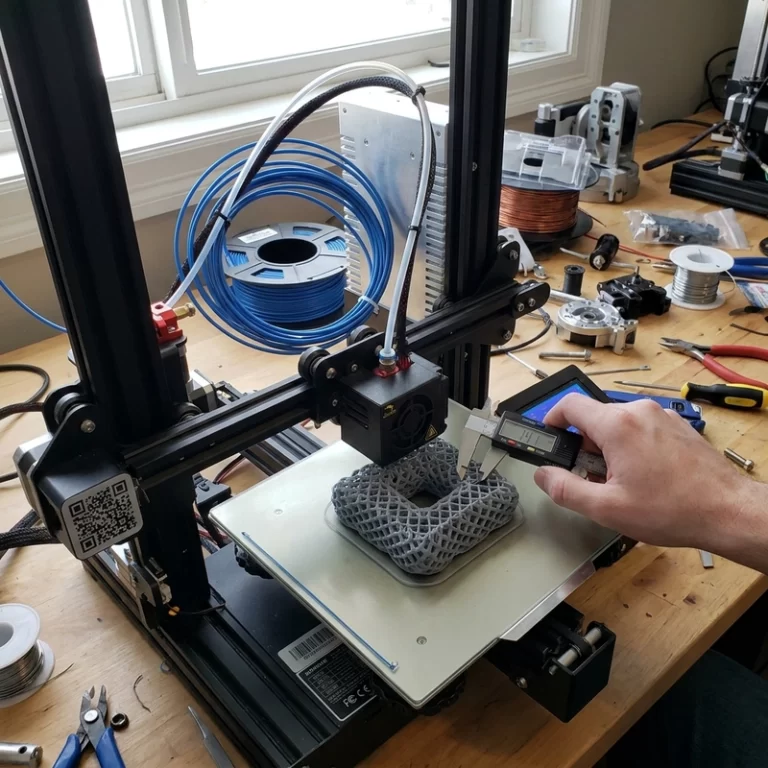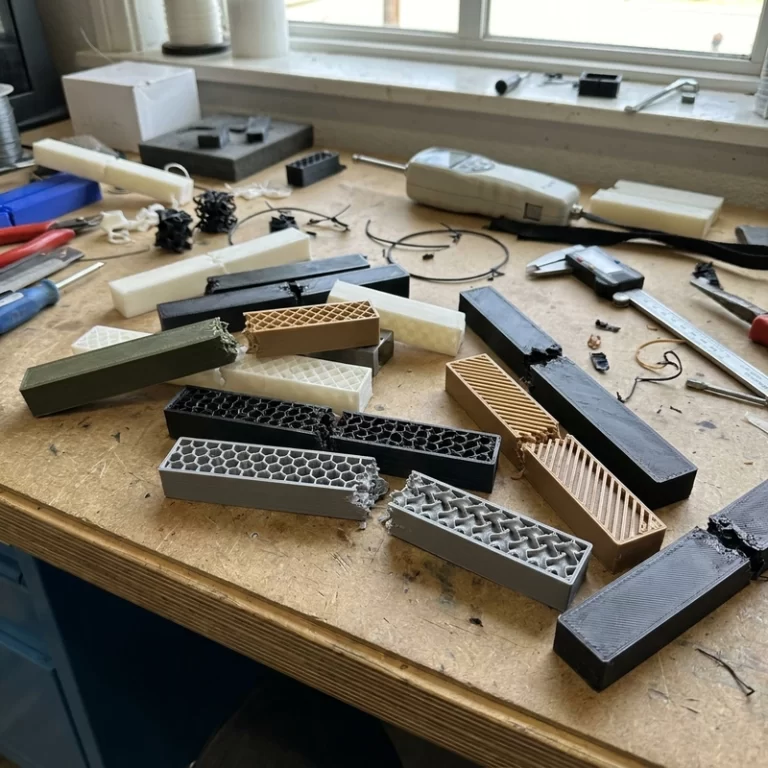
High-speed FDM printing is not a slicer dare. Raising speed asks the hot end to melt more plastic, the extruder to push it evenly, the motion system to turn without ringing, and the cooling system to freeze the bead at the right time. If one part lags, the print may finish faster but fail as a usable part.
I check speed by asking what quality must survive: layer bonding, hole size, corner sharpness, surface finish, or just a fast rough shape. Those do not all tolerate the same settings.
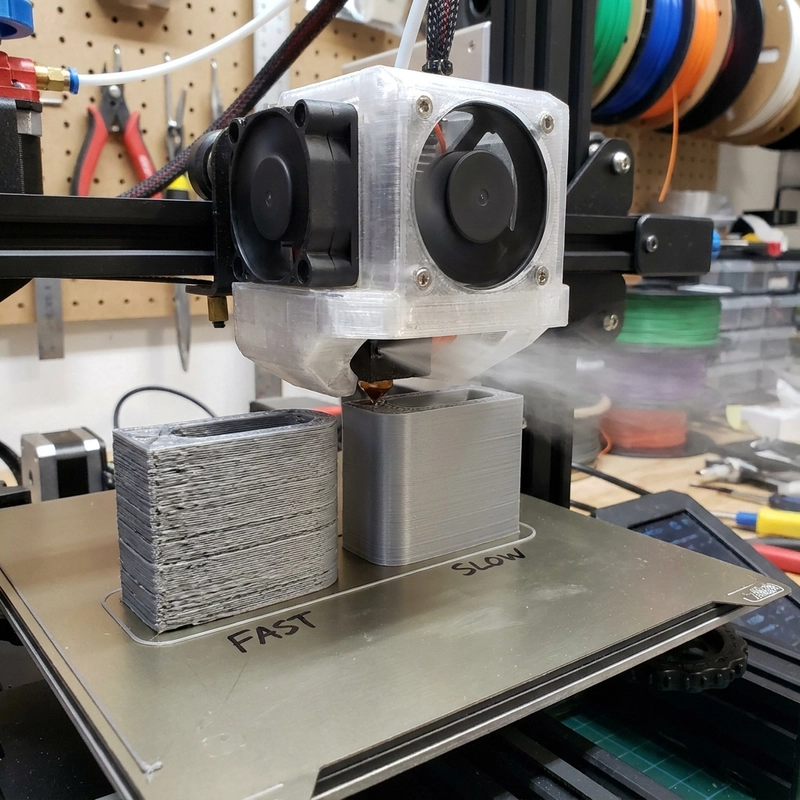
High-speed FDM printing hits the flow limit first
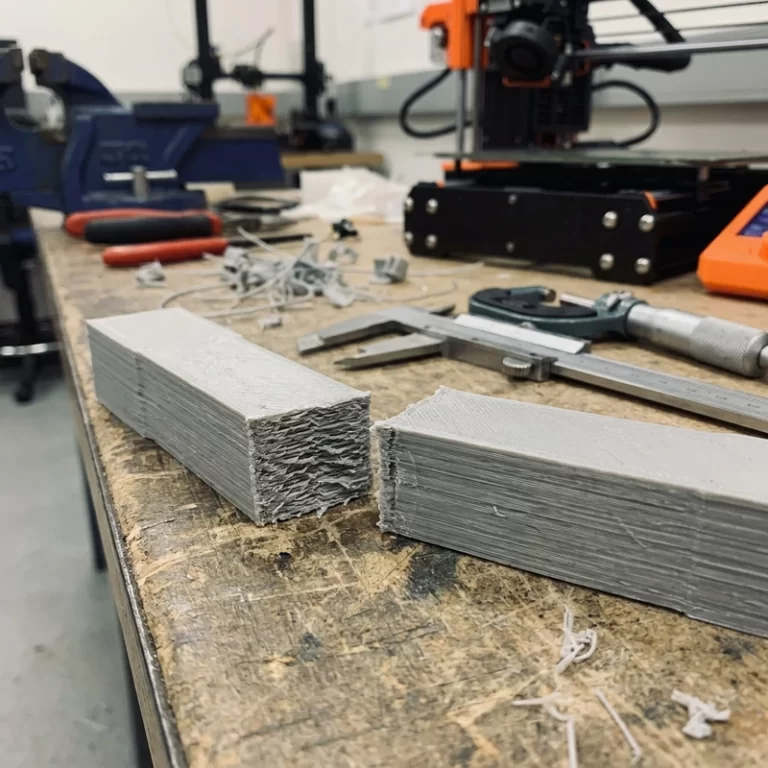
Volumetric flow is the quiet limit. It is roughly line width x layer height x speed. A 0.45 mm line at 0.2 mm layer height and 100 mm/s needs about 9 mm3/s of melted polymer. Double the speed and the melt demand doubles. If the hot end cannot supply that flow, the part under-extrudes and the layers become weak.
Raising nozzle temperature can help flow, but only inside the material window. Too little heat causes poor fusion. Too much heat creates stringing, soft corners, glossy sagging, and sometimes material degradation. I like a flow test before changing a full profile, because under-extrusion in fast infill and under-extrusion everywhere are different problems.
Cooling and motion decide high-speed FDM printing quality
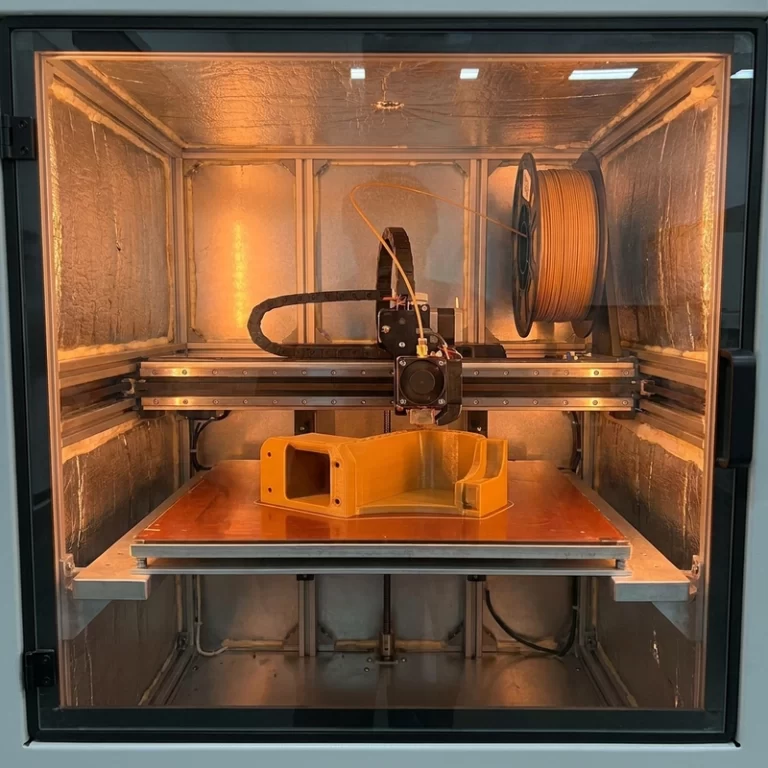
Cooling is not always “more fan.” Small PLA features printed fast may need strong cooling so the next layer does not smear the last one. ABS, ASA, PC, and nylon may need less fan and more chamber stability because aggressive cooling can weaken layer bonding or warp the part. The source mentioned room conditions around 20-25 C and humidity around 40-60 percent as general process-control notes, with extra care for moisture-sensitive materials.
The motion system adds another ceiling. Travel speed is not the same as accurate print speed. Acceleration, frame stiffness, belt tension, input shaping, pressure advance, and toolhead weight all show up as ringing, corner overshoot, or uneven line width. Outer walls, holes, and small bosses should not automatically run at the same speed as infill.
| Symptom | Likely cause | First correction |
|---|---|---|
| Under-extrusion | Hot end cannot melt enough material | Lower speed, check flow, or use larger nozzle |
| Ringing | Acceleration and vibration | Reduce acceleration or tune input shaping |
| Sagging features | Cooling cannot keep up | More cooling or slower small layers |
| Weak layers | Too much cooling or low heat | Balance fan and temperature |
| Stringing | Wet filament, high heat, travel path | Dry material and tune retraction |
Material changes the safe speed ceiling
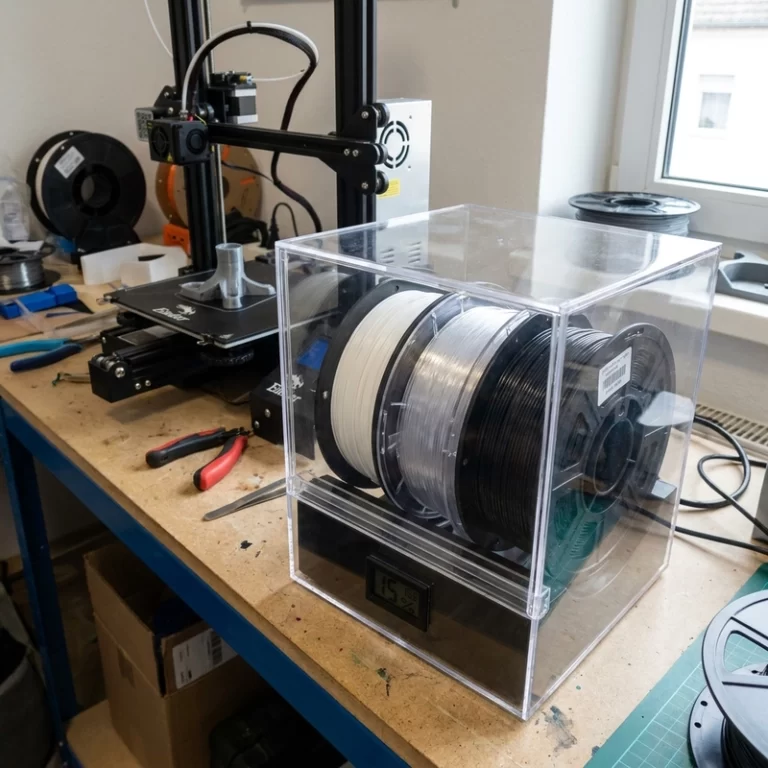
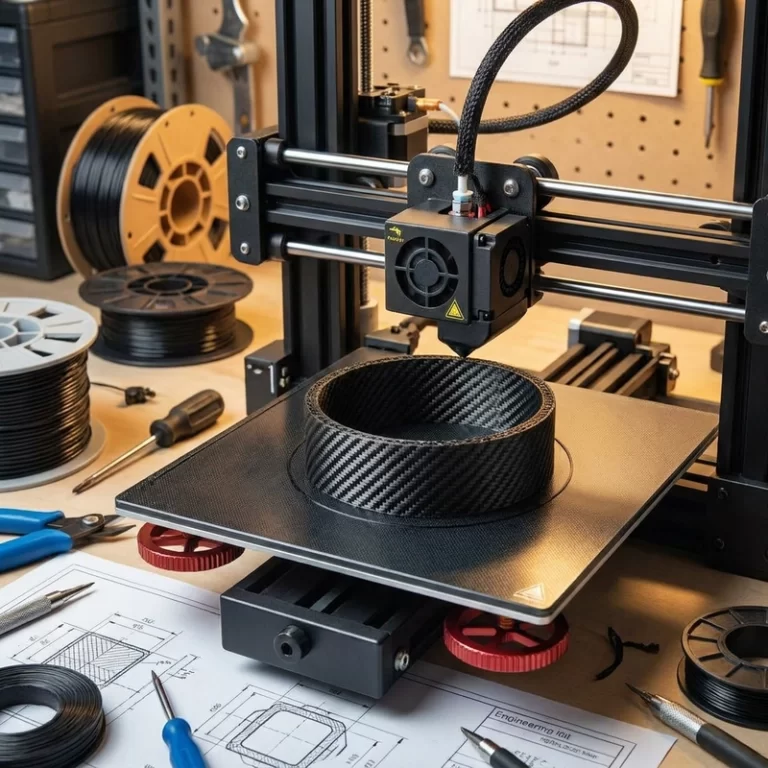
PLA often runs faster because it melts and stiffens conveniently. PETG can string. ABS and ASA need thermal control. Nylon can flow well but absorbs moisture and may become rough or weak when wet. Filled materials can print stiff parts, but they increase nozzle wear and may need slower, steadier extrusion.
Layer height matters too. A 0.15-0.2 mm layer range is often a practical compromise for many fast FDM parts. Thick layers demand high flow. Very thin layers reduce flow demand but add many layers, so total time may not improve. Speed should be tested on the geometry that matters, not only on a simple tower.
High-speed FDM printing notes before a small batch
Record nozzle size, line width, layer height, speed, acceleration, flow limit, fan setting, material batch, and drying condition. Without those notes, a fast print that works once is hard to repeat. For related failure modes, read FDM layer adhesion and filament drying and moisture control.
NIST additive manufacturing resources provide useful background, but the real proof is a part that includes the actual holes, corners, overhangs, and walls. My rule for high-speed FDM printing: raise speed only after flow rate, cooling, acceleration, and material condition are proven together.
For a real batch, I would rather save time on infill and simple travel than punish every outside wall. Many fast profiles work because they use different speeds for outer walls, inner walls, infill, top surfaces, bridges, and small features. A part can be fast without letting the nozzle attack holes and cosmetic faces at the same speed as straight internal lines.
High-speed FDM printing also needs repeatability notes. If the first sample was printed with freshly dried nylon, a clean nozzle, and a warm enclosure, the batch should not be run later with wet material and a worn nozzle. Speed exposes weak process control. It does not create it; it just makes it visible sooner.
I also check the first few layers on fast profiles. A fast upper section means little if the bottom is elephant-footed, poorly bonded, or curled at a corner. Bed temperature, first-layer height, brim choice, and chamber stability are still part of high-speed FDM printing, even when the marketing number focuses on motion speed.
If the first layer is wrong, the fastest profile only makes the wrong part sooner.
I check that before judging speed.