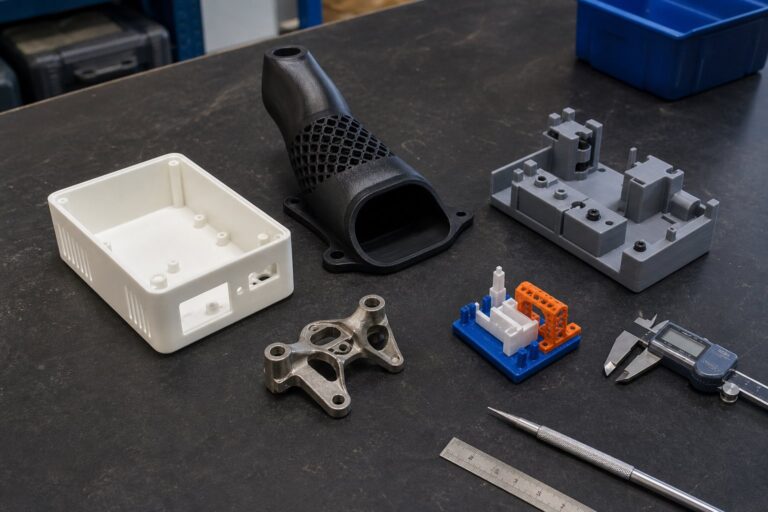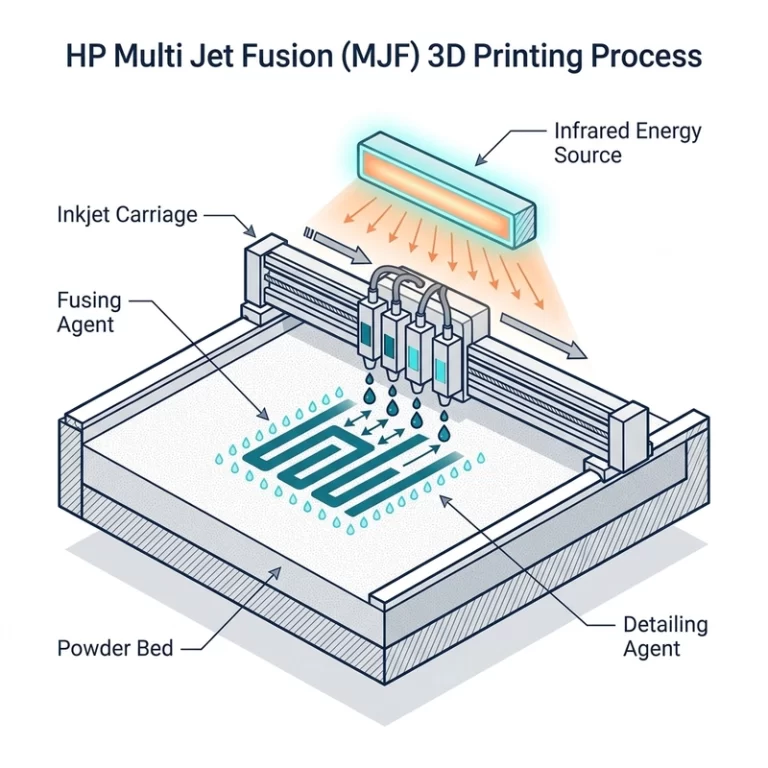
PA12 nylon 3D printing is often chosen for housings, ducts, clips, fixtures and low-volume functional parts. The decision looks simple on a material chart. It becomes less simple after powder history, build orientation, wall geometry, cleaning, dyeing and inspection enter the job.
I treat a PA12 datasheet as the starting point, not as a promise that every printed feature will reproduce the listed specimen values. A printed part is the result of material, process and geometry together.
Why PA12 Nylon 3D Printing Is Used for Functional Parts
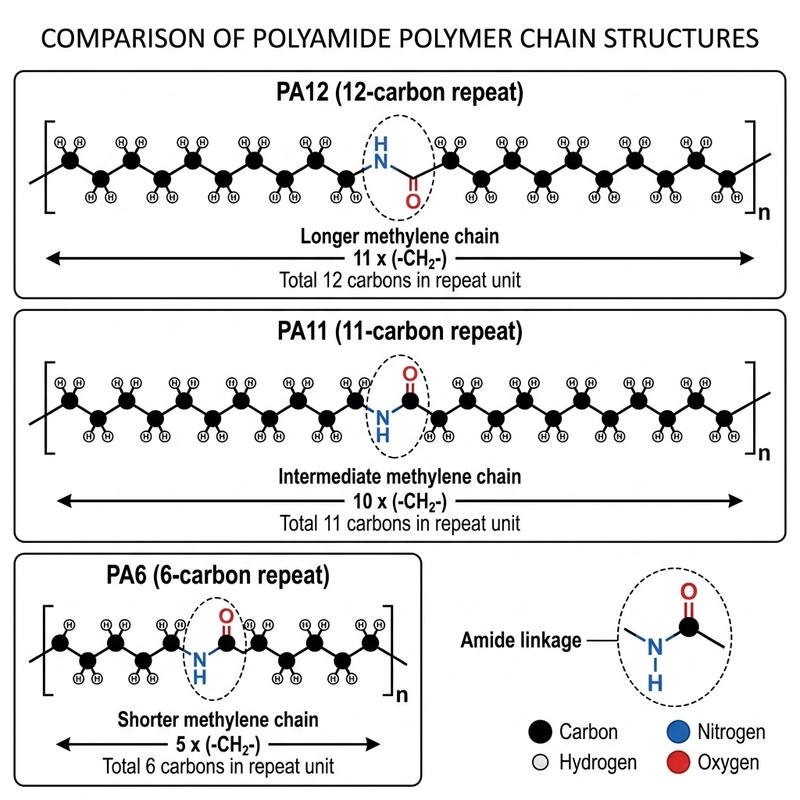
PA12 offers a useful balance of stiffness, toughness, low weight and chemical resistance for many dry industrial environments. Compared with more moisture-sensitive polyamides such as PA6, it generally absorbs less moisture, although it is not moisture-proof. It can produce complex shapes without the support structures associated with many extrusion and resin processes when printed by SLS or MJF.
That makes PA12 practical for cable guides, air ducts, covers, brackets, assembly aids and geometry that would be awkward to machine. It is also useful when a design may change before injection tooling is justified. None of that means every PA12 part is ready for outdoor, medical, food-contact or pressure service. Those uses need their own material grade, process control and qualification evidence.
SLS and MJF Do Not Produce an Identical PA12 Part
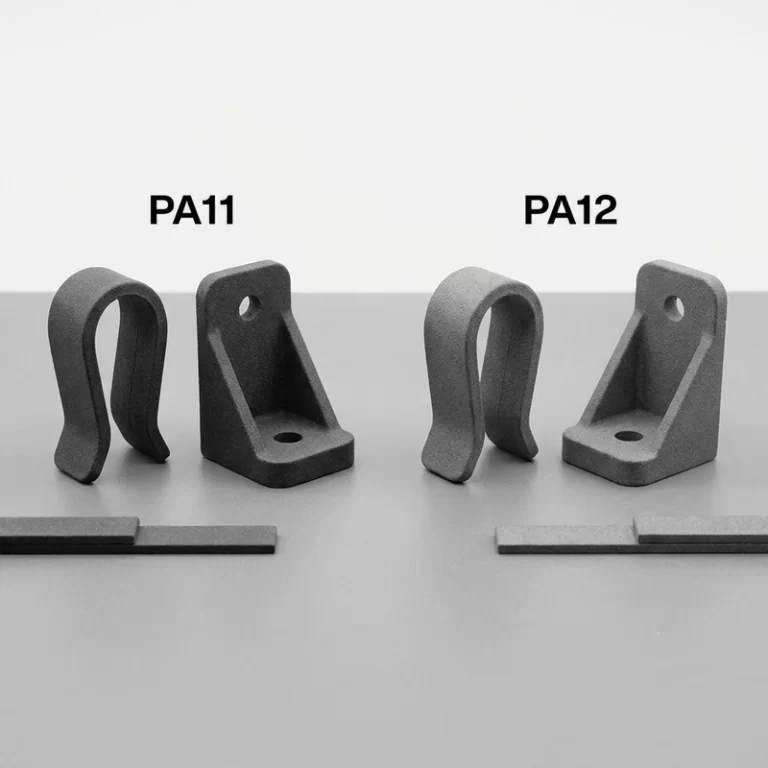
Both processes build parts in a powder bed, but their energy delivery, thermal management and process controls differ. Surface appearance, edge definition, dimensional behaviour and the way a supplier refreshes powder can vary. A buyer should compare finished samples and process capability for the actual geometry instead of assuming that “PA12” is one universal output.
In PA12 nylon 3D printing, process qualification has to connect the named material to the printed and finished part.
For a closer look at one route, the MJF technology guide covers powder removal, fit, surface and batch decisions. The choice between SLS and MJF should follow part size, quantity, finish, functional risk and available supplier data.
Powder History and Thermal Exposure Matter
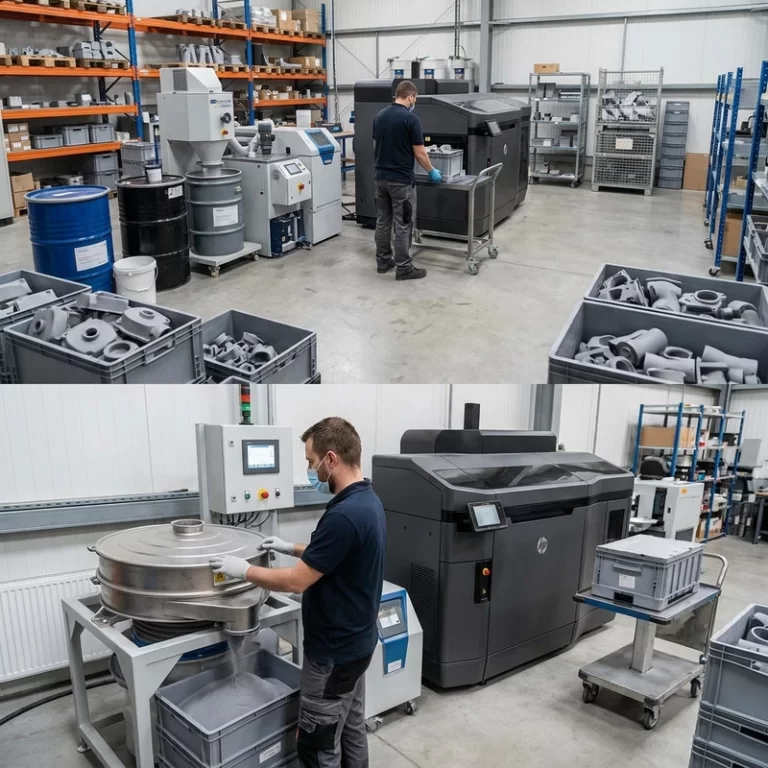
Powder-bed nylon is held at elevated temperature during the build. Unfused powder is not automatically identical to virgin powder after that thermal history. Production systems use controlled refresh strategies, screening and storage practices. The correct ratio and handling rules belong to the material and machine process, so I would not invent a universal reuse percentage for an RFQ.
What the buyer can ask is more practical: Is the job produced under a defined powder-management procedure? Are appearance and mechanical requirements tied to an approved process? Will repeat batches use the same material grade and finish route? Those questions matter more than a vague promise of “new powder.”
Design Limits Come From Geometry and Process Together
Thin walls and broad flat surfaces
A wall that survives slicing may distort during cooling or cleaning. Large flat panels can show bowing, especially when wall distribution is uneven. Ribs, gentle transitions and balanced sections may help, but they can also create local stiffness changes. Review the complete shape rather than applying one minimum wall value to every PA12 design.
Holes, clearances and moving assemblies
Small holes can retain powder or print undersize. Sliding and captive assemblies need enough clearance for process variation and cleaning access. The required gap depends on machine capability, geometry, orientation and post-processing. Mark critical fits in the drawing and confirm them with a sample instead of relying on a generic internet clearance.
Threads and repeated assembly
Large printed threads may be acceptable for light prototype use. Repeated fastening often calls for tapping, inserts or a standard nut-capture design. The choice depends on screw size, access, load and cycle count. If the joint matters, include the mating hardware in the RFQ notes.
Surface Finish Changes Appearance and Sometimes Fit
Raw PA12 normally has a matte, slightly grainy powder-bed surface. Blasting removes loose powder but does not create an injection-moulded finish. Dyeing, tumbling, sealing, coating and painting can improve appearance or handling, while also adding labour and potential dimensional change. Mark cosmetic faces and critical holes before the finish is selected.
Black dye is common because it gives many nylon parts a more uniform appearance, but colour does not hide every build line or handling mark. A customer-facing enclosure needs an agreed visual standard. An internal fixture may not need the same work.
For PA12 nylon 3D printing, finish requirements therefore belong in the quote before nesting and production begin.
How I Specify PA12 Nylon 3D Printing in an RFQ
- Send STEP and STL when dimensional review matters.
- State whether the part is a visual sample, fixture or functional component.
- Mark critical dimensions, holes, mating faces and moving gaps.
- Describe heat, moisture, chemicals, UV, load and repeated-flex conditions.
- Define raw, dyed, sealed, painted or other finish requirements.
- Separate first-sample quantity from expected repeat volume.
- State inspection, assembly, insert and packaging requirements.
The ASTM additive manufacturing resources are useful for shared terminology, but a process standard or material name does not qualify a part by itself. Application-specific testing and the supplier’s current material documentation should decide the final acceptance route.
Use the 3D printing design guidelines to review the model, then compare PA12 with resin, FDM, metal or hybrid routes on the custom 3D printing service page. A good PA12 nylon 3D printing decision is based on the finished part and its acceptance criteria, not only on a polymer name.