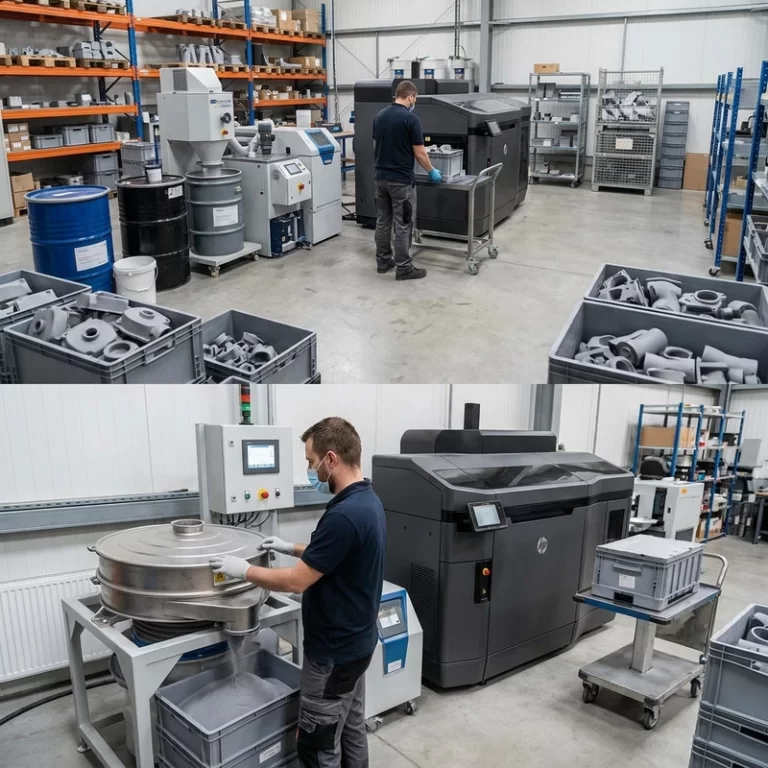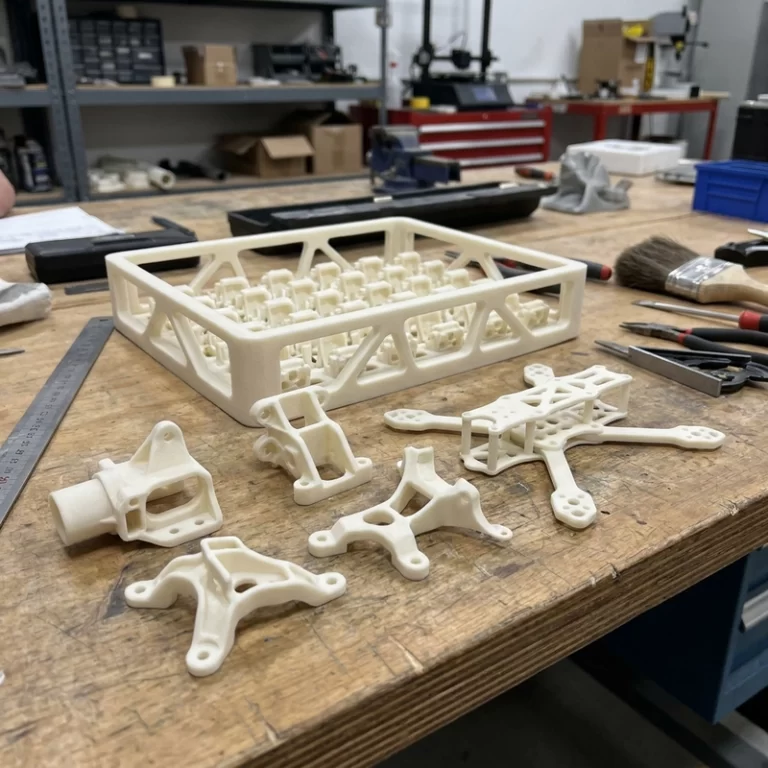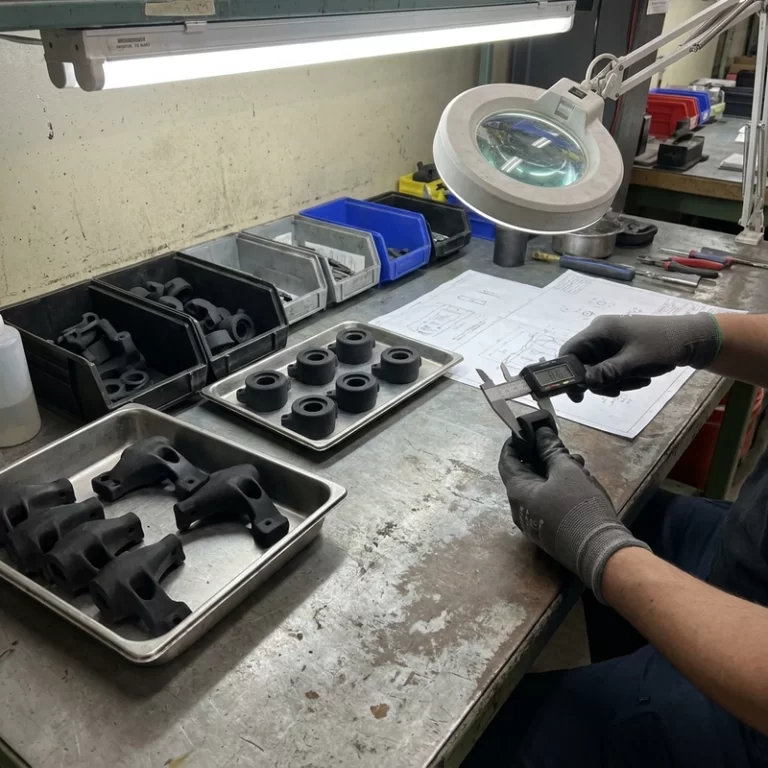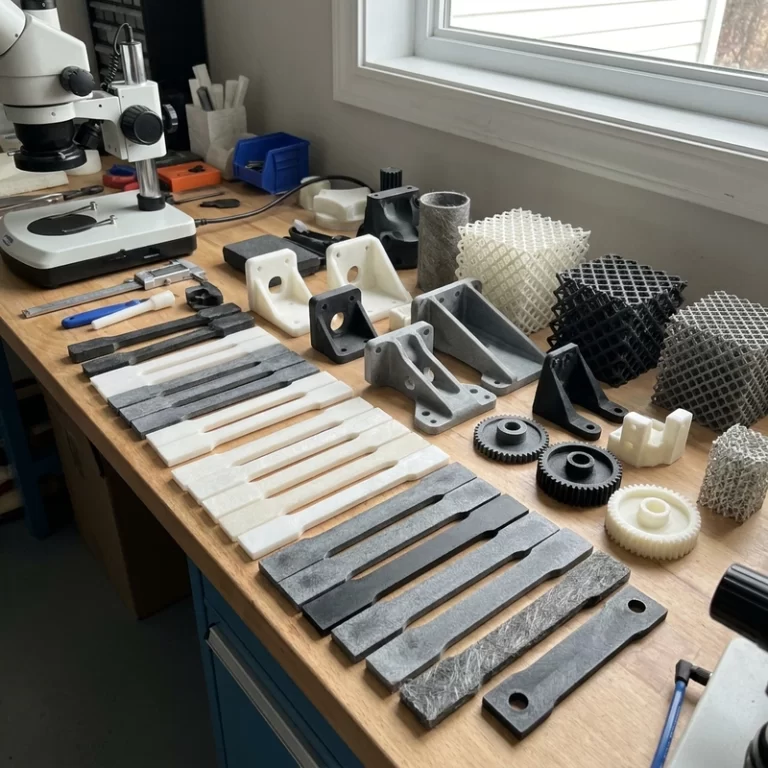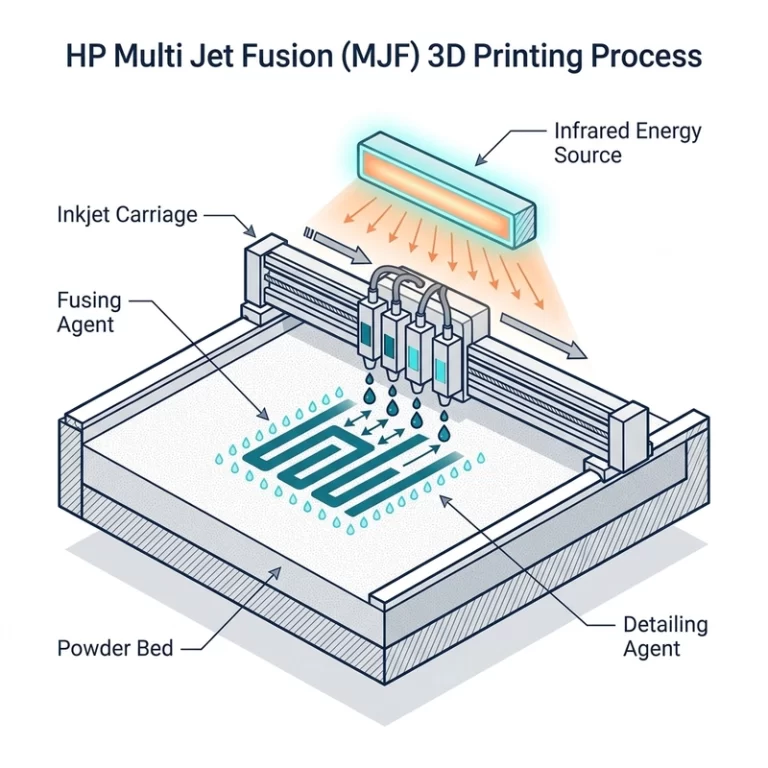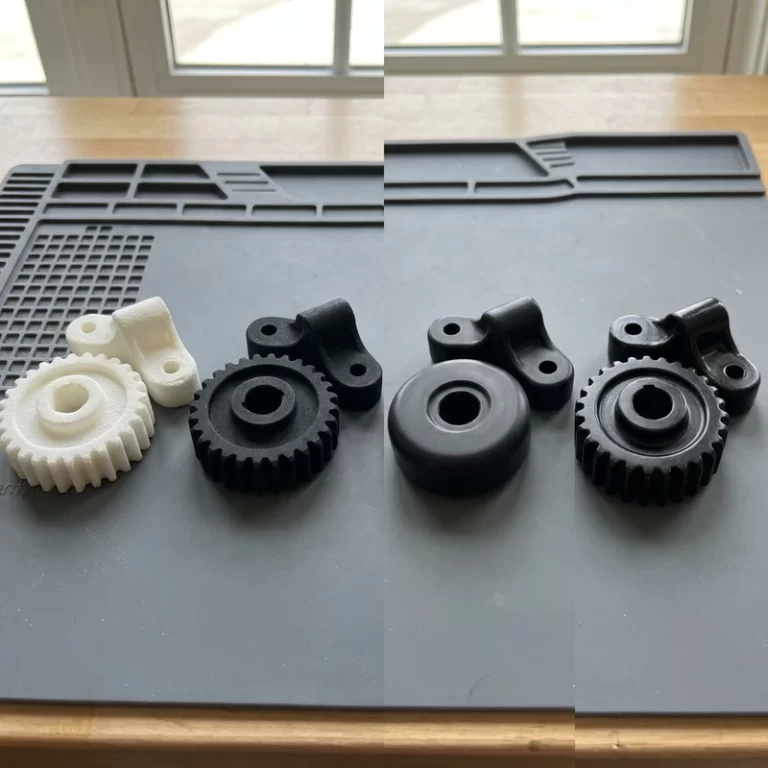
PA12S nylon 3D printing is usually discussed as a smoother PA12 route, but I would not treat it as a magic replacement for molded plastic. It can improve surface appearance in powder-bed nylon work, yet it still follows nylon rules: powder texture, depowdering, shrinkage, wall thickness, dyeing, sealing, and tolerance all matter.
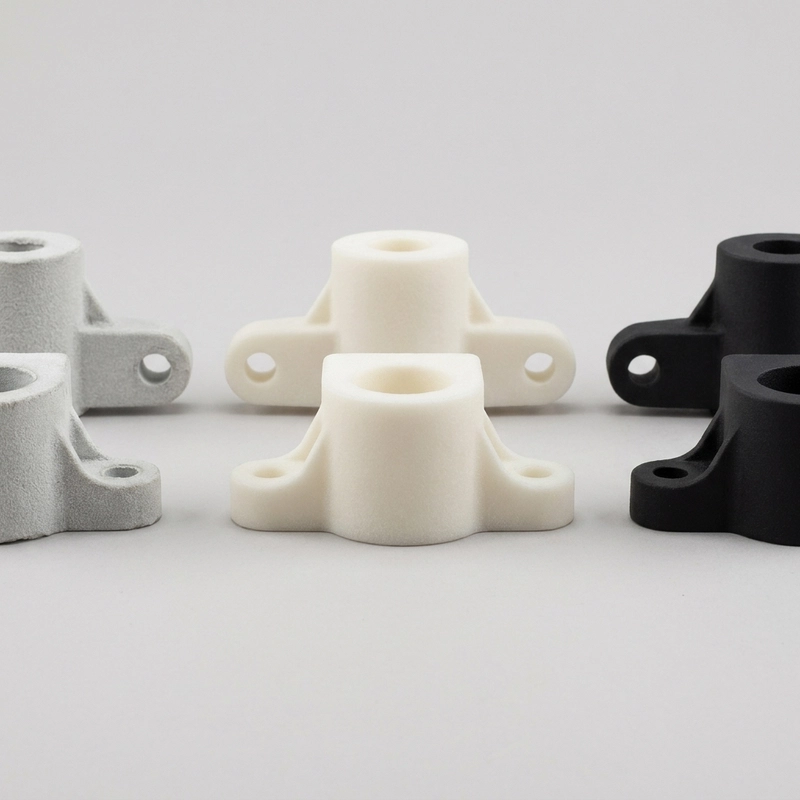
The useful way to think about PA12S nylon 3D printing is this: it may be a better powder-bed choice when the customer cares about appearance, hand feel, and small feature clarity, but still wants nylon-like handling. It is not the answer when the expected surface is glossy injection molded plastic without finishing.
PA12S nylon 3D printing surface quality
The source describes PA12S as an optimized PA12-style material for MJF or similar powder-bed behavior. Example references mention roughness around Ra 6-8 micrometers compared with standard PA12 around Ra 10-12 in one source, and another source claims roughness reduction around 70%. I would treat those as supplier-specific references. They are useful for questions, not universal promises.
Surface quality still depends on part orientation, build location, powder refresh, blasting, tumbling, dyeing, sealing, and inspection. Down-facing surfaces may look different from side walls. Small holes may hold powder. Thin edges may feel sharper or rougher than broad faces. A smoother material does not remove the need to mark cosmetic faces in the RFQ.
I also separate hand feel from measured roughness. A PA12S sample may feel smoother on a broad face, yet a small slot, underside, or lattice edge can still feel powdery. If the buyer will handle the part often, ask for the same finish on a real geometry, not only a flat sample plaque.
For standard powder-bed finishing choices, Zesmir’s SLS nylon surface finishing article gives more detail on dyeing, tumbling, sealing, and coating.
Accuracy and design limits in PA12S nylon 3D printing
The source gives accuracy references around +/-0.3% or a minimum of +/-0.3 mm, with shrinkage around 0.3-0.5% and minimum wall around 1 mm in some workflows. These are sensible starting points for discussion, but the part still needs design review. A 1 mm wall may print, but it may not survive handling, dyeing, tumbling, or assembly if the geometry is long and unsupported.
Holes, clips, and mating surfaces should be designed with powder removal and finishing in mind. A printed hinge or snap feature can work, but the clearance must account for powder-bed texture and post-processing. If the part has critical datums, leave machining allowance or define which surfaces must be checked. PA12S can improve the raw surface, not remove tolerance planning.
Small embossed text and thin decorative ribs need special care. PA12S may show them more cleanly than a rougher nylon powder, but blasting and dyeing can soften edges. If the part needs a serial number, logo, or alignment arrow, make it large enough to survive the full process, not just the CAD preview.
The design rules connect directly to the SLS nylon 3D printing guide and to SLS nylon dimensional accuracy. I would review those before approving a small functional assembly in PA12S.
PA12S nylon 3D printing for appearance parts
Raw PA12S parts may be light gray, off-white, or process-dependent in color. Black dye is common when the buyer wants a more uniform appearance and less visible powder variation. Colored or painted finishes need separate approval because surface texture changes how color looks. If a buyer expects brand color, a color chip and sample approval should be used.
Appearance parts also need packing control. A smoother surface can still scuff if parts rub together during shipping. For gift samples, consumer prototypes, or display models, I would specify individual wrapping or tray separation. Surface quality is not finished when the part leaves the machine.
PA12S also has a cost question. If the part is a hidden fixture, standard PA12 may be the smarter choice. If the part is handled by customers, used in a presentation, or shipped as a finished sample, the improved surface may justify the extra control. The decision should come from use, not from chasing the newest material name.
I also ask whether the customer really wants PA12S or simply wants a nicer PA12 part. Sometimes standard PA12 with better tumbling, dyeing, or sealing is enough. Sometimes the base surface must improve before finishing can do its job. Comparing one standard PA12 sample and one PA12S sample with the same finish is the cleanest way to decide.
For additive manufacturing terminology, ISO/ASTM 52900 is a useful neutral reference. It helps separate material claims from process categories when comparing PA12S, standard PA12, MJF, and SLS.
When PA12S is worth considering
- Powder-bed nylon parts where surface appearance matters more than with a shop fixture.
- Consumer product prototypes that need better hand feel than standard PA12.
- Small batches where dyeing or sealing will be used after printing.
- Models that need nylon toughness but cannot look too grainy.
PA12S nylon 3D printing is a useful option when smoother powder-bed nylon is the goal. It should still be quoted with wall thickness, tolerance, finish, color, and handling requirements. Without those details, the word “smooth” becomes too easy to misunderstand.
For RFQ files, include the visible faces, acceptable texture, target color, small lettering, packing needs, and whether the part is appearance-only or lightly functional. PA12S nylon 3D printing works best when “better surface” is tied to a real acceptance sample.