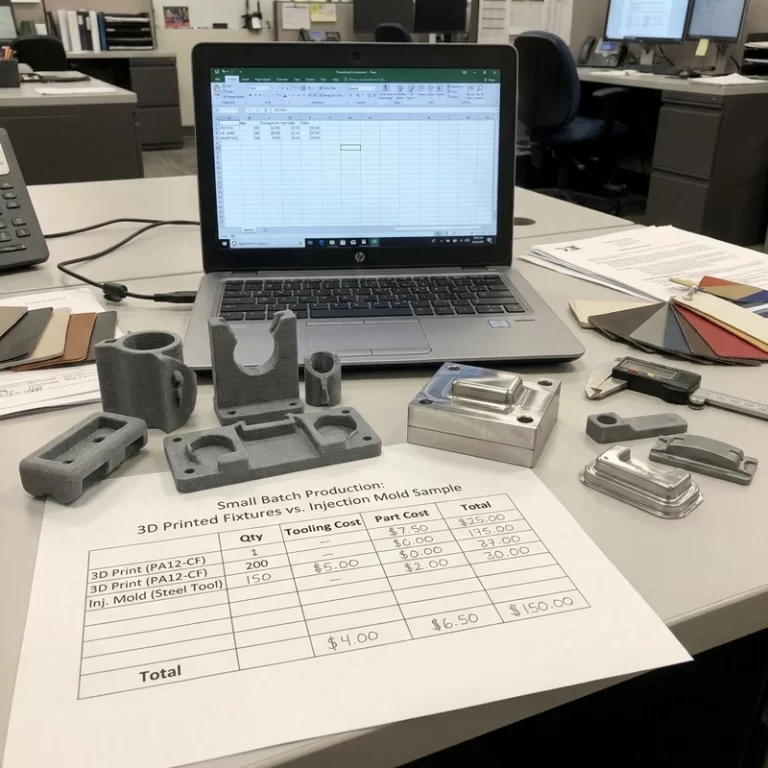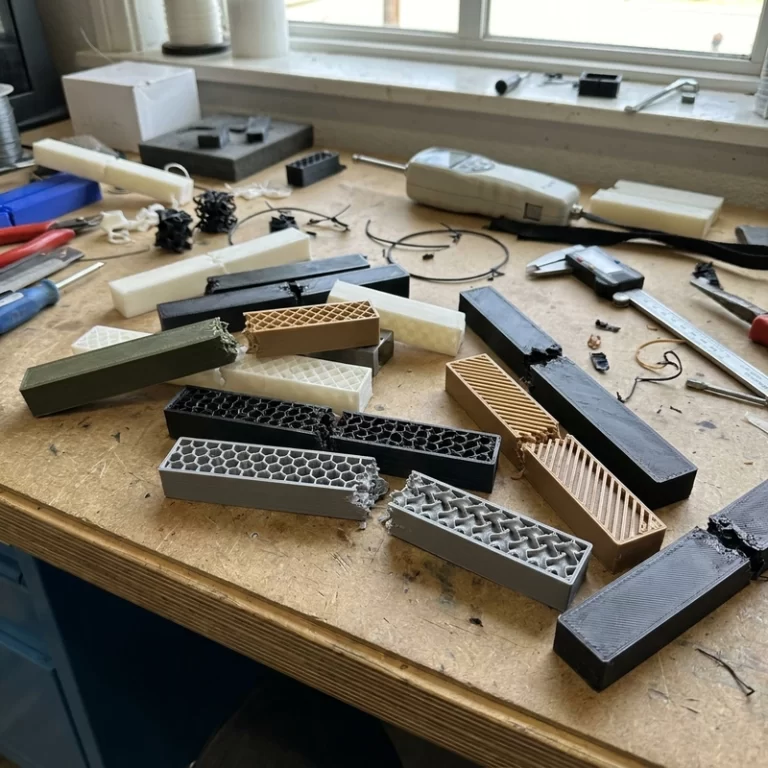
Engineering plastic 3D printing material selection should start with the job the part must survive, not with a material name that sounds strong. I see many RFQs ask for “ABS or nylon” with no temperature, load, chemical exposure, assembly method, or surface requirement. That is too thin. Engineering plastic 3D printing material selection needs the use condition first, then the process and grade.
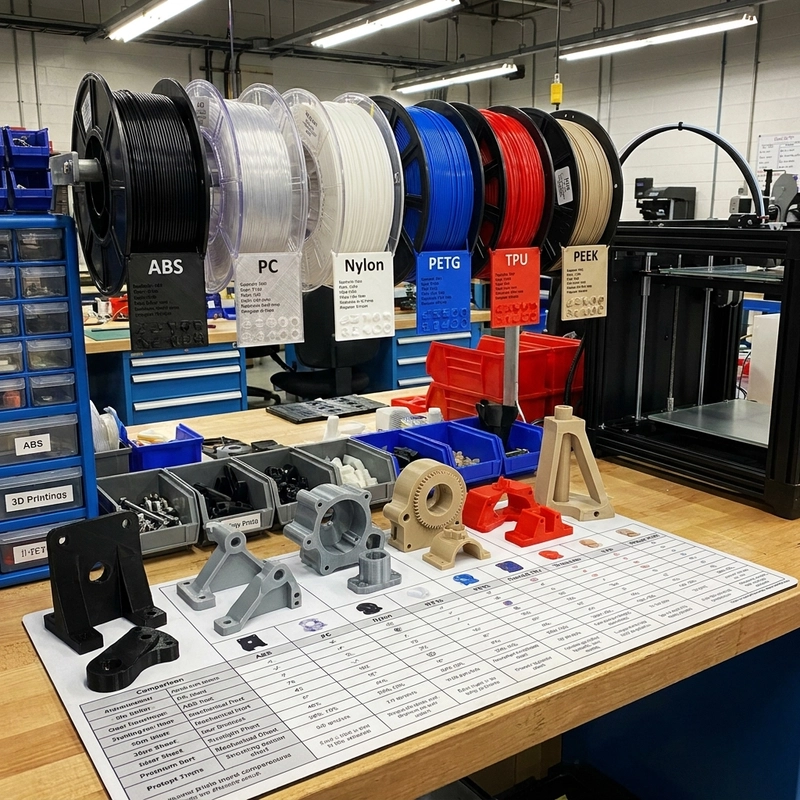
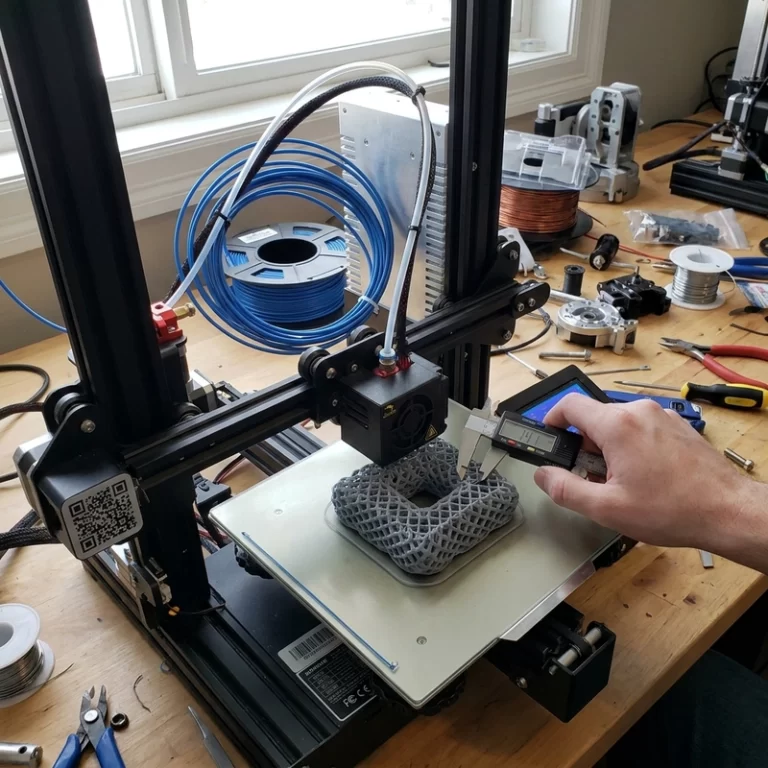
The same plastic family can behave differently in FDM, SLS, MJF, or high-temperature extrusion. Moisture, orientation, infill, annealing, chamber temperature, and post-processing all move the final result. A datasheet is a starting point. A printed part is still a printed structure with layer direction, surface roughness, and process history.
Engineering plastic 3D printing material selection by failure mode
I like asking what failure would be unacceptable. If the part softens near a motor, heat resistance matters. If screw bosses crack, impact and notch behavior matter. If clips must flex, elongation and fatigue matter. If the part sits near oil, coolant, alcohol, or cleaning fluid, chemical resistance matters. If it is only a shape model for a meeting, a cheaper material may be enough.
ABS is often chosen for housings and appearance prototypes because it sands and paints well and has decent heat resistance. Source references put tensile strength often around 45-50 MPa and heat deflection around 90-100 C for common grades. FDM ABS may print around 220-230 C nozzle temperature with a 90-100 C bed on suitable machines, but warping is a real risk without enclosure control.
PC is used when heat resistance and toughness are more important. Source references put PC tensile strength around 65-70 MPa and heat deflection around 130-140 C for some grades. It is harder to print cleanly than PLA or ABS and may require nozzle temperatures around 240-250 C and bed temperatures around 110-120 C, depending on grade. If the printer cannot hold a stable thermal environment, asking for PC may create more risk than value.
Nylon, PETG, TPU, and high-temperature plastics
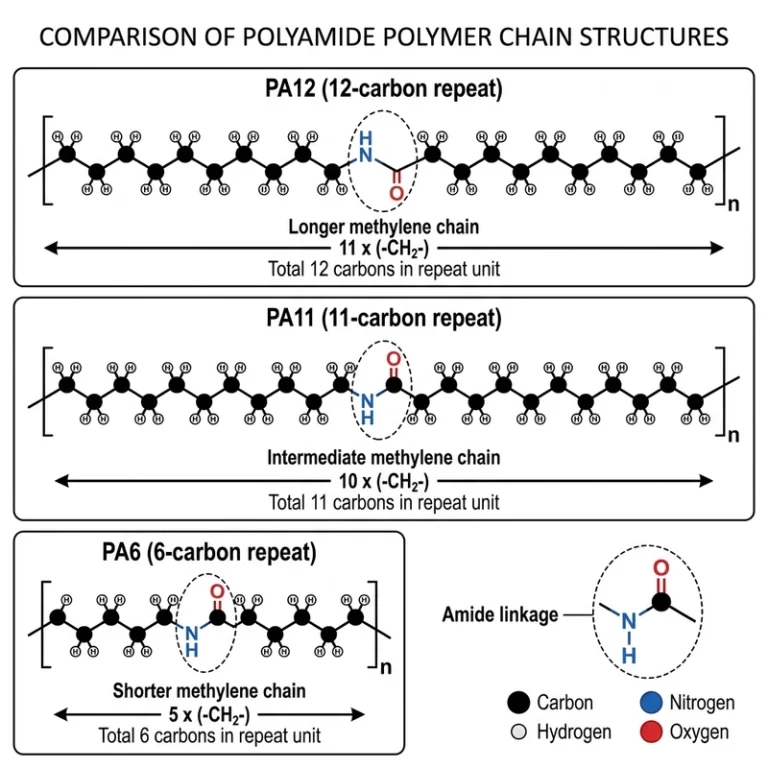
Nylon is a good answer for many functional parts, especially fixtures, brackets, snap features, and wear-prone components. It is not a carefree answer. Nylon absorbs moisture. Wet nylon can print with bubbles, rough surface, weak layers, and inconsistent dimensions. If nylon is selected, drying and storage should be part of the quote. The Zesmir article on nylon 3D printing moisture control goes deeper into that problem.
PETG is often a practical middle ground for functional prototypes that need toughness and easier printing than ABS or PC. It can be stringy and less crisp on small details, but it handles many jigs, covers, brackets, and shop-use parts well. TPU is selected for soft grips, bumpers, seals, protective parts, and flexible zones. The source notes common TPU hardness around Shore A 85-95A. That range still feels very different depending on wall thickness and infill.
PEEK, PEI, and other high-temperature plastics are not just expensive versions of PC. They need high nozzle temperature, hot chamber control, drying, and careful design. They make sense only when the use condition justifies the process difficulty. For many prototypes, a lower-cost engineering plastic plus design validation is the better first step.
Engineering plastic 3D printing material selection and process choice
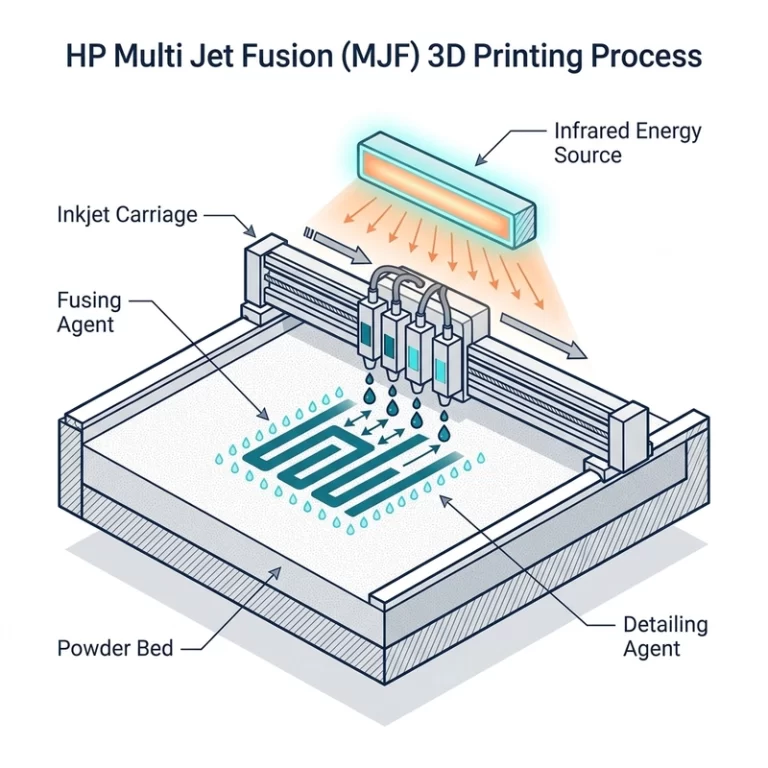
Material selection cannot be separated from process selection. FDM can be economical for large parts, fixtures, and housings, but layer anisotropy and visible lines matter. SLS and MJF nylon can produce stronger, more uniform small batches with no support scars, but the surface is powdery and tolerances need powder-bed rules. SLA gives appearance and detail, but most standard resins are not engineering plastics in the same sense as PC or nylon.
In practical RFQ work, I also check whether the part will be post-processed. Sanding and painting push the choice toward ABS or resin in some appearance projects. Heat-set inserts, tapping, and repeated screw assembly push the choice toward nylon, PC, or a reinforced grade. Outdoor use raises UV and water questions. None of those details are glamorous, but they decide whether engineering plastic 3D printing material selection holds up after the sample leaves the printer.
Batch consistency belongs in the same discussion. A one-off prototype can tolerate more hand correction than a repeat batch of fixtures or housings, so the selected plastic should match the expected production rhythm.
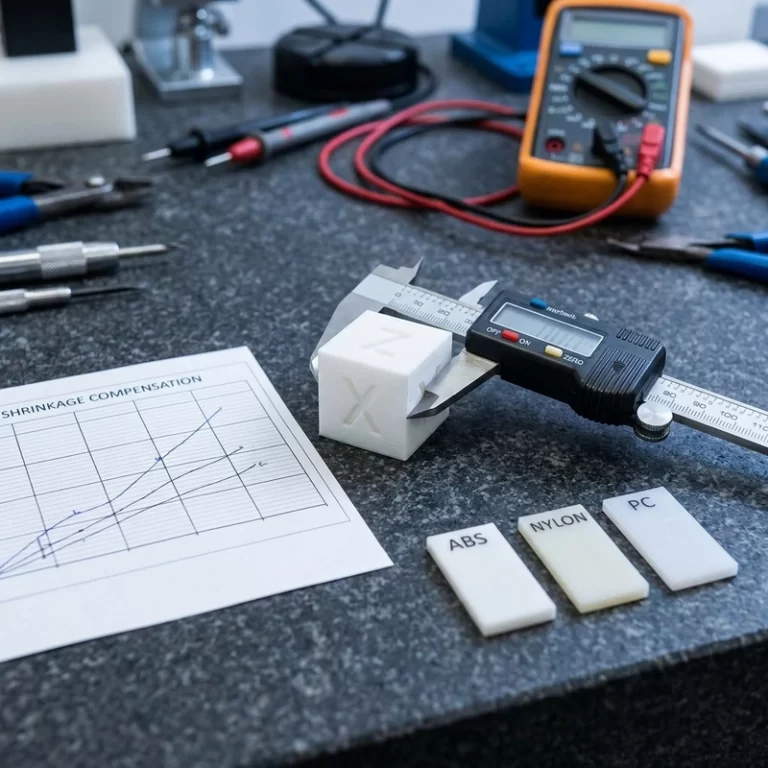
Accuracy also changes the decision. If a part has tight holes, mating faces, and assembly datums, read the related Zesmir article on engineering plastic 3D printing dimensional accuracy before choosing the material. A strong material printed with poor compensation can still fail the assembly.
For general additive manufacturing terminology, ISO/ASTM 52900 is a useful reference point. It helps keep process names clear when comparing extrusion, vat photopolymerization, and powder-bed fusion routes.
A short material decision table
| Need | Common starting option | Check before ordering |
|---|---|---|
| Painted enclosure prototype | ABS or resin, depending on detail | Warping, sanding, primer, cosmetic faces |
| Functional fixture | Nylon, PETG, PC, or filled nylon | Load direction, heat, thread inserts, wear |
| Heat near motor or lamp | PC, high-temp nylon, PEI/PEEK when justified | Real temperature and chamber capability |
| Flexible bumper or soft grip | TPU | Shore hardness, wall thickness, support removal |
| Low-cost large prototype | PETG, ABS, or PLA for non-heat use | Size, distortion, finish, assembly |
My RFQ note for engineering plastic 3D printing material selection is simple: list the use temperature, load direction, chemical exposure, surface finish, quantity, and which dimensions must fit. Without those details, the material choice becomes a guess. With them, the cheapest acceptable material is often easier to find than the strongest-sounding one.