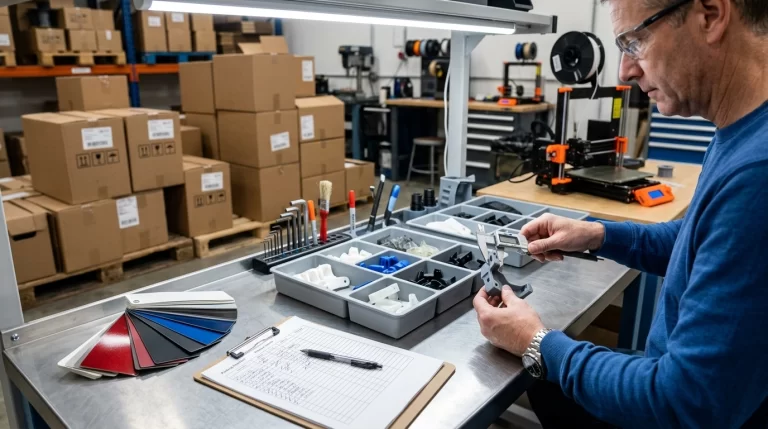
3D printed corporate gifts can look sharp when the design is planned around the brand, the surface finish and the packaging. They can also look improvised if the logo is too thin, the base is unstable, the paint scratches easily or the gift box does not protect the part.
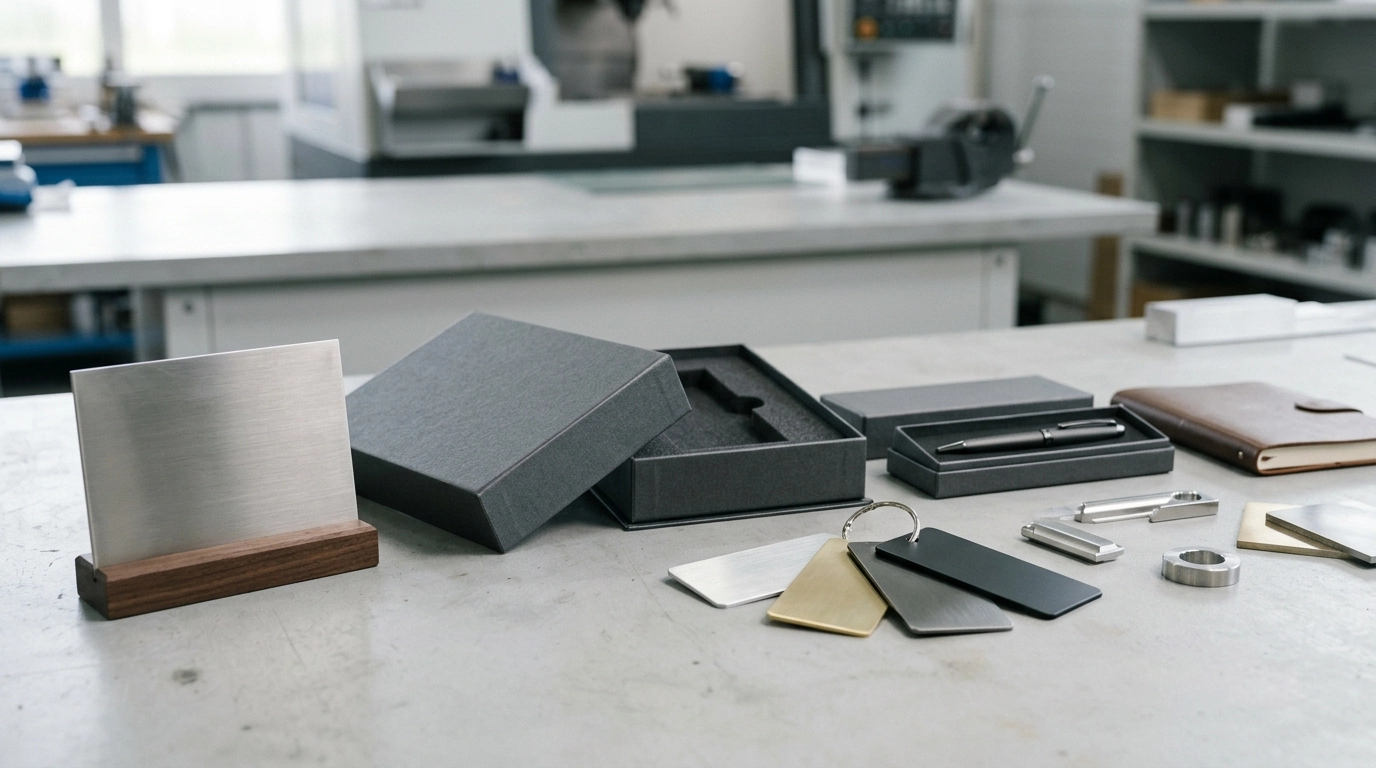
Corporate gift buyers usually care about presentation first. That is fair. But presentation comes from production choices: material, layer visibility, sanding, paint, logo method, base weight, color reference and box fit.
3D Printed Corporate Gifts Need a Strong Base Design
A base can carry the logo, make the gift stand upright, protect fragile features and create a better unboxing moment. Thin text on a vertical face may be hard to print or paint cleanly. Engraved, raised or printed logos each need different treatment. If the gift is an award, the nameplate area should be planned early.
For surface planning, 3D printing surface roughness helps explain why raw process texture matters. For finishing options, engineering plastic 3D printing finishing is useful even when the final gift is not an engineering part.
Finish and Color Should Match the Brand
Matte black, metallic paint, glossy clear coat, soft-touch coating and full-color printing all send a different message. Metallic finishes can look premium but may show dust or handling marks. Gloss can reveal sanding defects. Matte finishes can hide some surface marks but may scuff. A color proof is safer than approving from screen color.
For paint risk, use resin print paint adhesion as a production reference. Primer and surface prep matter more than most buyers see in a photo.
3D Printed Corporate Gifts Need Packaging Approval
A corporate gift is judged twice: when it is opened and when it is handled later. The box, insert, label and surface protection should be approved with the sample. If the gift has sharp corners, metallic coating or raised logos, rubbing during shipment can be obvious.
Carrier resources such as DHL packing advice are useful background, but the insert needs to match the actual geometry. 3D printed corporate gifts work best when branding, finish and packaging are treated as one product, not three separate decisions.
Quantity and Deadline Change the Route
A small executive gift run may justify more sanding and hand finishing. A few hundred event gifts may need a simpler finish that can repeat quickly. If the event date is fixed, the buyer should approve the sample early and avoid late logo or color changes. Additive manufacturing can move quickly, but paint drying, packing and export shipping still take time.
The RFQ should include event date, quantity, logo file, target size, finish style, packaging requirement and whether a sample must be approved. That gives the supplier a real production target instead of a decorative idea.
3D printed corporate gifts can be quiet, premium and specific to the brand when the product is designed around the final use. A gift that only looks good in a render is not finished. It needs to stand, survive handling, match the brand and arrive cleanly packed.
For awards, the buyer should decide whether each piece needs personalization. Names, dates and department text can be 3D printed, engraved, labeled or added as a separate plate. Each option affects lead time and finish. A separate nameplate is sometimes cleaner than printing every name into the model.
Corporate buyers should also approve the product under real lighting. Metallic paint, gloss and dark matte surfaces can look different in studio photos and office light. A physical sample prevents a lot of disappointment. 3D printed corporate gifts work best when the buyer approves the object the recipient will actually hold.
Weight and hand feel matter more than many buyers expect. A gift that feels too light can seem cheap, while a heavy part may raise shipping cost and break packaging assumptions. The right answer depends on the product: a desk award, a small mascot, a launch souvenir and a display model all need different physical presence.
For brand color, do not rely on a logo file alone. Printed, painted and coated surfaces reflect light differently from a screen. Send a Pantone reference, previous product, packaging sample or approved brand guide when color is important. 3D printed corporate gifts should fit the brand system, not just carry the logo.
If the gift is handed out at an event, plan the carton and unpacking workflow too. A beautiful object packed in a way that takes five minutes per unit to open can slow the whole event team. Production quality includes the quiet details that happen before the recipient sees the gift.
Brand approval should include the boring files: vector logo, color reference, text spelling, recipient list if personalized, and packaging artwork. A low-resolution logo pulled from a website can make the final gift look cheap even when the printed model is clean. The input file quality shows up in the finished object.
For reorder programs, keep the gift modular when possible. A shared base with changeable nameplate, city mark or yearly badge can reduce redesign work. 3D printed corporate gifts are especially useful when the brand needs controlled variation without making a mold for every campaign.