Large-format 3D printing distortion is a scale problem before it is a slicer problem. A small model may shrink a little and still pass. A 500 mm panel can turn the same percentage into several millimeters of bow, lift, twist, or assembly error. I do not trust a large print just because the small version worked.
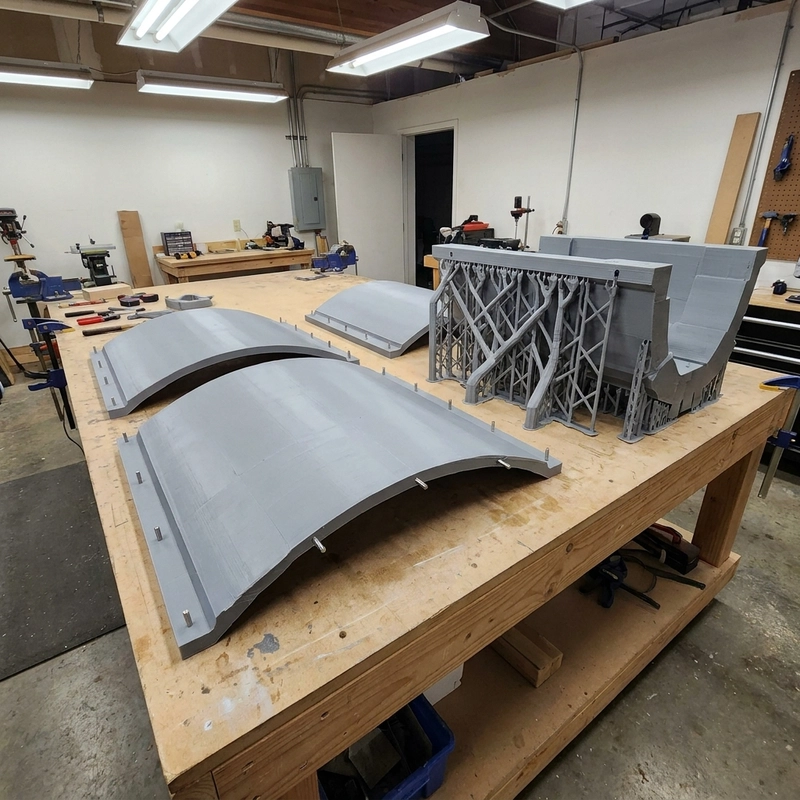
Large parts hold more heat, cool more unevenly, carry more weight during printing, and expose more surface area to drafts. FDM parts can curl from the bed. Resin parts can sag, crack, or warp during washing and curing. Large-format 3D printing distortion is managed by design, segmentation, support, thermal control, and assembly planning together.
Large-format 3D printing distortion from shrinkage and heat
The source gives ABS shrinkage around 0.8% as an example. On a 500 mm length, that can become about 4 mm of movement if the print is not controlled. The number is not a universal ABS rule, but the scale effect is real. Small percentage errors become visible on large parts.
Heat control is not only bed temperature. Drafts, open doors, air conditioning, direct sunlight, and quick cooling can all create uneven contraction. Source guidance mentions common PLA bed temperatures around 60-65 C and ABS around 100-110 C on suitable machines, plus slower print speeds around 40-50 mm/s for some large segmented FDM work. The machine and material datasheet still decide the real settings.
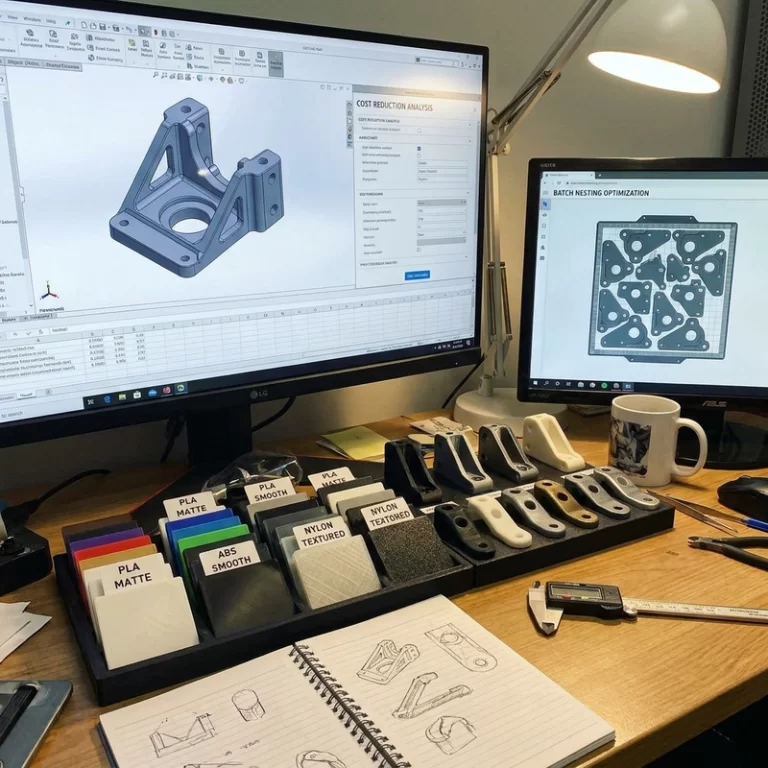
Material choice changes the battle. PLA is easier for large display models but weak around heat. PETG is tougher but can flex and string. ABS gives better heat resistance but asks for enclosure control. Resin gives fine detail but large parts can sag or crack during washing and curing. Large-format 3D printing distortion is often reduced by choosing the least risky material, not the strongest-sounding one.
For general support logic, the Zesmir article on 3D printing support design is a useful companion. For accuracy causes, see 3D printing accuracy parameters.
Segmentation for large-format 3D printing distortion control
Segmentation is often the cleanest fix. The source suggests keeping some FDM segments under about 30 cm on the longest side and large resin segments closer to 20 cm when distortion risk is high. I treat those as starting points. The real split depends on geometry, material, machine size, surface requirement, and assembly method.
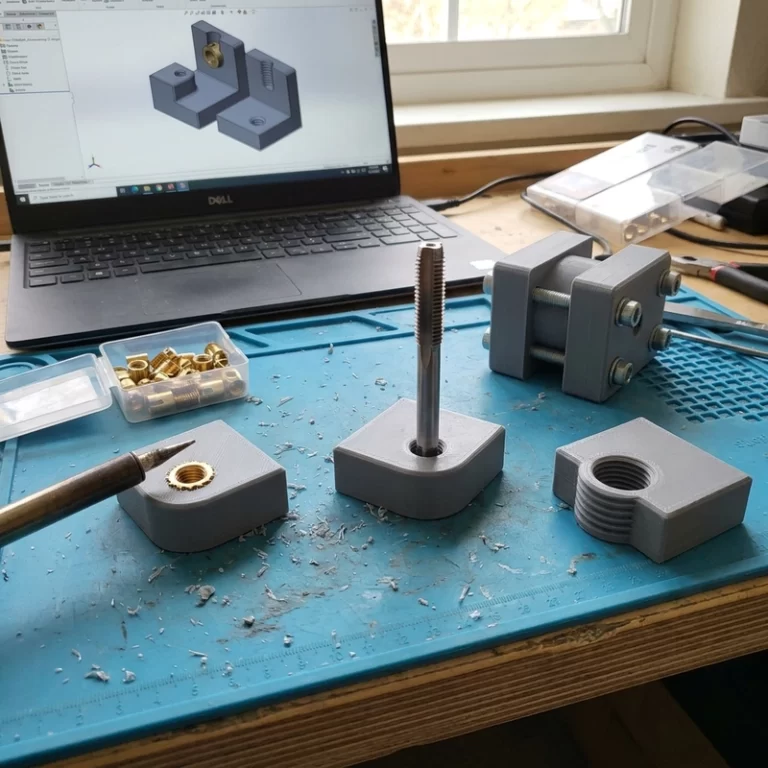
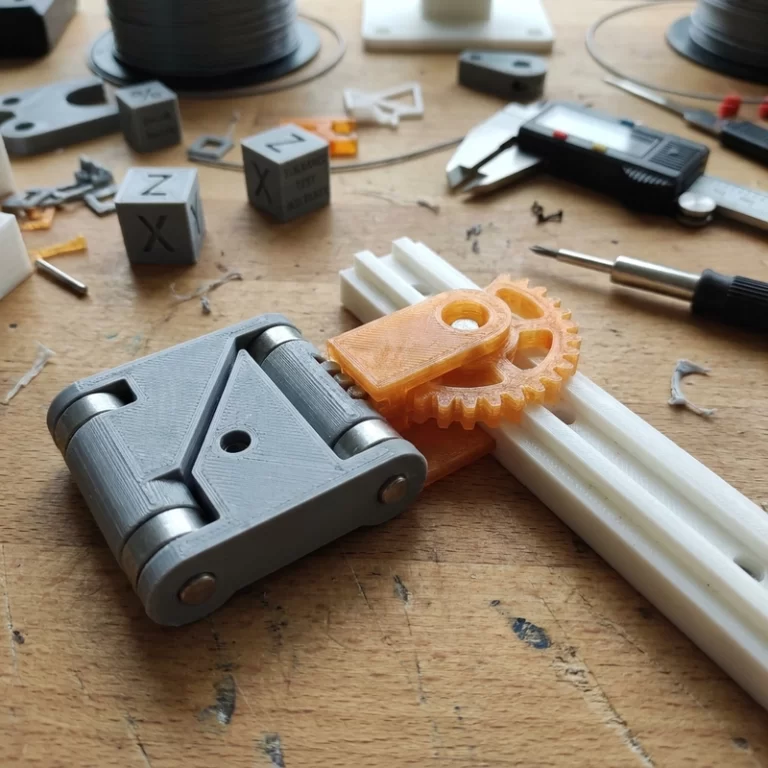
Good split lines follow the model. Put joints along hidden seams, panel breaks, waistlines, flanges, shoulders, or natural design features. Avoid cutting through load paths without reinforcement. Add alignment pins, bosses, dovetails, or tongue-and-groove features. The source mentions pin diameters around 5-10 mm and clearance around 0.1-0.2 mm in some printed assemblies. Test the joint before committing to the full build.
Supports and stress release for large-format 3D printing distortion
Large models need support designed for weight and stability, not only overhang angle. The source mentions main supports around 10-12 mm and reinforced layouts around 10-15 cm spacing in some large FDM examples. Heavy overhangs, tall slender forms, and resin suction zones need local attention. Too little support lets the part move. Too much support damages visible faces and increases cleanup.
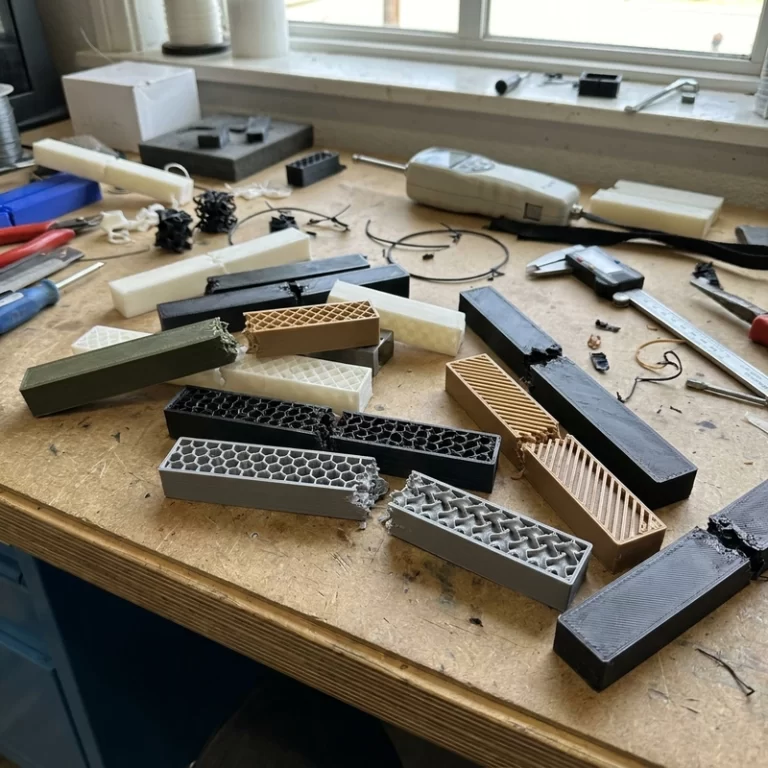
Stress relief can help, but it can also deform the part. Source notes include PLA stress relief around 60-70 C for 1-3 hours in some workflows, followed by slow cooling. ABS and engineering plastics need different conditions. I would test a scrap or small segment before heating a full large-format part. Heat correction is a repair tactic, not a replacement for good segmentation.
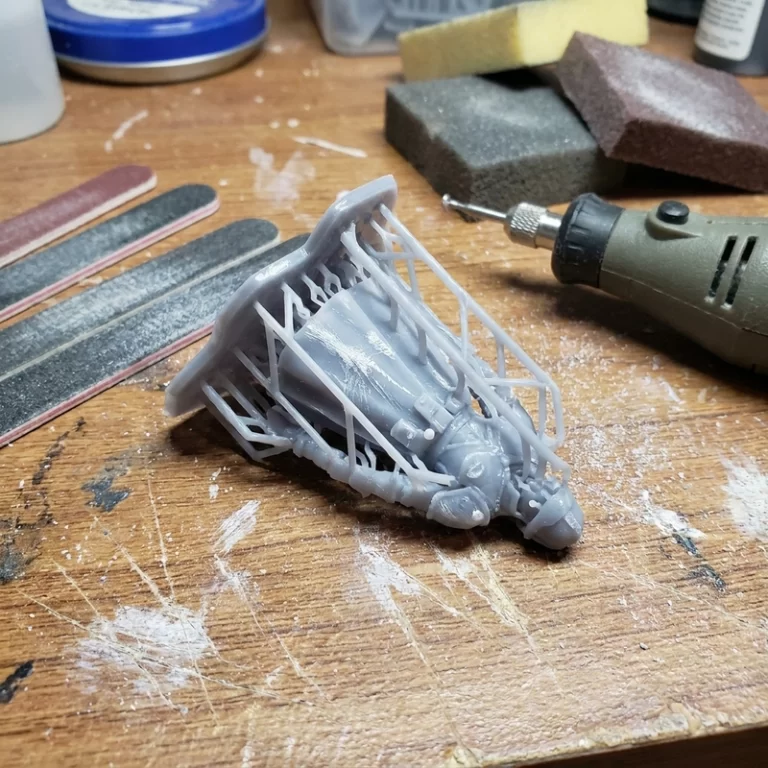
Support scars should be planned too. On a small part, a scar can be sanded quickly. On a large statue, enclosure, or product mockup, support cleanup can become a finishing project. Put supports on hidden faces where possible, and decide whether the surface will be painted, filled, or left raw before slicing.
Large assemblies should be dry-fitted before glue, screws, or filler. Measure each segment after cooling. Check diagonal dimensions, joint gaps, and reference faces. Photograph the fit-up if the job may repeat. Large-format 3D printing distortion becomes much easier to manage when the assembly path is designed before the first layer.
Measurement should happen in stages. Measure the segment, then the dry assembly, then the bonded assembly after cure. A small error at each joint can accumulate across a large model. If one section is badly warped, reprint or correct it before it becomes locked into the full assembly.
Adhesive choice also affects distortion control. Solvent cement, epoxy, CA glue, screws, and embedded pins all pull joints differently. A long thin seam can creep while curing if it is not clamped. Alignment features should be designed so the assembly can be held without forcing the parts into stress.
For neutral additive manufacturing process language, ISO/ASTM 52900 is a useful reference. The practical work still happens in CAD, supports, thermal control, and inspection.
RFQ notes for large parts
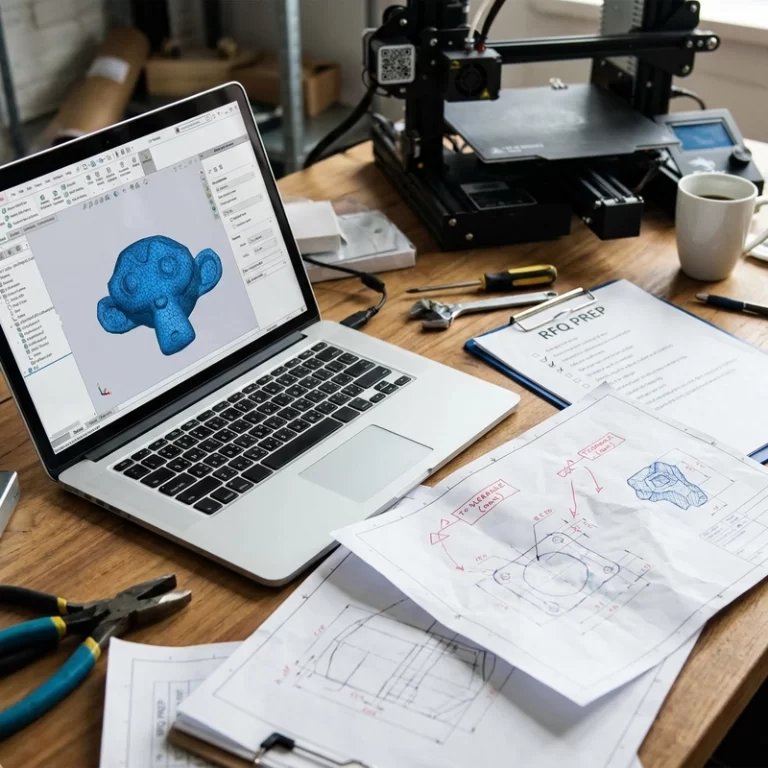
Send the final size, material preference, visible faces, acceptable split lines, assembly tolerance, support-scar limits, and whether the part must be shipped assembled or in sections. Large-format 3D printing distortion is not eliminated by one setting. It is reduced by making the part printable, coolable, measurable, and assembleable.
If a supplier says a large part can be printed in one piece, I still ask how it will be supported, cooled, measured, packed, and corrected if it moves. The answer matters more than the build volume number.
The most reliable large-format jobs usually look less dramatic in planning: smaller segments, duller support choices, more dry fitting, and slower cooling. That discipline is what keeps the finished size close to the drawing.