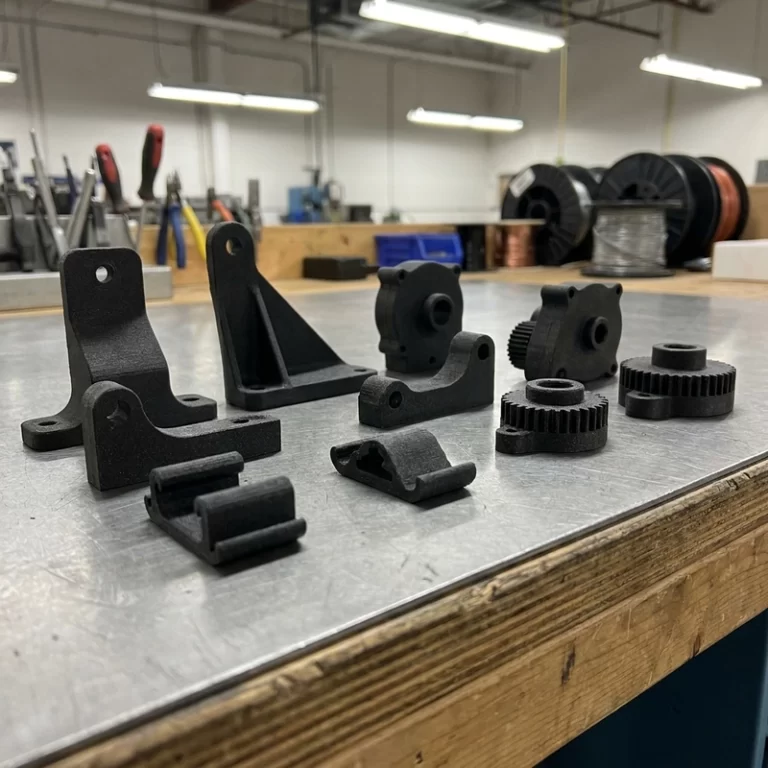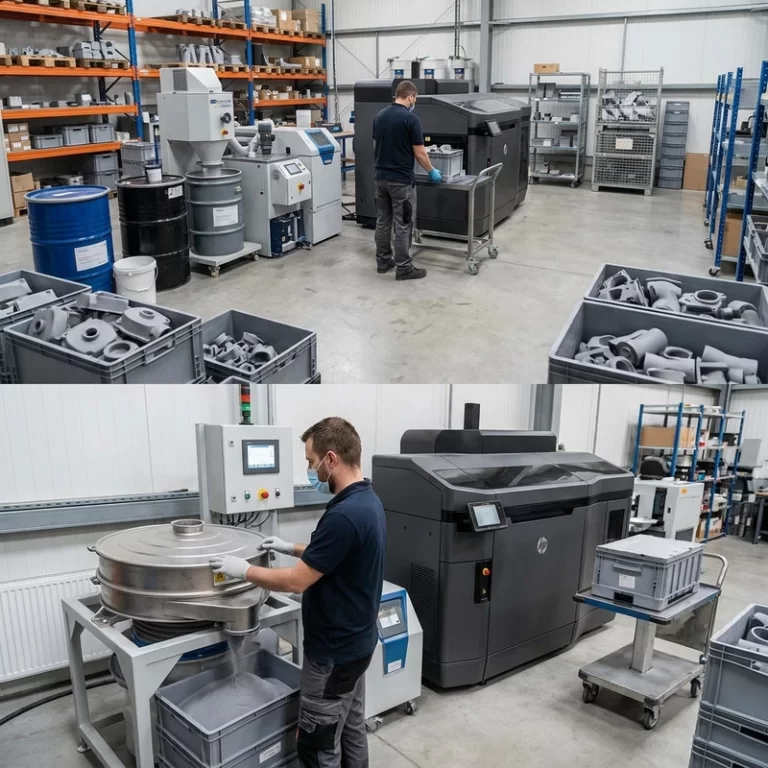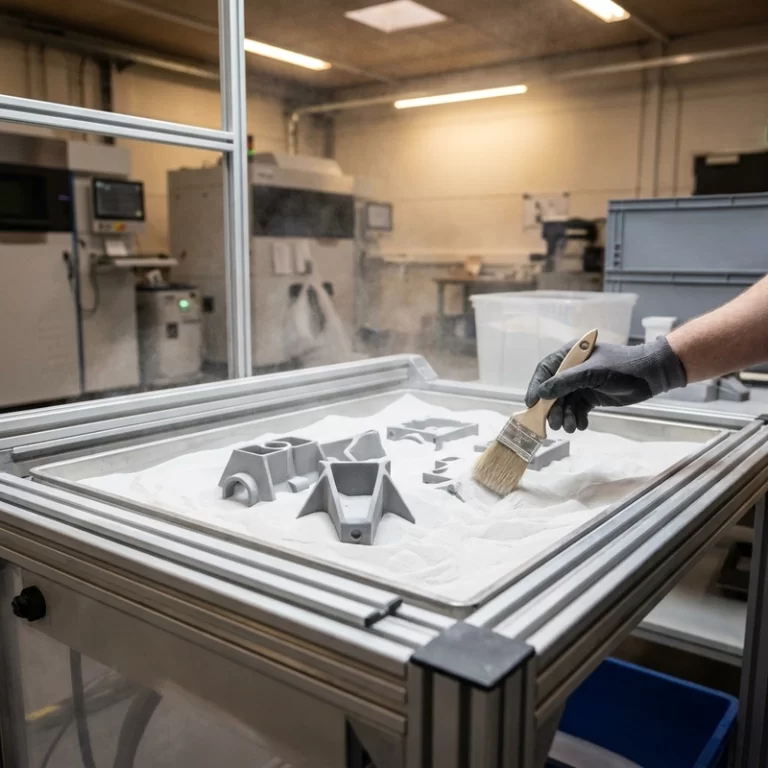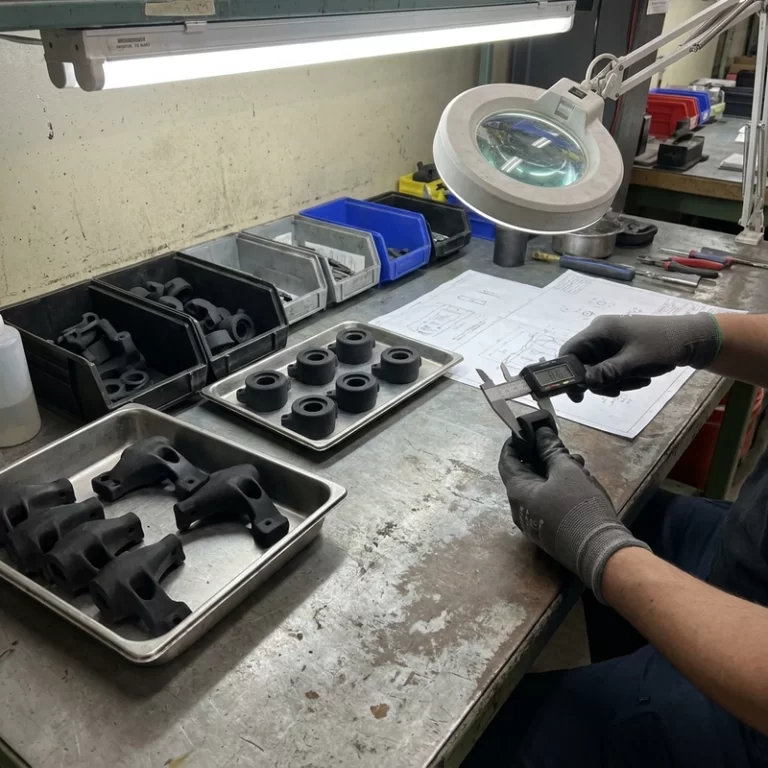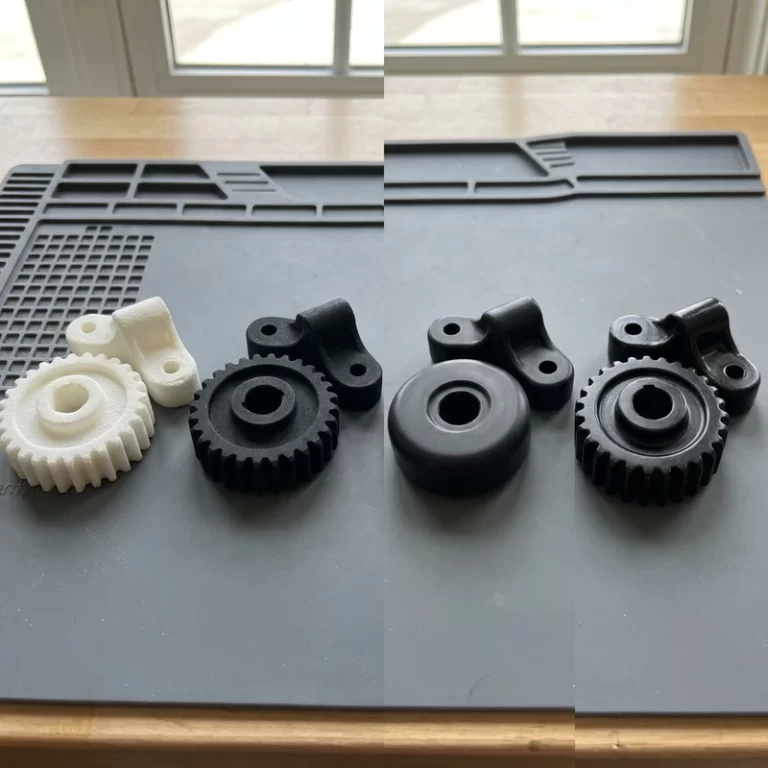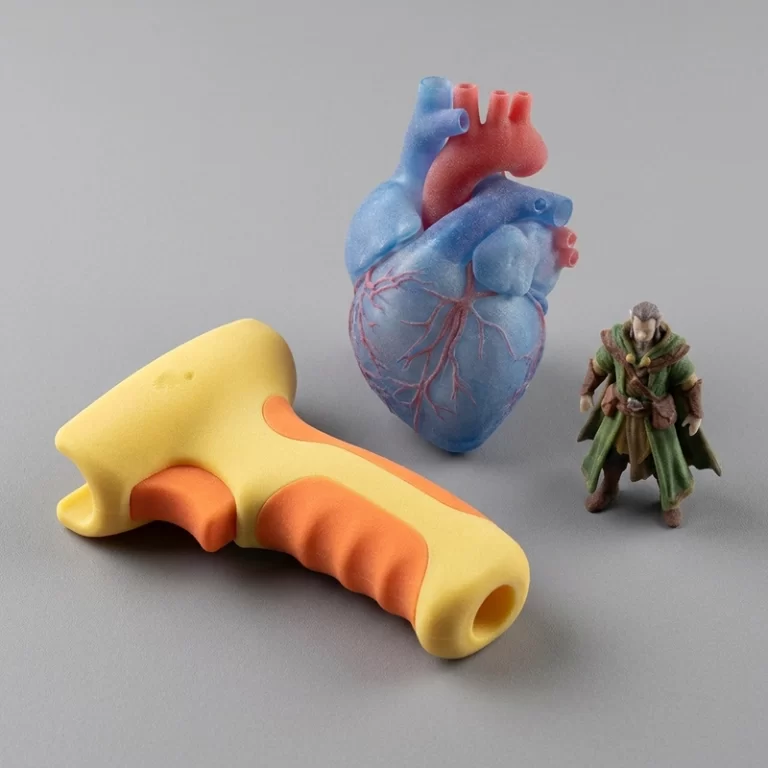
SLS nylon 3D printing applications make the most sense when the part needs nylon toughness, complex shape, small-batch flexibility, and support-free geometry. Fixtures, automotive brackets, drone frames, equipment covers, ergonomic models, and low-volume production parts can all fit. The process is useful because it removes tooling from the early decision, not because it removes engineering judgment.
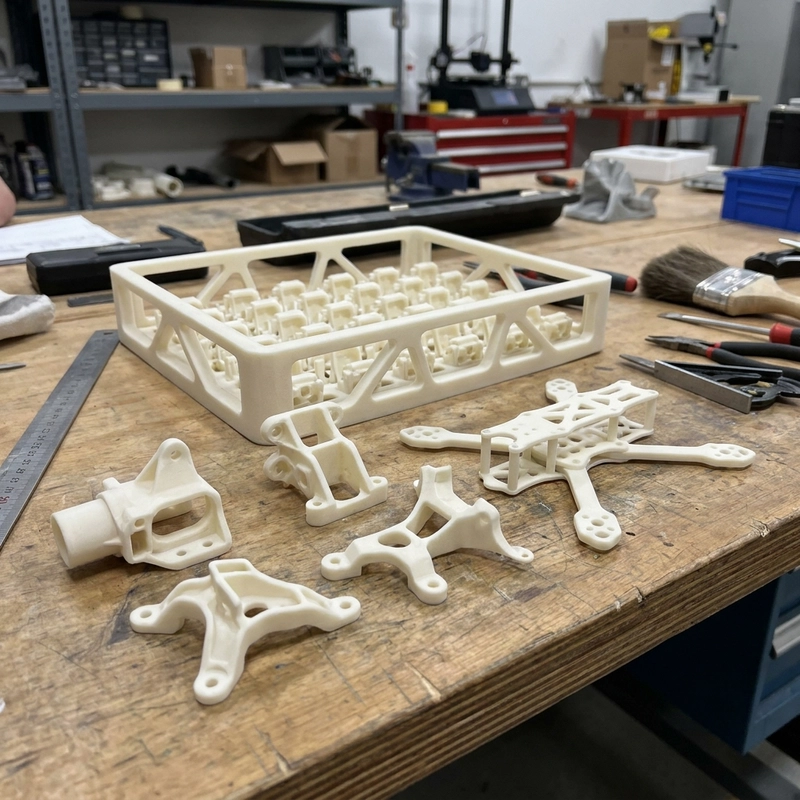
I see SLS nylon as a middle route between rough proof-of-concept printing and high-volume molding. It can produce real parts quickly, but it still has powder texture, shrinkage, cleaning limits, and material constraints. SLS nylon 3D printing applications work best when those constraints are included in the design from the beginning.
SLS nylon 3D printing applications for fixtures
Fixtures and jigs are strong candidates. SLS can create complex nests, sensor mounts, cable routes, airflow passages, lightweight ribs, and ergonomic shapes without support removal scars. The source mentions a fixture example carrying about 10 kg while keeping internal channels open. I would not turn that into a universal load rating. It simply shows why SLS can be practical when the load path is designed and validated.
Fixture design should include replaceable wear points where needed. Nylon is tough, but it can still wear against metal edges, repeated clamping, or abrasive parts. Metal pins, bushings, threaded inserts, and sacrificial pads can make an SLS fixture last longer. If the fixture will be used daily, define the acceptance test before ordering a batch.
Inspection fixtures also need stable reference points. A printed surface can be good enough for positioning a soft part, but a hard datum may need a metal insert or machined pad. When the fixture decides pass or fail, I would not let an unmeasured printed edge become the master reference.
For the process basics behind these decisions, start with Zesmir’s SLS nylon 3D printing guide. For broader engineering plastic use cases, compare against engineering plastic 3D printing applications.
Automotive, drone, and equipment parts
Automotive and equipment teams often use SLS nylon for trial brackets, ducting, clips, covers, cable guides, and assembly aids. Drone and robotics teams use it for lightweight frames, sensor housings, prop guards, and custom mounts. SLS is attractive because organic geometry and integrated features do not add tooling complexity.
The caution is environment. Heat near motors, UV exposure, oil, fuel, cleaning fluids, and vibration can all change the material choice or finishing route. A bracket that works during a desk review may fail near a hot enclosure. A drone part that looks stiff in the hand may vibrate differently in flight. SLS nylon 3D printing applications need testing in the real use direction.
For automotive-like parts, I also check clip direction and service access. A clip may survive installation once and still break during maintenance. A cover may fit well before dyeing and become tight after sealing. Small service details decide whether a low-volume printed part feels professional or experimental.
If a datum, bearing seat, or sealing face needs tighter tolerance, hybrid finishing may be needed. Zesmir’s article on CNC machining after 3D printing explains when a printed blank plus machined surface is safer than expecting raw powder-bed accuracy everywhere.
SLS nylon 3D printing applications in low-volume production
SLS can handle low-volume production when the geometry is complex, the quantity does not justify tooling, or the design changes often. It is especially useful for product variants, spare parts, custom fit products, and pilot production. Nesting many parts in one build can improve efficiency, but cleaning, inspection, and powder refresh still affect cost and consistency.
Appearance is the usual discussion point for customer-facing parts. Raw PA12 is matte and powder-textured. Dyeing, tumbling, sealing, and coating can improve the surface, but each step adds cost and may change dimensions. For visible products, approve a finished sample, not only a raw print.
Low-volume production also needs repeatability records. Keep the approved material, finish, color, critical dimensions, and packing method. If a later batch moves to another powder, machine, or finish route, the customer should know. SLS can be flexible, but uncontrolled flexibility becomes variation.
Medical and ergonomic models are another practical area, as long as claims stay honest. SLS nylon can create lightweight anatomical teaching parts, surgical planning models, or grip studies with enough toughness for handling. That does not make the part sterile, implantable, or clinically qualified. The application label should match the documentation.
For neutral background on additive manufacturing process families, the NIST additive manufacturing page is a useful external reference.
Where SLS nylon is not the answer
Simple flat plates, shafts, metal-like precision parts, transparent components, and very smooth consumer shells may be better made by CNC, sheet metal, casting, molding, SLA, or another process. SLS nylon is also not automatically food-safe, medical-grade, flame-rated, or aerospace-qualified. Those claims need material documentation and testing.
For an RFQ, send the use case, quantity, load, temperature, finish, color, critical dimensions, assembly features, and expected validation. SLS nylon 3D printing applications are strongest when the process is chosen for a specific manufacturing reason, not only because the part looks printable.
A good RFQ also says what failure would matter most: breaking, bending, rough appearance, poor fit, heat movement, or color variation. That answer usually decides whether SLS nylon is the right route or only one option among several.