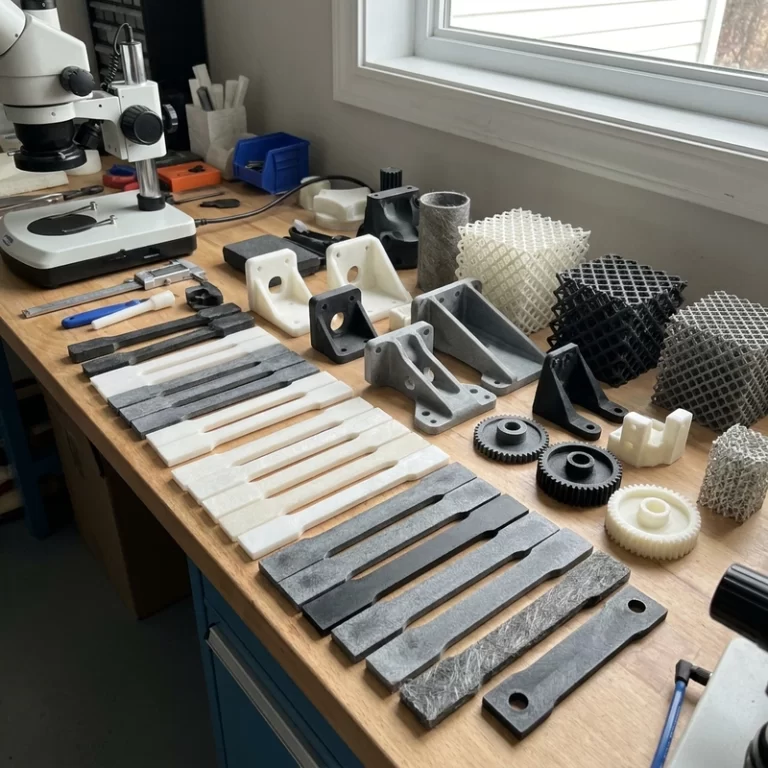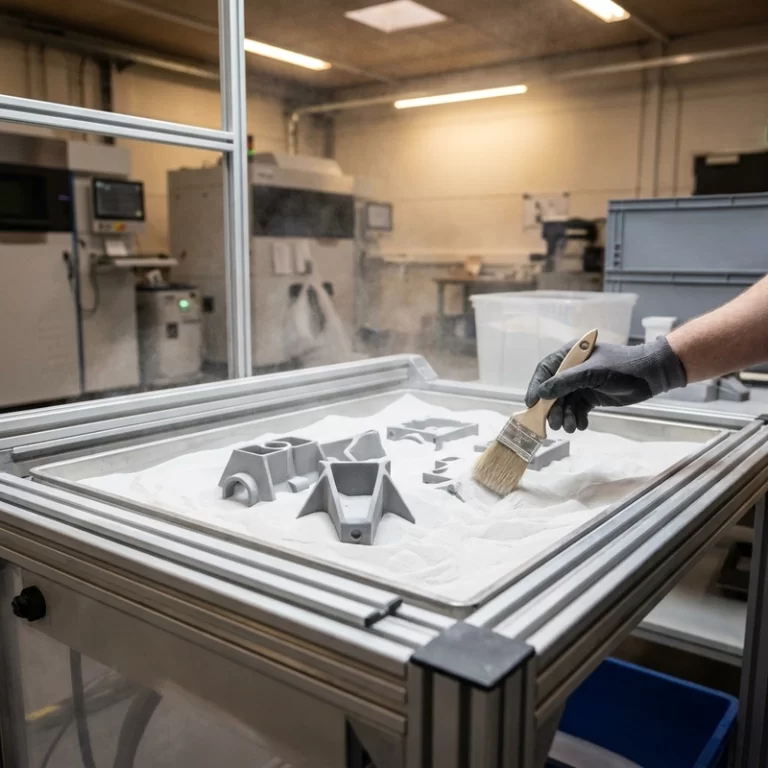
Nylon 3D printing moisture control is not a storage detail I would leave until the end. Nylon can absorb water from the air, and that moisture can show up as bubbles, rough surface, weak layers, powder clumping, dimensional drift, and lower mechanical strength. If a nylon print suddenly looks worse than last week, I check drying and storage before I touch five slicer settings.
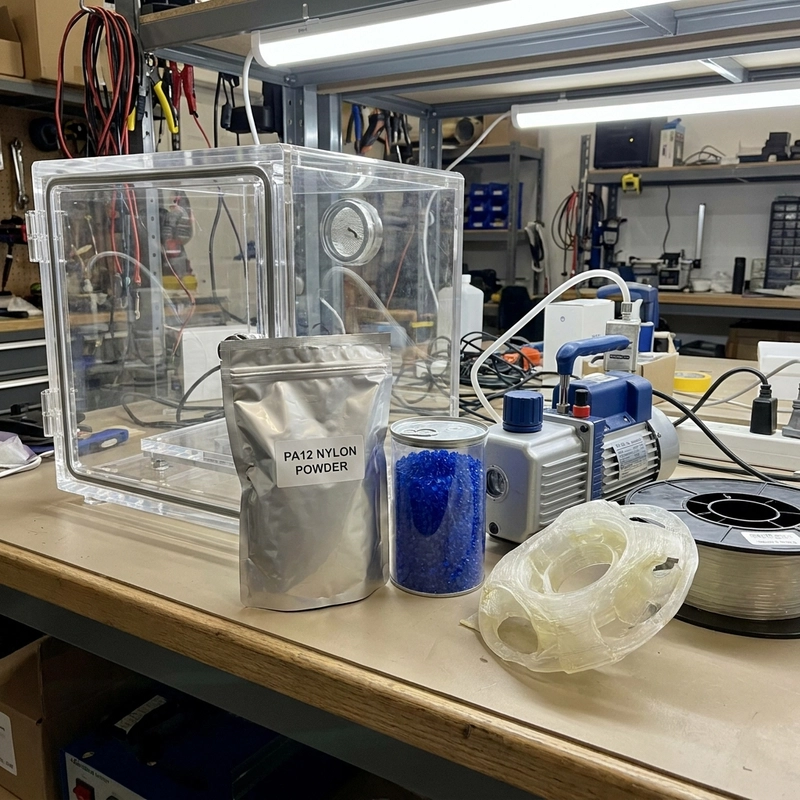
Moisture control affects both FDM filament and SLS/MJF powder. Wet filament can hiss, foam, string, and lose layer bonding. Wet powder can spread poorly, clump, sinter inconsistently, and change refresh behavior. The part may still print, but it may not measure, feel, or break the way a dry nylon part would.
Nylon 3D printing moisture control during storage
The source notes that at 60% relative humidity, nylon powder may absorb around 1.5% moisture in 24 hours, and at 80% relative humidity it may reach around 3% with clumping risk. Treat those as source examples, not a universal absorption curve. The practical lesson is clear: open nylon should not sit on a bench while everybody debates the print orientation.
Sealed storage matters. Dry boxes, sealed bags, desiccant, and humidity indicators are simple controls. The source suggests keeping storage below about 30% RH when possible. Desiccant also needs maintenance. A full container of exhausted desiccant is only decoration. I like labeling material with opening date, drying date, and whether it was returned from a machine or kept unused.
Incoming material should be treated the same way. A sealed spool or powder container can still have an unknown history if it was shipped through heat and humidity. When the job is critical, I would rather run a small coupon or dry the material again according to supplier guidance than assume the packaging tells the full story.
For material choice before storage planning, read Zesmir’s nylon 3D printing material selection. PA6, PA66, PA12, PA11, and filled nylon do not absorb and process the same way. The grade decides how strict the drying plan should be.
Drying settings for nylon 3D printing moisture control
The source gives practical drying references: PA6 around 80-85 C for 2-3 hours, PA12 around 75-80 C for 1.5-2 hours, and filled nylon around 85-90 C for 3-4 hours. These are not commands. Supplier datasheets should decide the actual drying temperature and time, especially for modified nylon blends and powder-bed materials.
Overdrying and overheating can also damage material. A random oven with poor temperature control can create hot spots. Some filament dryers cannot reach or hold the temperature required for engineering nylon. For powder, drying must avoid contamination and must fit the powder reuse policy. A clean dry process is better than a dramatic high-temperature guess.
Cooling after drying matters too. If hot nylon is pulled into humid air and left open, it starts absorbing moisture again. Move it into a dry container, feed it from a dry box when possible, and avoid opening powder containers repeatedly during a long setup. Nylon 3D printing moisture control is a chain; one weak link can undo the earlier drying step.
The source also mentions an illustrative strength drop, from about 60 MPa dry to around 40 MPa after roughly 1.5% moisture in one example. I would not generalize that value across all nylon. It is useful because it shows that moisture is not only cosmetic. It can be mechanical.
Print symptoms linked to nylon 3D printing moisture control
Wet FDM nylon often leaves a rough surface, popping sounds at the nozzle, stringing, weak layer adhesion, and inconsistent extrusion width. Wet powder may show poor flow, uneven layers, fragile green parts, rough sintered surfaces, or more variable dimensions. These symptoms overlap with temperature and calibration problems, so I try a known dry sample before changing a full print profile.
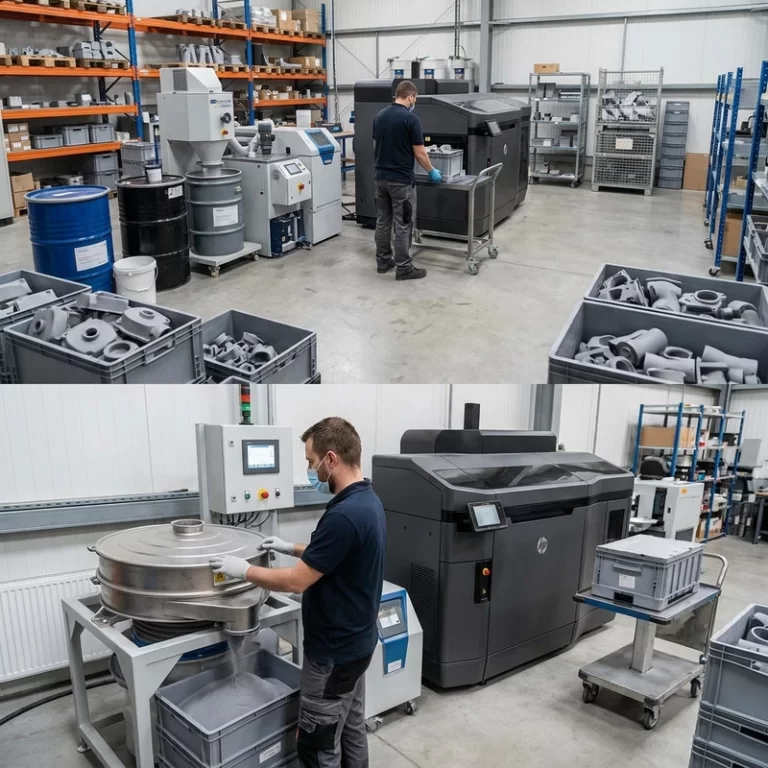
Powder reuse adds another layer. Used powder has seen heat, oxygen, humidity, and handling. Refresh ratio, sieving, storage, and drying affect the next build. For powder-bed process basics, the SLS nylon 3D printing guide connects moisture control with powder spreading and part quality.
For FDM, the print path matters after drying. A dry spool sitting outside the dryer for several hours can return to a risky condition in a humid room. If the part is long or mechanically important, feeding from a dry box is safer than drying once and leaving the spool exposed beside the machine.
For a neutral occupational and technical context around additive manufacturing, the NIST additive manufacturing page is a useful reference. The drying recipe still belongs to the material supplier and shop process.
Simple shop controls that prevent rework
- Store nylon sealed with desiccant and humidity indication.
- Label material opening date, drying date, and reuse status.
- Dry according to supplier data, not guesswork.
- Run a small coupon when moisture condition is uncertain.
- Keep powder handling clean to avoid moisture and contamination at the same time.
For an RFQ, say whether the nylon part must carry load, hold tolerance, be dyed, be sealed, or work in a humid environment. Nylon 3D printing moisture control is part of making the part trustworthy. Ignoring it is a fast way to make a good material look unreliable.
If the printed part failed before, send photos of the surface, the fracture, the filament or powder storage condition, and the drying record if one exists. That evidence is more useful than a vague note saying “nylon print failed.” It lets the process review start from material condition instead of guessing.