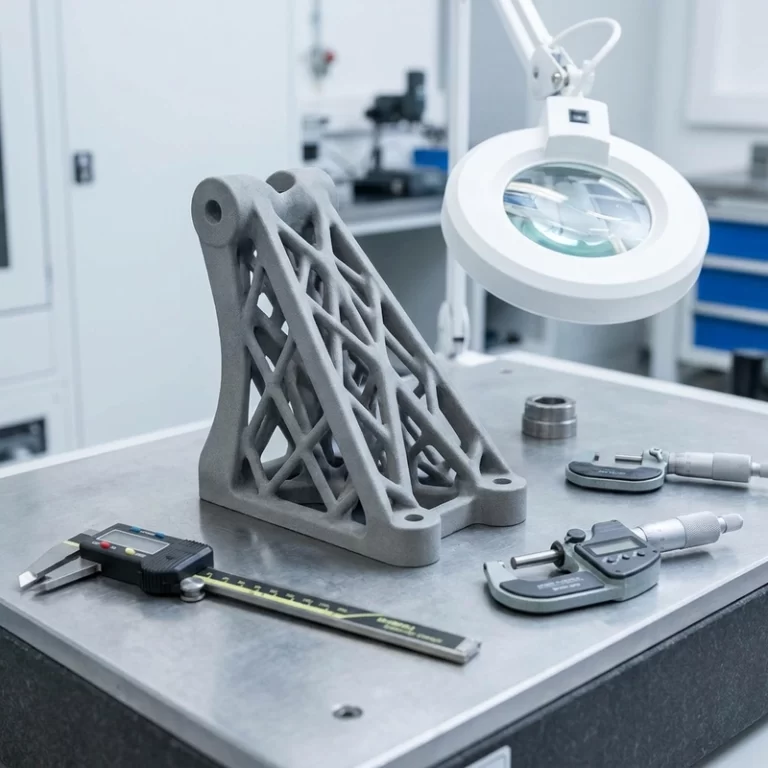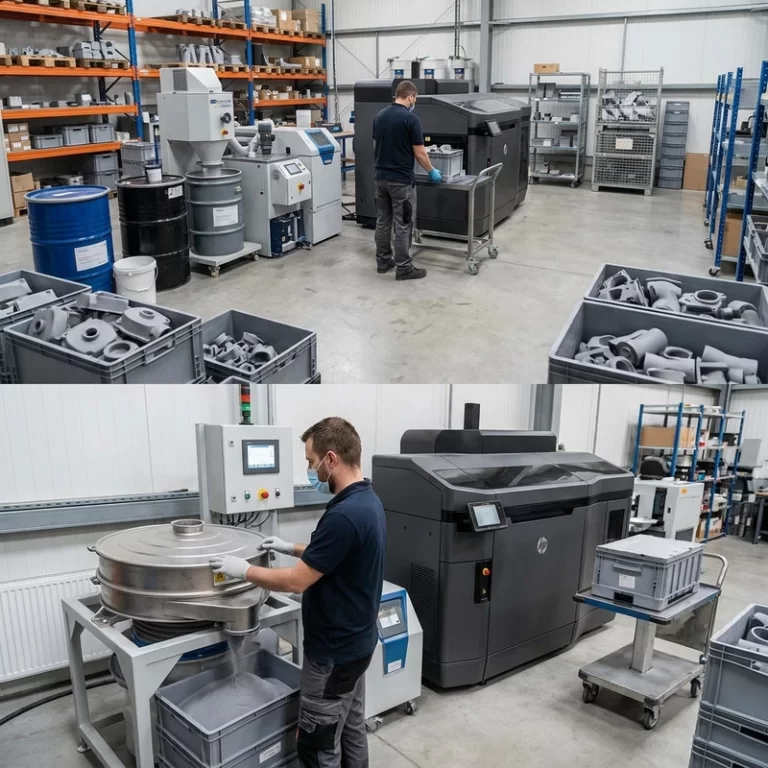
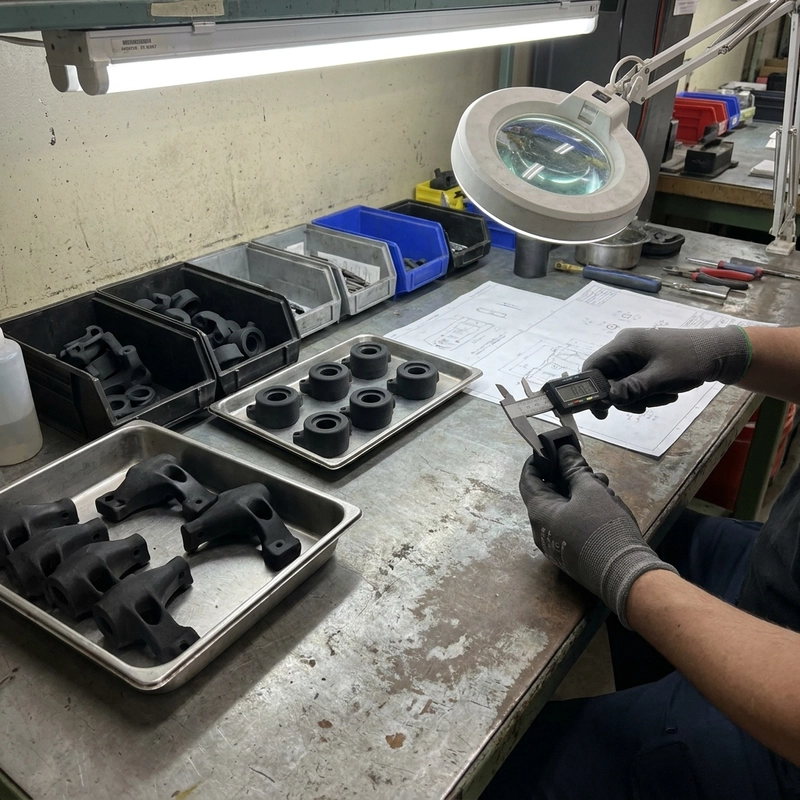
I’ve had MJF batches come back looking fine on the surface and failing fit checks on every single part. The problem wasn’t the printer—it was the process controls (or lack of them). MJF can produce excellent PA12 parts at batch scale, but only if you’re watching the variables that don’t show up in a photo: powder age, nesting density, thermal balance, and finish route.
MJF uses a powder bed, fusing agent, and detailing agent, then passes a fusing lamp over the bed. The agents and the thermal profile decide where the powder fuses and where it stays loose. Small changes in powder condition or packing density can shift dimensions or surface quality across a build. If you’re buying MJF parts, here’s what to ask before you approve the batch.
Powder Refresh: The Variable Most Buyers Never See
PA12 powder degrades with each thermal cycle. Fresh (virgin) powder has the best flow, mechanical properties, and color consistency. Recovered powder gets reused, but it must be refreshed with virgin powder at a controlled ratio—typically 20–50% virgin per build, depending on the process and part geometry.
If the supplier is running too high a ratio of recovered powder, you may see: color darkening or yellowing, slightly lower impact strength, or rougher surface texture. Ask for the powder refresh ratio and whether it’s tracked per build. For batch production, this matters more than the machine brand.
Moisture: The Silent Surface Killer
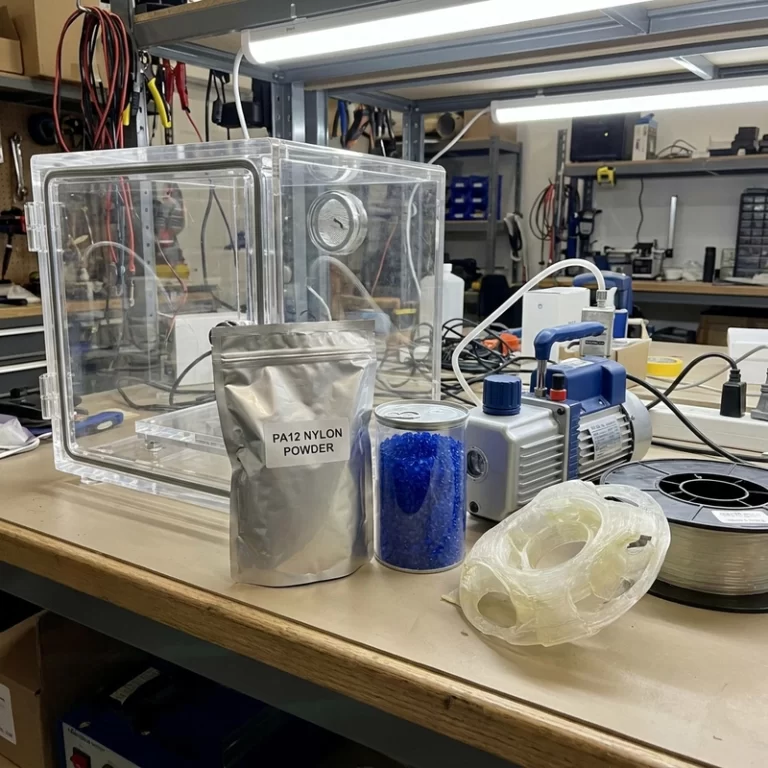
PA12 powder absorbs moisture from the air. Damp powder doesn’t spread evenly, and it can create small bubbles or surface pitting on the fused part. The powder should be dried before each build. If your parts have a rough or “orange peel” surface and the powder is old or was stored in a humid environment, moisture is a likely cause.
I’ve also seen moisture cause inconsistent agent absorption—the fusing agent doesn’t spread evenly on damp powder, leading to local weak spots that don’t show up until the part is under load.
Nesting Density: Packing More Parts Can Ruin All of Them
MJF’s economics depend on packing many parts in one build. But dense packing changes how heat moves through the bed. Thick parts, large flat areas, and parts with high thermal mass can create local hot or cold spots. Pack too densely and you get warping, inconsistent cooldown, or dimensional drift between parts at the edge and parts in the center.
| Quality point | Possible issue | Control method |
|---|---|---|
| Powder refresh | Strength or color variation | Track virgin/reused powder mix ratio |
| Moisture | Rough surface or process instability | Dry and store powder correctly before build |
| Nesting density | Warping or uneven cooling | Balance packing with thermal spacing |
| Finish route | Unexpected texture or dimension shift | Define raw, dyed, tumbled or sealed finish |
| Inspection timing | Fit changes after finishing | Measure after final finish for critical parts |
For critical batches, I ask for a thermal spacing rule: minimum spacing between parts, and between parts and the build frame. If the supplier can’t explain their nesting rules, they’re probably over-packing.
Finish Route: What “Standard Finish” Actually Means
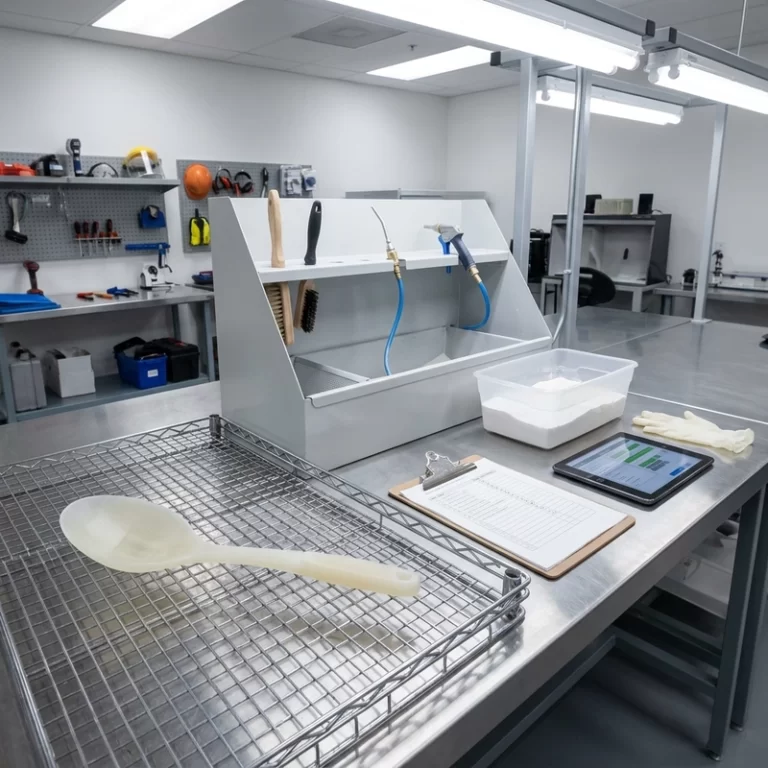
MJF PA12 parts come out of the bed with loose powder on the surface. The standard process is bead blasting to remove loose powder, which leaves a matte, slightly rough surface. From there, you can specify:
- Raw (bead blasted only): functional, slightly rough. Fine for internal parts.
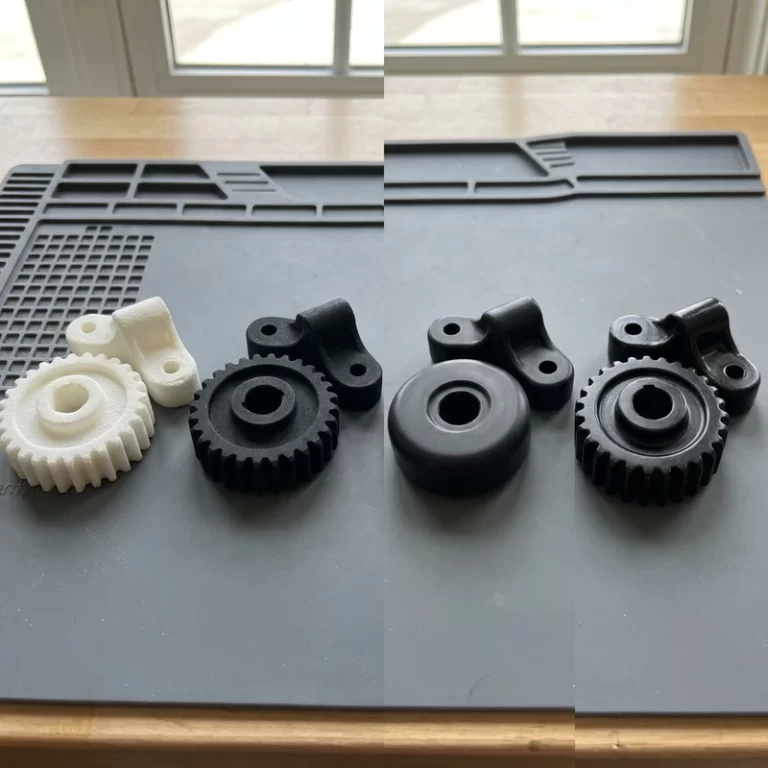
- Dyed: usually black or grey. Gives a more uniform look but doesn’t change surface texture.
- Tumbled: smooths edges and surface. Good for consumer-facing parts but rounds sharp edges.
- Sealed: adds a coating that improves cleanability and feel. Can shift tight tolerances.
If you need a cosmetic surface, approve a finish sample before the batch. Surface finishing can make or break the perceived quality of an MJF part.
Inspection: Measure After Finishing, Not Before
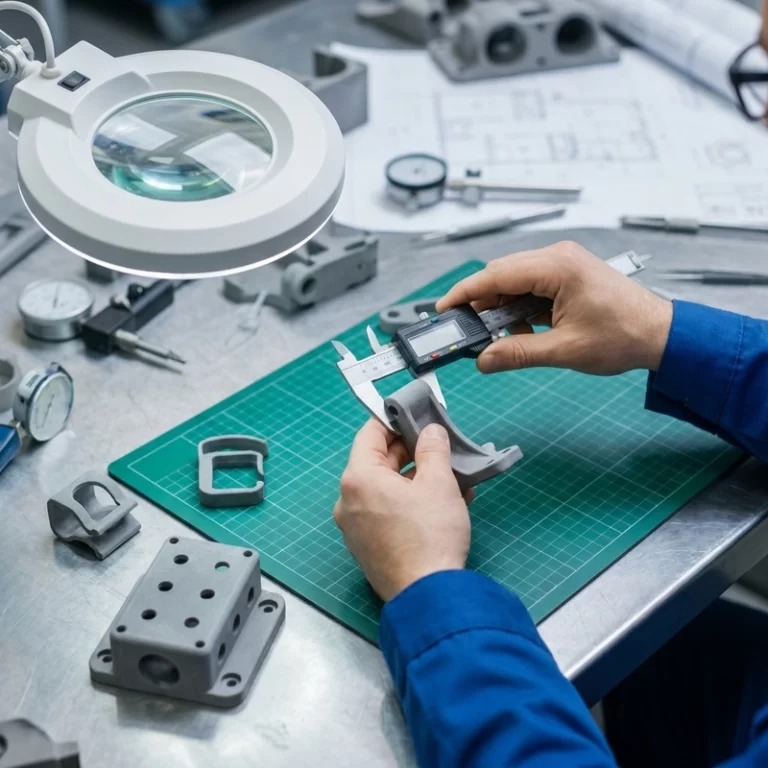
Dyeing, tumbling, and sealing all remove or add material. If you inspect critical dimensions on raw parts and then send them for finishing, the finished parts may not meet spec. For PA12 parts with holes, clips, or mating surfaces, I always specify: “inspect after final finish.”
For batch production, first-article inspection (FAI) is worth the cost. Print a small batch, measure everything, approve the process, then run the full batch. Finding out the finish route removes 0.2 mm of clearance after 500 parts are done is an expensive lesson.
RFQ Checklist for MJF PA12 Parts
- Material grade: standard PA12, flame-retardant PA12, or other? Each has different process windows.
- Color and finish: raw, dyed (which color), tumbled, sealed? Approve a sample if cosmetic.
- Quantity and repeats: one-off or recurring batches? If recurring, ask about process consistency controls.
- Critical features: which holes, clips, flatness specs actually matter? Inspect those.
- Inspection timing: raw, after bead blast, or after final finish?
MJF is an efficient process for PA12 batch parts. But “efficient” doesn’t mean “automatic.” The quality is in the process controls, not just the machine. Ask the right questions before the build, and you’ll get parts that fit and perform—not just parts that print.