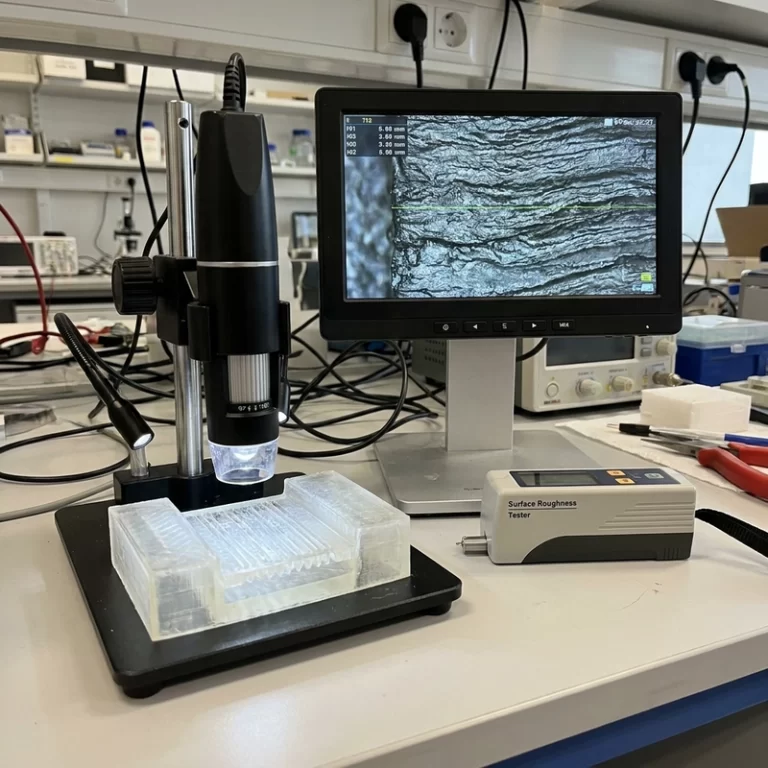
Wood-filled 3D printing materials are polymer composites, not printable lumber. Most printable grades mix wood powder, sawdust or fiber with a binder such as PLA. The part may smell warm, sand differently and show a matte wood-like surface, but its strength, heat limit and printability still come from fiber size, fiber ratio, binder behavior, moisture and nozzle control.
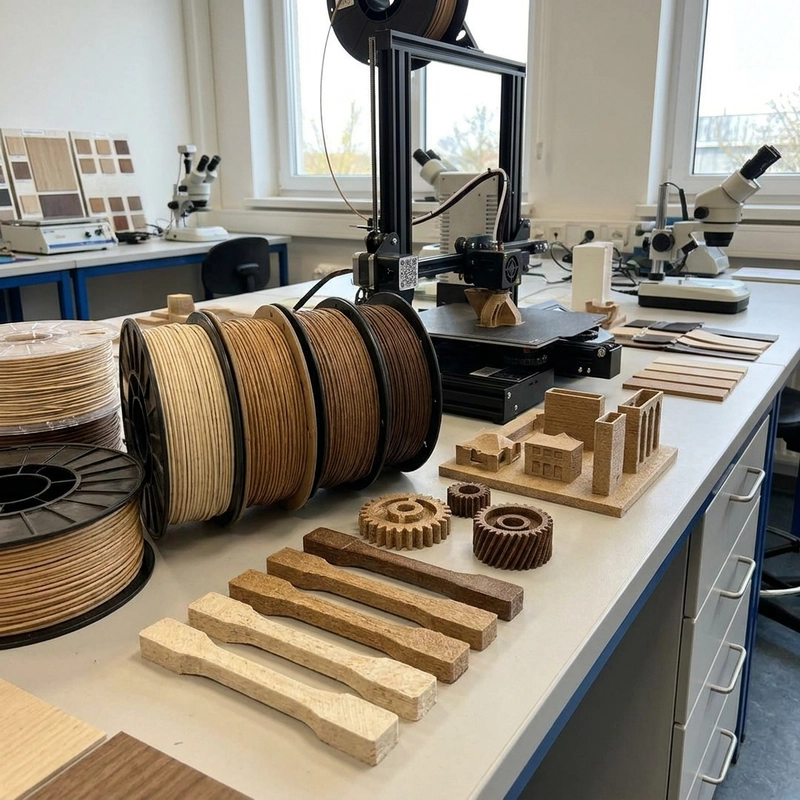
I like these materials for architectural models, cultural products, display props, educational samples, low-load product mockups and decorative prototypes. I do not treat them as structural wood or engineering plastic. The higher the wood content, the more the material may look natural, but printability can get worse quickly.
Wood-Filled 3D Printing Materials Depend on Fiber Size
The source notes softwood fibers around 1-4 mm long and 10-40 micrometers in diameter, while hardwood fibers may be around 0.5-2 mm long and 20-50 micrometers in diameter. Smaller particles flow more easily through a nozzle and hold finer detail. Longer fibers may improve reinforcement potential but increase clogging, roughness and dispersion risk.
For filament printing, the fiber must survive repeated feeding through a small hot end. Large particles, poor dispersion and moisture can form plugs. Filled materials also wear brass nozzles faster than plain PLA. A hardened nozzle and a conservative nozzle diameter are often safer than trying to print wood-filled filament through a tiny opening because the model has small details.
For base polymer behavior, compare with PLA 3D printing strength. For broader composite material selection, see engineering plastic 3D printing material selection.
Fiber Ratio Is Not the Whole Story
The source discusses 20%, 30%, 40% and 50% fiber ranges. Within a workable range, each 10% fiber increase may raise tensile strength by about 15-20% in some formulations. That trend does not continue forever. Too much fiber can create agglomeration, voids, brittle fracture, poor surface consistency and nozzle clogging.
A decorative precision model may work better around 25-30% fiber with a PLA-based binder that flows well. A furniture-like experimental part may explore around 40% fiber with a stronger binder and larger nozzle. A 50% material may look attractive in a formulation table and still be miserable to print repeatably. I would rather test the actual geometry than choose the highest wood percentage.
Color and texture also move with processing. Higher nozzle temperature or slower speed can darken some wood-filled filaments, which may be useful for a warmer tone but risky for repeat color matching. Sanding exposes fiber differently from the as-printed surface. Stain may take unevenly because the part is still a polymer composite. For a batch of display products, I would approve a finish sample before printing a full set.
Binder Behavior in Wood-Filled 3D Printing Materials
PLA is common because it prints easily and bonds reasonably with treated wood powder. Its glass transition temperature is around 60-65 C, so PLA-based wood composites are not good for hot environments. Inorganic binders such as gypsum or cement can improve stiffness or heat behavior but bring curing and fiber-degradation concerns. Natural binders such as starch or methylcellulose improve sustainability but can reduce water resistance. Epoxy can raise strength but changes recyclability and curing control.
Wood fiber and polymer do not automatically bond well. Alkali treatment can clean the fiber surface, and source notes mention tensile strength improvements around 20-30% in some alkali-treated wood fiber and PLA formulations compared with untreated fiber. Coupling agents can help load transfer, but too aggressive a treatment can damage the fiber. For decorative parts, surface and printability may matter more than maximum tensile strength.
Toughening additives need the same caution. A small TPU phase can improve impact behavior in some wood-plastic blends, but it may reduce stiffness, change extrusion pressure and make edges feel softer. Epoxy or inorganic binders may improve certain properties while adding curing, brittleness or post-processing limits. The best binder is the one that matches the part’s load, heat, finish and manufacturing route, not the one with the longest material description.
Printability, Moisture and Finish
Wood fiber holds moisture. Wet material can bubble, roughen the surface and weaken layers. Dry the filament according to supplier guidance and store it sealed. Slow the print enough for the composite to flow. Use retraction carefully because fiber friction can make pressure less predictable. Nozzle temperature should be high enough for smooth extrusion but not so high that the wood phase darkens or degrades.
Nozzle choice is not a small detail. A brass nozzle may work for a short decorative test, but filled materials can wear it and change the opening over time. A worn nozzle changes line width, surface texture and dimensions. If the model has tiny holes, sharp text or thin pins, the wood-filled grade may be the wrong material even when the color is perfect. Sometimes it is cleaner to print plain PLA or resin and apply a wood-like finish afterward.
For wood-filled 3D printing materials, the RFQ note should include desired texture, color tolerance, finish method, minimum feature size, heat exposure and whether the part is decorative or load-bearing. Those details matter more than asking for the highest fiber percentage.
These materials can sand, stain or paint nicely when the formulation matches the finish. They are useful for texture, warmth and appearance. They are not a replacement for machined wood or structural composite laminate. The NIST additive manufacturing page is useful process background, but the material decision still comes down to the part’s size, fiber texture, nozzle risk, heat exposure, finish and load. Wood-filled 3D printing materials work best when the buyer wants a controlled wood-like composite, not a fantasy version of real wood.