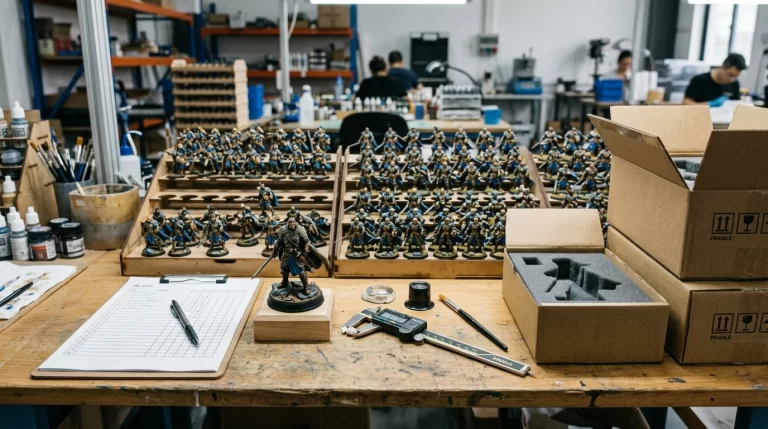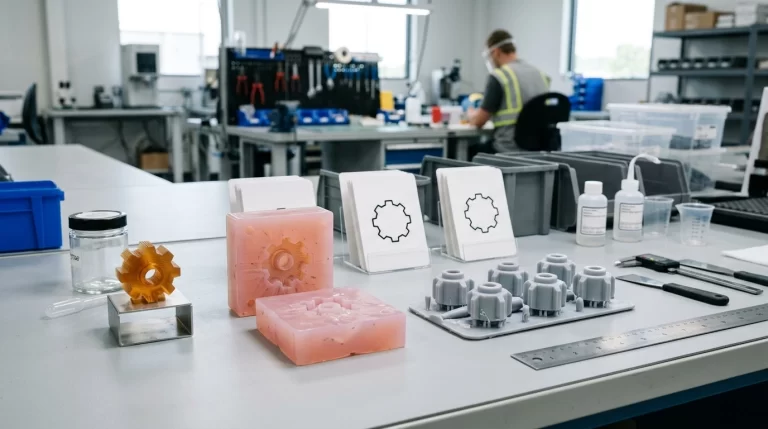
Painted resin vs full-color 3D printing is a choice about final product control. Painted resin starts with a printed model and adds finish by hand or spray workflow. Full-color printing builds color into the print based on texture files. Both routes can work for figurines, but they fail in different ways.
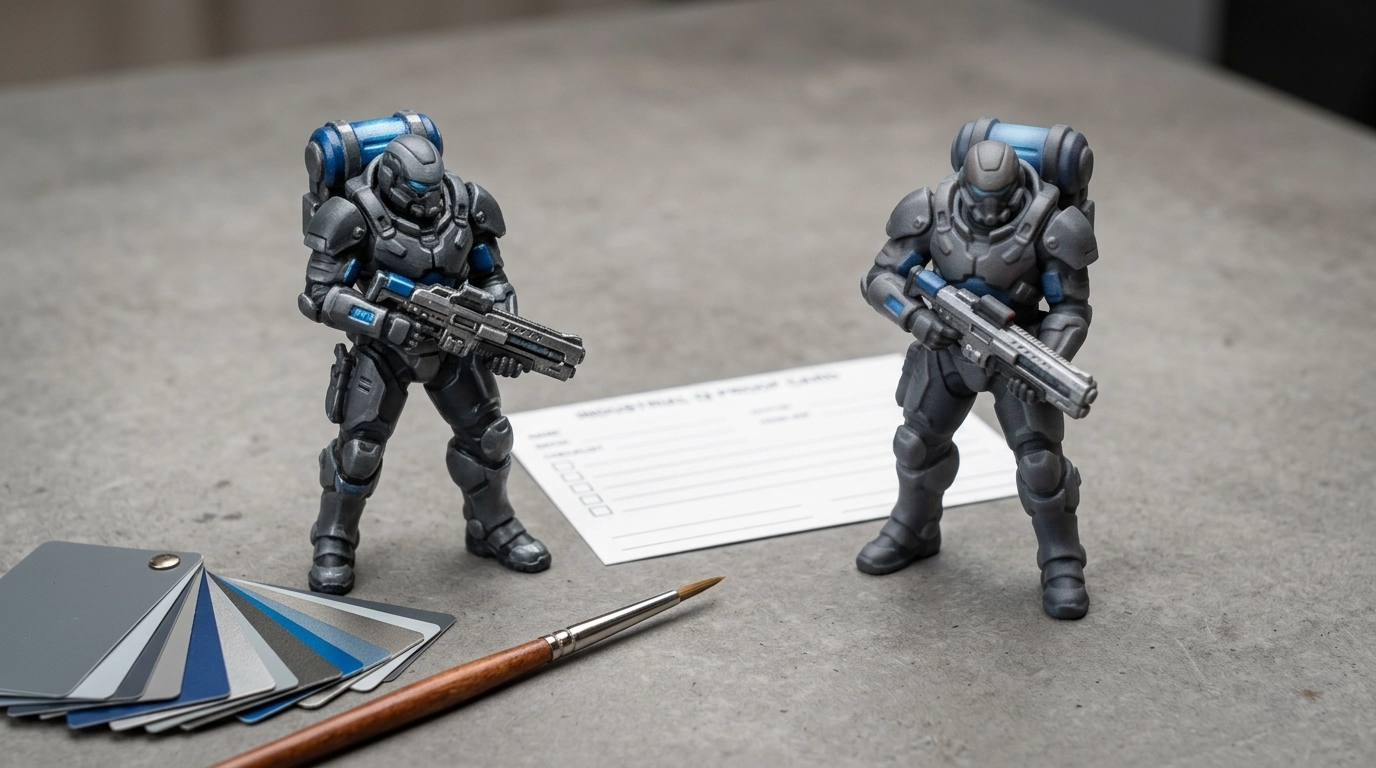
Painted resin gives human adjustment. Full-color printing gives digital color workflow. A buyer should compare proof samples, not slogans.
Painted Resin vs Full-Color 3D Printing for Detail
Painted resin can make eyes, skin tones, clothing edges and metallic details stand out when the painter has a good surface. The print needs cleaning, curing, support mark repair, sanding and primer. If those steps are rushed, paint can peel or look uneven.
Full-color printing depends on the texture file, white ink or base color behavior, and the printer’s color capability. It can reduce manual painting, but it may not match screen color exactly. Small text, gradients and face tones should be proofed.
For paint workflow, see resin print paint adhesion. For full-color behavior, read WJP full-color resin 3D printing and multi-color 3D printing comparison.
Cost, Batch and Repair
Painting can be labor-heavy, especially for portraits and character figurines. It can also be repaired or adjusted. Full-color printing can simplify some batches, but a bad texture file can make the whole result wrong. If the buyer needs exact brand color, proofing matters either way.
Painted Resin vs Full-Color 3D Printing for OEM Gifts
For OEM gifts, approve a sample before batch production. Check color, surface, edge sharpness, gloss, handling resistance and packaging. The NIST additive manufacturing resource gives process context, but the buyer should judge the finished object. Painted resin vs full-color 3D printing should be decided by proof sample and batch repeatability.
When Painted Resin Makes More Sense
Painted resin is often better when the buyer wants a premium hand-finished look, metallic accents, controlled facial highlights or repairable color. It can also work well when the color design changes after the sculpt is approved. The tradeoff is labor, time and possible variation across the batch.
Full-color printing can make sense when texture files are ready and the buyer wants color built into the part. It may be better for complex patterns or small batches where hand painting every detail would be slow. But it still needs proofing, and not every surface effect can be matched to paint.
For a useful RFQ, send both the 3D model and the color reference. If full-color is being considered, include texture files. If painting is expected, include finish samples or brand color references. Painted resin vs full-color 3D printing is easier to decide when the buyer defines the final look, not only the process name.
Batch size matters. A few premium pieces can justify hand painting. A larger batch with repeated complex color may push the buyer toward a full-color route or a simplified paint scheme. The supplier should quote the color workload honestly because painting time can quietly become the largest cost.
For fragile gifts, packaging should be part of the comparison. Painted surfaces can rub. Full-color surfaces can still scratch or mark. Approve a packed sample before deciding that either route is ready for bulk. Painted resin vs full-color 3D printing should end with a handled, packed product, not just a nice bench photo.
Repairability is a practical difference. Painted resin can sometimes be touched up if a small area is scratched before shipping. Full-color parts may not be as easy to repair cleanly, depending on the process and surface. That matters for OEM batches where a small cosmetic defect can decide whether a unit ships.
Texture files can become the bottleneck for full-color work. A buyer may have a beautiful concept image but no UV-mapped model or usable color data. In that case, the quote should include digital color preparation. Painted resin may be simpler if the color scheme is better described by reference photos and hand work.
I would compare painted resin vs full-color 3D printing with three samples when budget allows: raw printed detail, finished color and packed product. Each one answers a different risk. Detail tells whether the model works. Color tells whether the look works. Packing tells whether the finished surface survives delivery.
Gloss level can change the choice. Hand-painted resin can use matte, satin, glossy, metallic or selective clear coat with more control. Full-color parts may have a more fixed surface character unless extra coating is added. If the buyer wants a premium collectible feel, finish samples matter as much as color samples.
For repeat OEM orders, save the color recipe or texture files with the approved sample. A photo alone is weak evidence because lighting changes the color. Painted resin vs full-color 3D printing should leave behind a production record, not just a decision made during one sample meeting.
If the product has faces, show the buyer close-ups before approving the batch. Small eye highlights, lip color and skin tone can decide whether a figurine feels alive or strange. Color route matters most where customers look first.