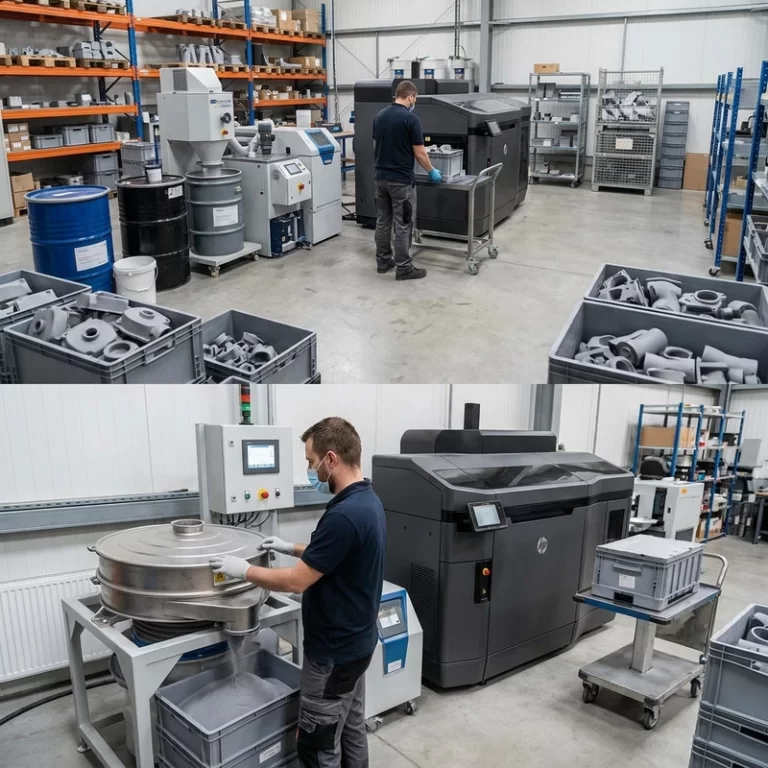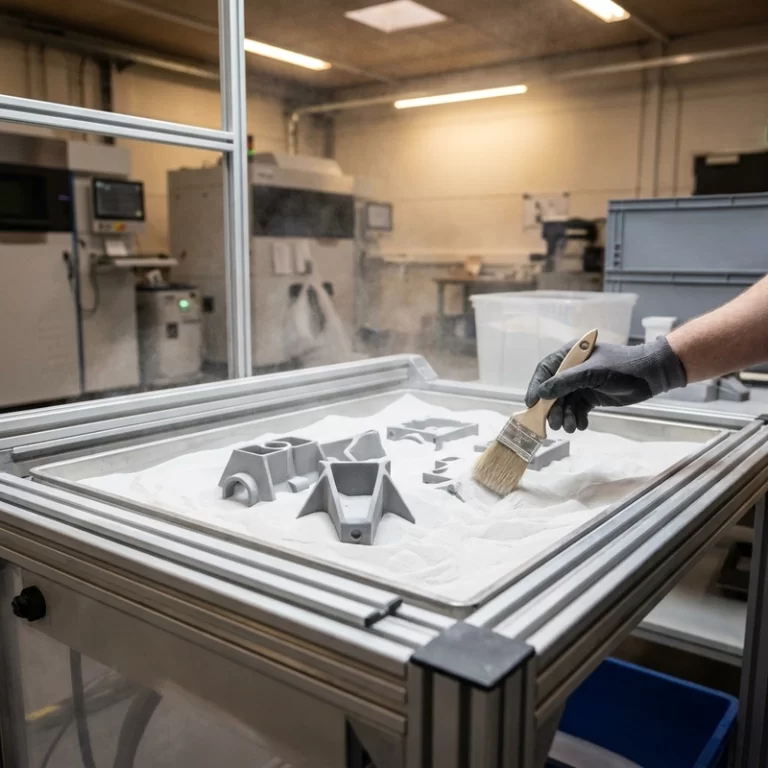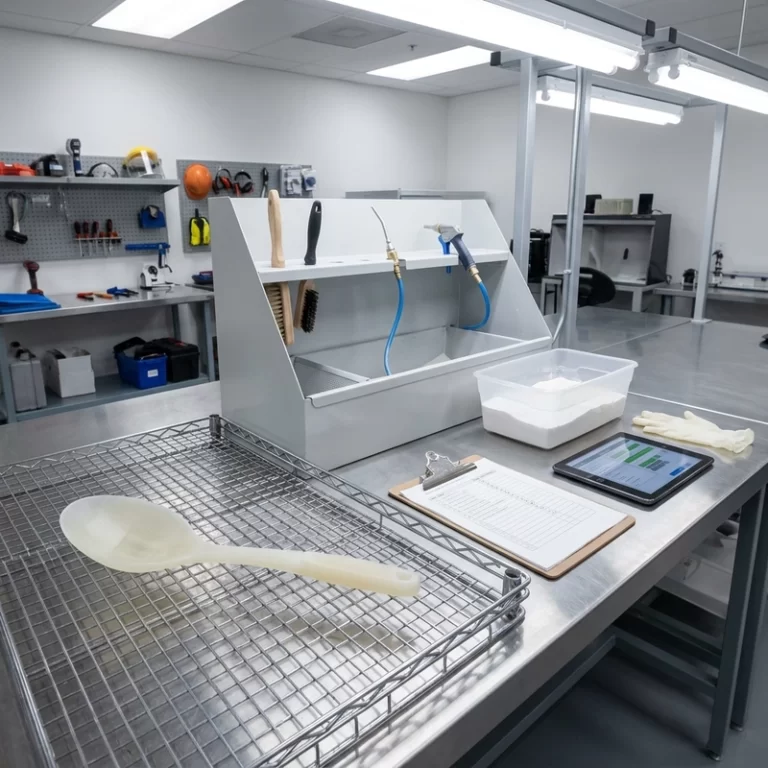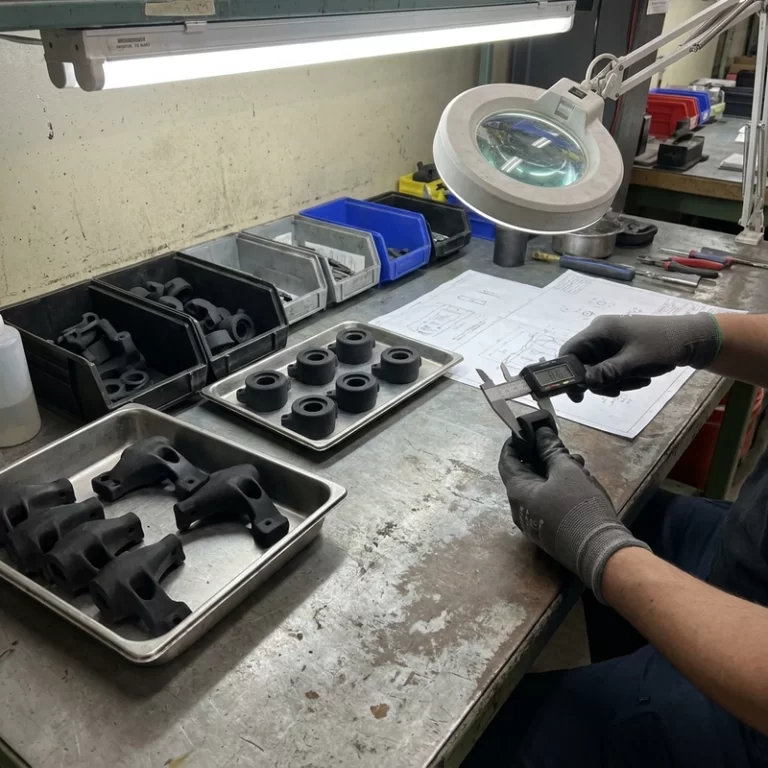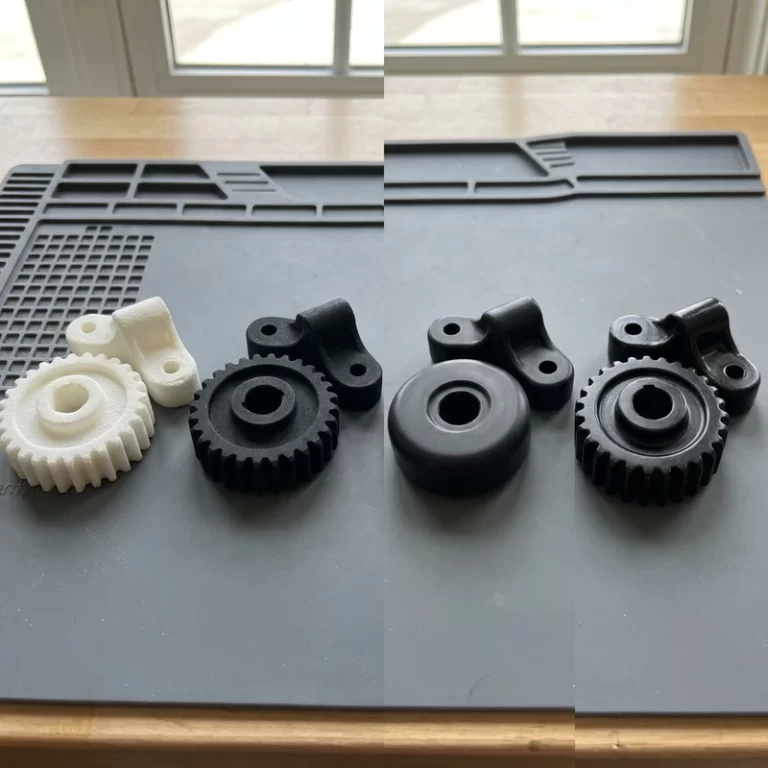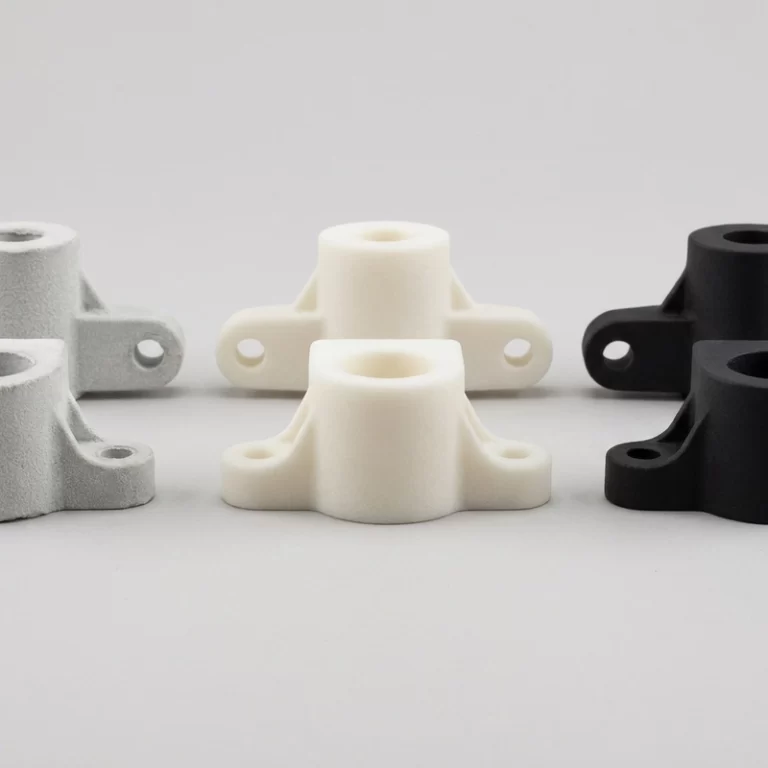
High-performance nylon powder printing is used when ordinary prototype nylon is not enough for heat, stiffness, impact, weight reduction, or industrial handling. The phrase sounds impressive, but it covers several materials and process choices: PA12, PA11, glass-filled PA, carbon-filled PA, PA66-based powders, PA46, PA612, and other specialty blends. The right question is what performance is needed and how it will be verified.
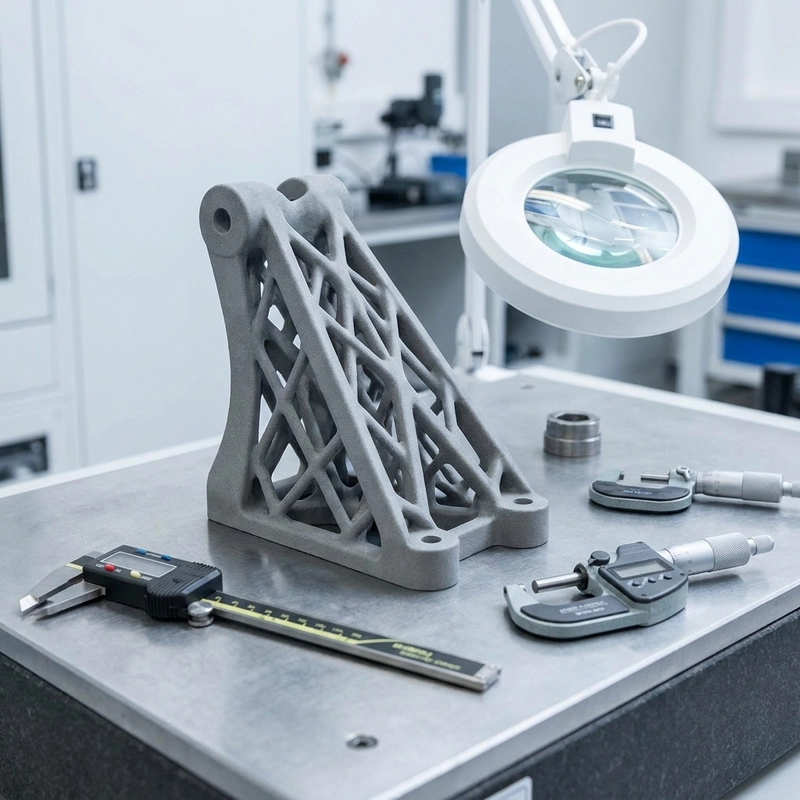
I do not like using “aerospace” or “industrial” as decoration in a material description. A bracket may be lightweight and printed from a strong nylon powder, but that does not make it qualified for flight, medical, or safety service. High-performance nylon powder printing can support serious engineering work, yet the part still needs design review, process control, and testing appropriate to the risk.
High-performance nylon powder printing material choices
The source gives useful strength references: common nylon powder parts may sit around 50-80 MPa tensile strength, PA12 around 55 MPa in one example, and glass-filled PA12 around 70-90 MPa in some references. PA11 may offer better impact behavior, with a source value around 40 kJ/m2. These values depend on material, process, orientation, refresh ratio, and post-treatment. Use them as screening questions, not as final part properties.
Reinforced powders improve stiffness and heat behavior, but they can reduce ductility and change surface feel. A carbon-filled or glass-filled nylon bracket may be excellent for a stiff fixture and poor for a snap clip. A flexible PA11 part may handle impact better but cost more. A PA66-based or high-temperature nylon may demand tighter powder handling and process control.
For base nylon grade selection, the related Zesmir article on nylon 3D printing material selection is the better starting point. This article is about when the ordinary choice is not enough.
Heat resistance and process limits
The source mentions heat-resistant nylon references: reinforced PA12 around 150-160 C, PA66-based materials around 160-180 C, and selected PA46 or PA612 grades above 200 C. I would be careful with these numbers. Heat resistance depends on test method, load, time, moisture, and grade. A short heat exposure and continuous service are different problems.
High-temperature performance also brings print difficulty. Powder must flow, spread, sinter, cool, and refresh properly. If laser energy is too low, the source notes strength may drop 20-30% in some conditions. If energy is too high, the part may over-sinter, warp, or lose detail. Layer thickness also matters. A 0.1 mm layer and a 0.2 mm layer do not always produce the same surface, strength, or build time.
Orientation is part of performance too. A bracket loaded across layers, a thin arm blasted aggressively after printing, or a lattice with trapped powder may perform below the material headline. For high-performance nylon powder printing, I prefer coupon testing in the same orientation and finish route as the real part when the load is important.
Powder moisture and reuse matter here too. The nylon 3D printing moisture control article covers the practical storage side. High-performance powder usually deserves stricter control, not looser control.
High-performance nylon powder printing for lattices
Lattice structures are one reason to use powder-bed nylon. The source mentions porosity ranges around 30-70% in lattice design references. That can reduce weight, tune stiffness, and create energy absorption zones. It also creates cleaning and inspection challenges. Powder must escape. Cell size must be realistic. Small struts must survive depowdering, finishing, and handling.
A lattice that looks elegant on screen may fail if the struts are too thin, the powder cannot be removed, or the load path is misunderstood. I would test a coupon or partial lattice before printing a full expensive part. For functional assemblies, inspect both the outer dimensions and the internal cleanup path.
Surface finish can also change lattice behavior. Tumbling may round fine struts. Sealing may bridge tiny gaps. Dyeing can hide trapped powder in corners. Those details are acceptable for some display or ergonomic parts, but not for a part where the lattice controls stiffness or airflow.
For neutral additive manufacturing vocabulary, the NIST additive manufacturing resource is useful. It will not qualify a part, but it keeps the process language clean when discussing powder-bed fusion and material behavior.
Use cases and RFQ details
High-performance nylon powder printing can be useful for lightweight fixtures, robot parts, drone components, airflow guides, housings near moderate heat, impact-resistant models, and test parts where machining would remove too much design freedom. For aerospace-style work, low-outgassing bake-out or material documentation may be needed, but do not assume those controls are included unless they are specified.
I also ask whether failure should be stiff fracture, ductile bending, or controlled energy absorption. Those are different material targets. A glass-filled PA bracket, a PA11 impact part, and a soft lattice bumper may all be “high-performance” in conversation, but they are not interchangeable on the bench.
Inspection should match that target. A heat-resistant cover may need dimensional checks after thermal exposure. A stiff fixture may need deflection measurement. A lightweight bracket may need load testing in the real mounting direction. High-performance nylon powder printing should not be approved only by looking at a nice surface.
Send the load case, heat exposure, stiffness target, impact need, weight goal, surface finish, powder removal concerns, and inspection requirement. High-performance nylon powder printing is valuable when the performance target is real and measurable. If the requirement is only “make it stronger,” the material choice is still unfinished.