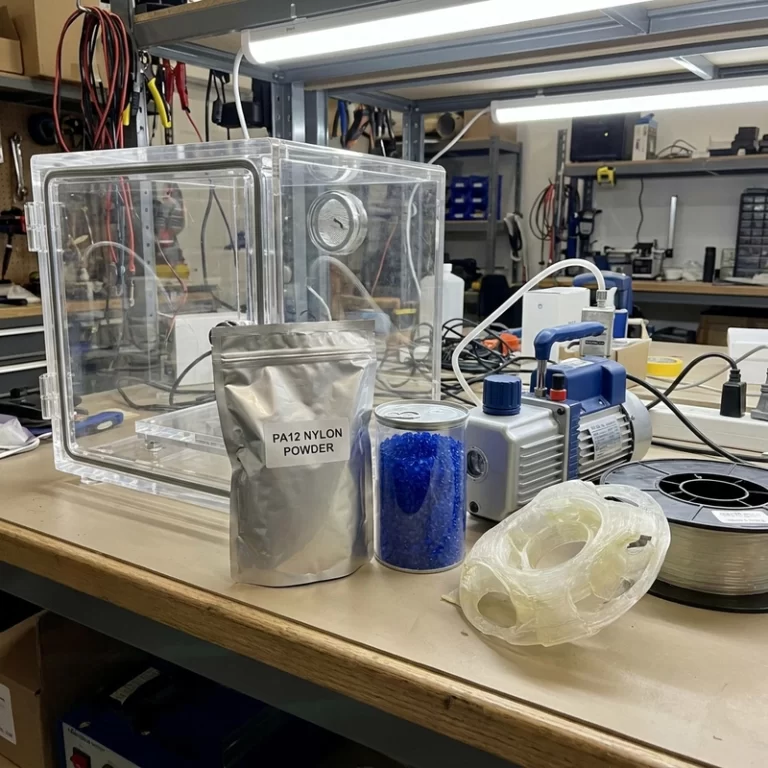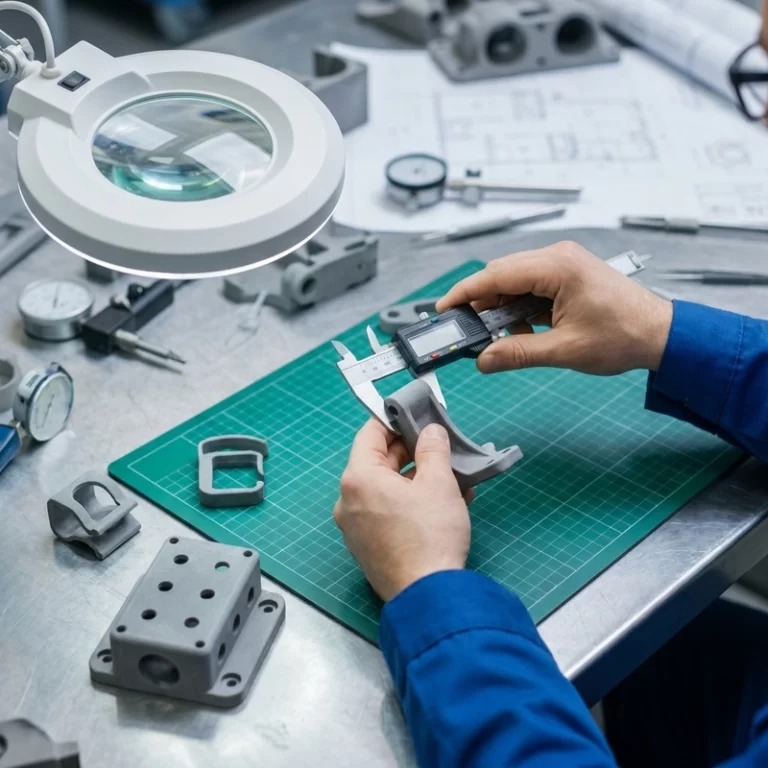
Food-safe nylon 3D printing is not a label I would accept from the material name alone. Nylon may be a familiar engineering plastic, but food-contact use depends on the exact material, additives, powder or filament handling, printer cleanliness, post-processing, migration testing, and the intended contact condition. A printed part is not food-safe just because the base polymer sounds acceptable.
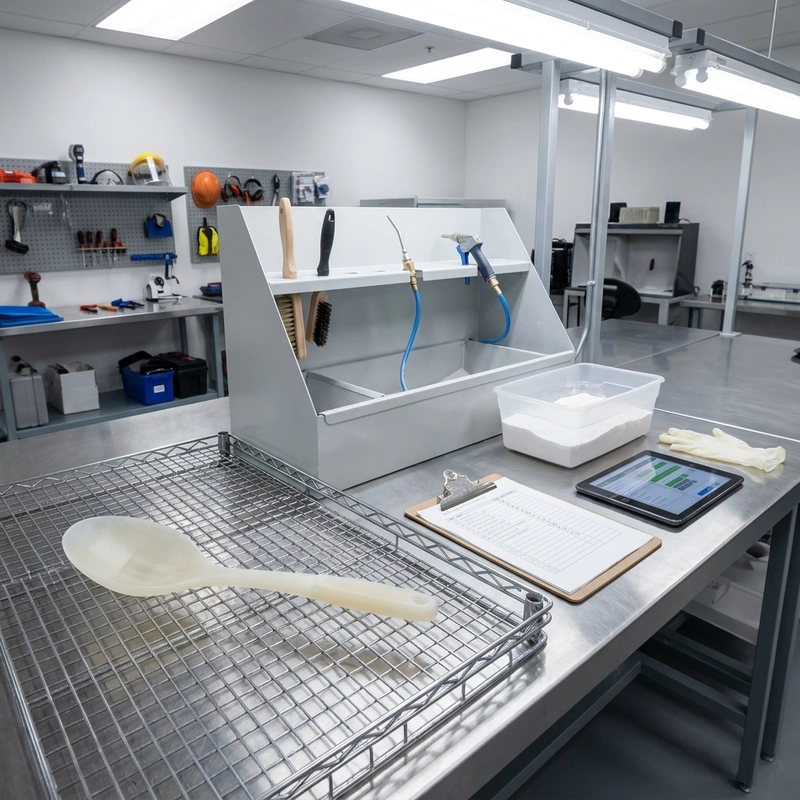
I write this carefully because overclaiming food safety is a real risk. A prototype spoon, coffee-machine part, food fixture, or packaging-contact sample may look harmless, but the print surface can hold powder, pigment, cleaning residue, dye, coating, or trapped contamination. Food-safe nylon 3D printing should be treated as a controlled manufacturing route, not a casual material choice.
Food-safe nylon 3D printing starts with certification scope
The first question is which regulation or customer standard applies. The source mentions GB 4806.7-2016 and a lead migration reference of <=0.01 mg/kg under that standard. Overseas buyers may ask for FDA, EU, LFGB, or other documentation depending on market and product. A supplier statement, a resin datasheet, and a finished printed-part test are not the same document.
For U.S. context, the FDA food contact substance framework is the right direction to check rather than relying on shop vocabulary. A useful starting point is the FDA page on food contact substances. The practical point is simple: intended use, contact food type, temperature, time, and migration matter. A dry display sample and a hot-oil contact part are not the same risk.
If the application is truly food-contact, ask for the exact material grade, colorant, process route, post-treatment, and available test report. Do not ask only whether “nylon is food-safe.” That question is too vague to be useful.
Process cleanliness in food-safe nylon 3D printing
SLS or MJF nylon powder runs through a machine, recoater, powder handling system, sieves, blast cabinet, and finishing area. If the same equipment handles non-food materials, color powder, recycled powder, coatings, or contaminated parts, the process history matters. Cleanliness is not only the final wash. It begins with material storage and machine control.
The source references PA12 sintering around 180-200 C in some workflows. That heat does not sterilize the whole finished supply chain. After printing, the part still needs powder removal, cleaning, and handling controls. Compressed air around 0.2-0.3 MPa is mentioned as a powder-removal reference, but air quality and operator practice matter too. Blowing dirty air into a porous part is not cleaning.
Powder-bed nylon surfaces are slightly porous and textured. Powder trapped in small holes, channels, and blind pockets is hard to verify. For food-contact design, avoid deep blind cavities, sharp internal corners, and surfaces that cannot be inspected or cleaned. If the geometry cannot be cleaned, the material certificate alone does not solve the problem.
Machine segregation is another question I would ask early. If food-contact work is mixed with ordinary prototype powder, dyed parts, or unknown customer materials, cross-contamination risk becomes difficult to explain later. A serious food-safe nylon 3D printing request should ask how the supplier separates material lots, cleaning tools, blasting media, and packing areas.
Surface finishing and food-safe nylon 3D printing limits
The source lists wet sanding from 400-1200 grit as a possible finishing route. Smoother surfaces may reduce dirt retention, but sanding also creates debris and can open or smear pores. Coatings can improve cleanability only if the coating itself is appropriate for the contact condition and is applied consistently. A random clear coat should not be used to turn an ordinary print into a food-contact part.
Temperature and chemistry are also limits. The source warns about high temperature above roughly 120 C and strong acid or alkali exposure. Actual limits depend on grade and certification. If a part will touch hot water, alcohol, oil, acidic food, detergent, or repeated dishwasher cycles, say that in the RFQ. Those conditions change the risk.
For general powder-bed nylon behavior, read Zesmir’s SLS nylon 3D printing guide. For the moisture side of nylon quality, the nylon 3D printing moisture control article is the better companion.
Where food-contact printing may make sense
Food-safe nylon 3D printing may be considered for development fixtures, short-run handling aids, shape prototypes, jigs outside direct food zones, or parts that later go through formal material and migration review. It is a poor fit for vague consumer claims, rough porous surfaces touching wet food, hidden channels that cannot be cleaned, or applications where the buyer cannot define the regulation.
For RFQ work, separate three categories: visual food product prototype, indirect food equipment part, and direct food-contact component. The first may only need appearance. The second may need cleanability and non-contamination controls. The third needs serious documentation and testing. Mixing these categories creates dangerous assumptions.
One more trap is repeated cleaning. A part may pass visual inspection when new, then become rougher or stained after detergent, hot water, or scrubbing. If the part will be reused, ask how it will be washed, dried, stored, and inspected between uses. Single-use display contact and repeated food equipment contact are completely different design problems.
Traceability matters if the part leaves prototype status. Keep the material lot, print date, post-processing route, cleaning method, and any test document connected to the part. Without traceability, it becomes difficult to explain which process produced a later replacement or repeat batch.
My food-safe nylon 3D printing checklist is conservative: exact material grade, regulatory target, food type, contact temperature, contact time, cleaning method, colorant or coating, process cleanliness, and test documentation. If those details are missing, call it a prototype material discussion, not a food-safe production claim.