WJP full-color resin 3D printing is useful when the color is part of the model, not just decoration added after printing. I think of it as a visual-manufacturing route: geometry, texture files, white ink, resin behavior, and lighting all affect the final part. If any one of those is ignored, the print can be technically complete and still look wrong.
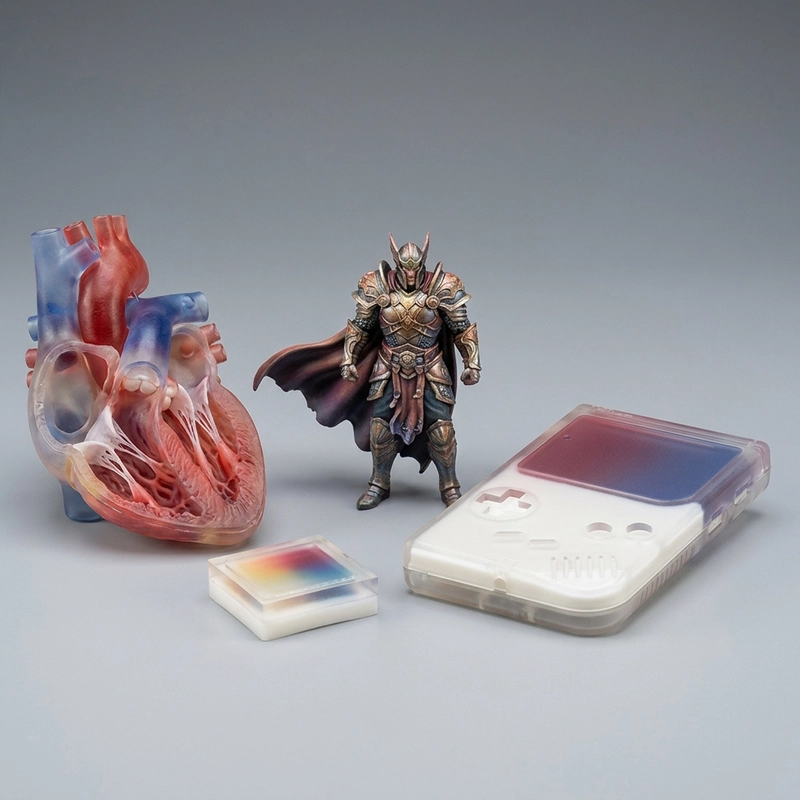
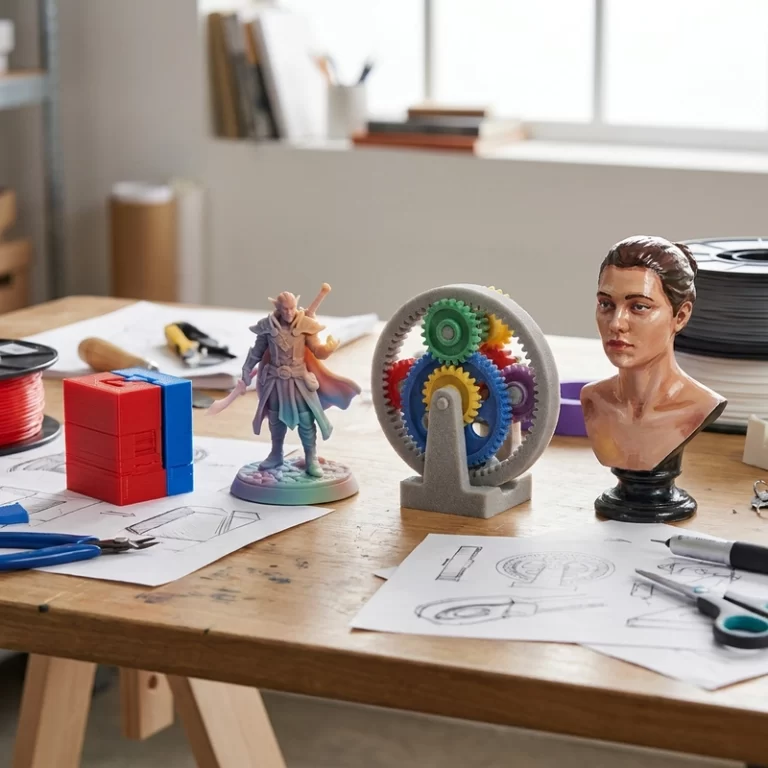
This process is often considered for portrait figurines, anatomical models, cultural products, education models, and product appearance samples. It is not the same as printing a resin blank and painting it by hand. The color data has to survive the trip from design file to slicing software to printed resin surface. That is why a plain STL is usually not enough when the part carries photographic texture or complex color zones.
Where WJP full-color resin 3D printing fits
WJP-style full-color resin printing sits between hand-painted SLA and powder-bed full-color nylon. Compared with painted SLA, it can reduce manual color variation and make repeated visual models easier to manage. Compared with full-color nylon, it can offer smoother resin detail, especially on faces, small props, anatomy, and display surfaces. The tradeoff is material behavior. Resin is not selected because it is the toughest option. It is selected when visual detail, small features, and color presentation matter most.
The source notes that some machine-specific workflows use very fine ink-dot and layer scales, with examples around 0.043 mm ink dot scale and 0.021 mm layer thickness. I would not quote those as universal capability. They are process references, not a promise for every model. The useful lesson is that color detail depends on the printing system, the resin, and the file quality, not just on the word “full-color” in a brochure.
For a broader comparison, Zesmir’s multi-color 3D printing comparison explains where WJP, dual-color FDM, painted resin, and full-color nylon differ. If the part is mostly mechanical and color only separates zones, PAC full-color nylon 3D printing may be a better route.
WJP full-color resin 3D printing needs complete color files
File preparation is where many color projects go sideways. OBJ, VRML, 3MF, or another color-capable format may be needed, often with texture maps in the same folder. UV mapping has to be clean. Texture resolution has to match the model scale. If the model has missing texture paths, low-resolution photos, or mismatched color spaces, the printer cannot guess the correct result.
For photo-based figurines, I would not send only one front photo and expect magic. Front, side, hair, clothing, and accessory references help. For product prototypes, provide logo files, Pantone or physical color references when available, and mark which surfaces are color-critical. A render is useful, but a render is not a physical color standard.
White ink or a white base matters because resin and color layers can be translucent. Without enough white backing, colors may look dull, muddy, or affected by the underlying material. Too much opacity or coating can also change small details. This is why a proof print is safer than approving a batch from screen images.
Color accuracy limits in WJP full-color resin 3D printing
Color accuracy is not only a printer specification. The printed surface has texture. Resin scatters light. Clear coat, matte coat, or handling sealer changes saturation. Skin tones and subtle gradients are especially sensitive. A face that looks acceptable under office light may look too red or too flat under exhibition light. I like using one approved physical sample as the reference for repeat work, not a phone photo.
Small text and sharp color borders also need realistic expectations. Tiny lettering can be limited by texture resolution, model scale, and resin edge definition. If the color boundary is critical, add it as actual geometry where possible instead of relying only on a bitmap texture wrapped over a curved surface.
There is also a packaging angle. Full-color resin parts may have fine surface detail and local color that can rub if pieces knock against each other in transit. For gift models or display samples, I would rather specify individual wrapping and a stable tray than repair rubbed noses, corners, or raised logos after shipping.
Comparing WJP with painting and dyed nylon
| Route | Strength | Risk |
|---|---|---|
| WJP full-color resin | Digital color, fine detail, good for display models | File quality, color proofing, resin toughness |
| Hand-painted SLA | Best artistic control and local correction | Labor cost and batch variation |
| Dyed SLS/MJF nylon | Tougher handling and simple batch color | Limited to solid or simple color effects |
| Full-color nylon | Color plus nylon-like handling | Powder texture and color accuracy limits |
WJP full-color resin 3D printing is strongest when the model is visual and the color information is complex. It is weaker when the part needs repeated load, snap fits, heat resistance, or outdoor durability. Those cases should be checked against engineering plastic, nylon, or a hybrid route.
The NIST additive manufacturing page is a useful neutral starting point for process vocabulary. It will not answer color matching by itself, but it helps keep resin printing, material jetting, and powder-bed processes separated in the discussion.
RFQ notes that prevent color rework
For a WJP quote, send the color-capable file, all texture maps, model scale, color-critical surfaces, intended viewing distance, finish expectation, and quantity. If the model is a figurine or portrait, add photo references and say whether the final look should be realistic, stylized, matte, or glossy. If the model is a medical or education display, mark which colors carry information and which are only visual.
One small proof can save a large batch. WJP full-color resin 3D printing rewards clean files and physical color approval. It punishes missing textures, vague color expectations, and rushed approval from a monitor screenshot.