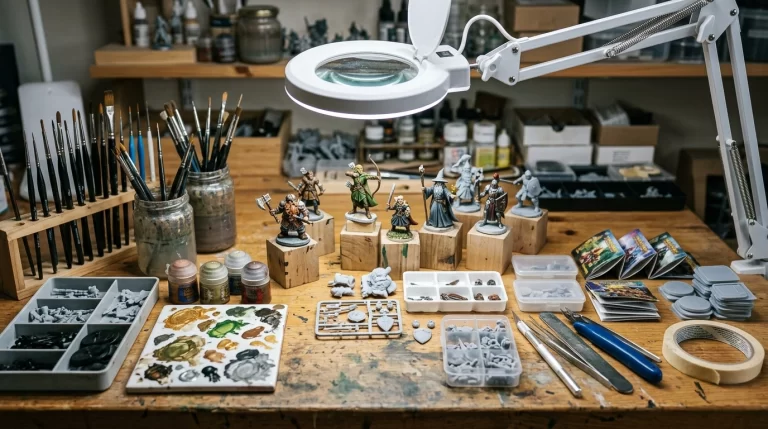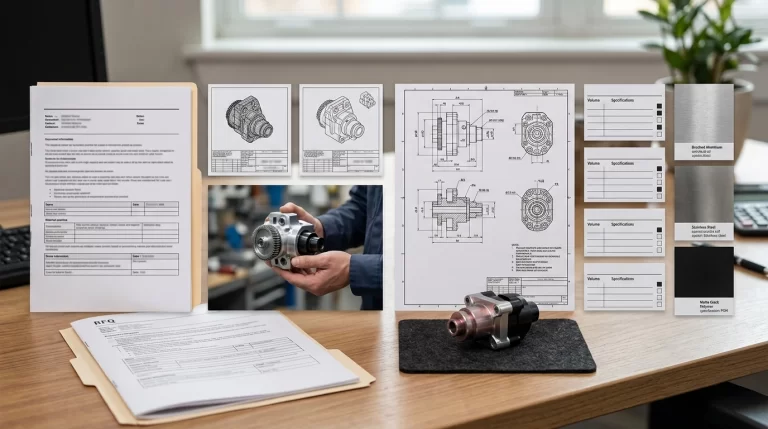
A 3D printing quote checklist is not paperwork for the sake of paperwork. It is how a buyer keeps the first price close to the real production route. When a quote request only says “please quote this STL,” the supplier has to guess material, finish, tolerance, quantity, packaging and sometimes even the final size. Guessing is where later price changes begin.
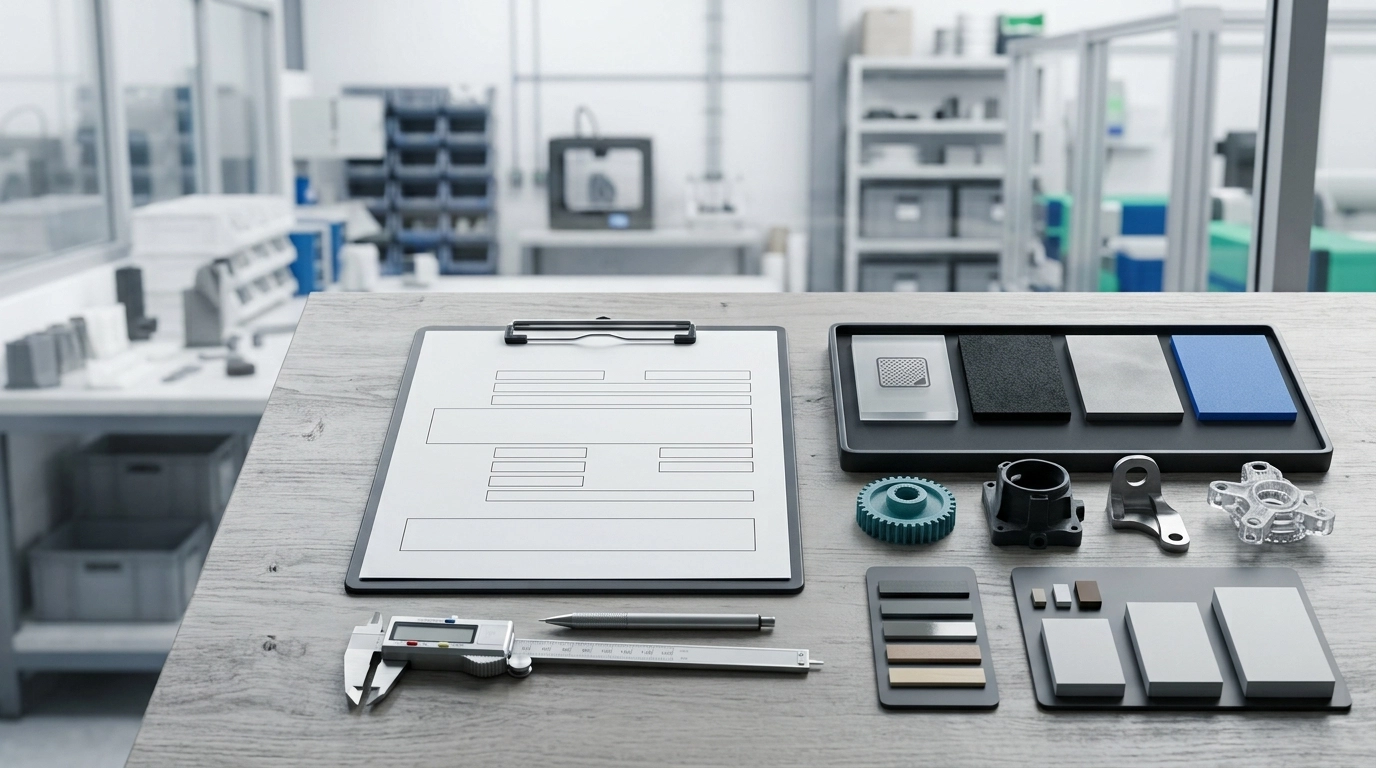
I like quote requests that make the part’s job visible. Not a long story. Just enough truth. A display figurine, a nylon hinge, a heat-exposed plastic cover and a metal insert can all be “3D printed parts” in an email, but they do not quote the same way. The checklist below is what I would want before treating a quote as more than a rough estimate.
3D Printing Quote Checklist for Files and Size
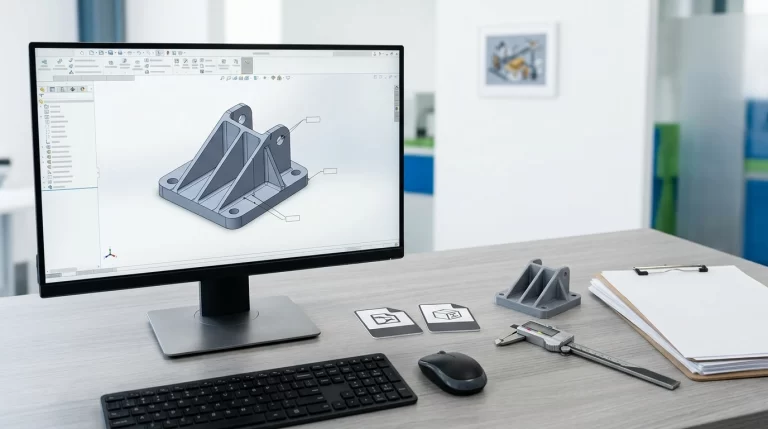
Start with the file package. Send STL for printability review. Send STEP when the part has engineering features, holes, threads, assemblies or surfaces that may need machining. If you only have OBJ, 3MF, scan data or a sculpted mesh, send it, but tell the supplier what it is. A mesh from sculpture software may need a different review than a mechanical CAD file.
Write the final size in the email. Do not rely on the file scale alone. If the part is a figurine, state height. If it is a housing, state the key envelope dimensions. If it mates with another part, send the mating file or at least the critical dimensions. Unit mistakes can make a quote look cheap for exactly the wrong reason.
For file repair and RFQ data, the earlier guide on 3D printing file preparation is the right companion article. For dimension-sensitive work, also check engineering plastic 3D printing dimensional accuracy.
Material, Process and Use Condition
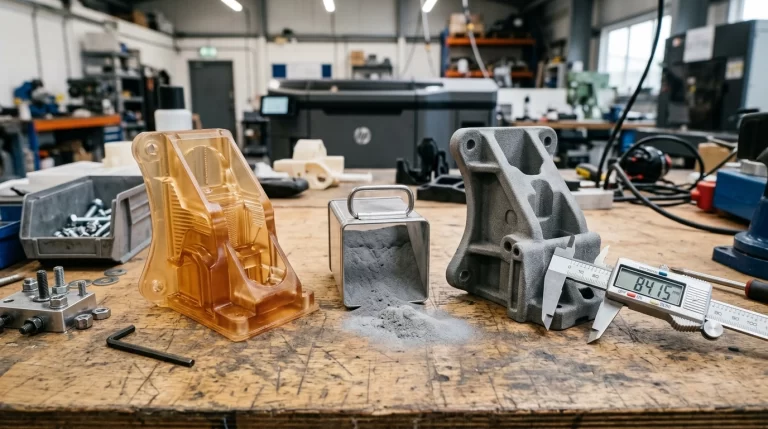
Material choice should come from use, not from a familiar name. If the part is visual, resin may be enough. If it needs toughness and repeated handling, SLS or MJF nylon may be safer. If the part is large and low-cost, FDM may be acceptable. If the part needs metal strength, the conversation moves toward SLM, binder jetting, CNC or a hybrid route.
Tell the supplier how the part will be used. Indoor display, outdoor use, heat exposure, water contact, repeated assembly, impact, painting, dyeing, retail packing and export shipping all change the quote. A prototype that sits on a desk and a part that snaps into a product every day should not be quoted with the same assumptions.
If you are unsure, describe the job instead of forcing a material. The article on engineering plastic 3D printing material selection explains why ABS, PC, nylon, PETG, TPU and high-temperature plastics behave differently. That kind of context helps more than writing “strong material” in an RFQ.
3D Printing Quote Checklist for Tolerance and Finish
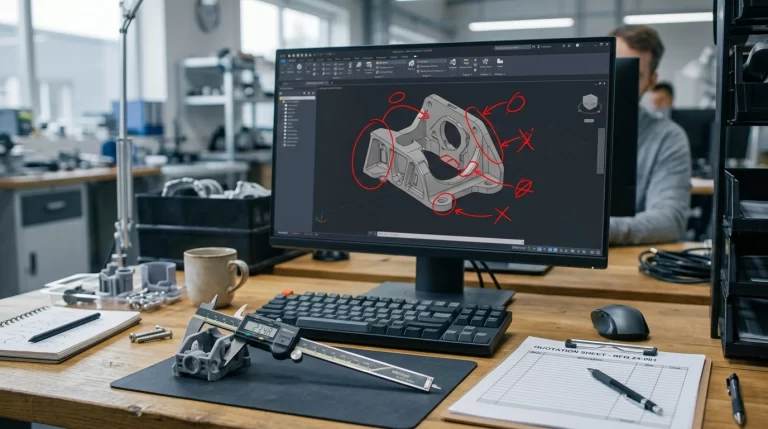
Do not mark the whole part as high tolerance if only two holes matter. Name the critical faces, holes, slots, bosses or mating areas. If post-machining is allowed, say so. CNC finishing after printing can improve certain surfaces, but it adds setup, datums and machining time. If machining is not allowed because the surface is cosmetic, that should also be clear.
Surface finish needs the same honesty. Raw SLA, sanded resin, painted resin, dyed nylon, tumbled nylon, vapor-smoothed plastic, polished transparent resin and metal post-processing all cost differently. A smooth white prototype and a retail-ready painted figurine are not the same quote. If color matters, send a color reference. If texture matters, send a photo of the target finish.
Surface issues are often tied to the process. The post on 3D printing surface roughness is useful before asking for a finish that the selected process may not naturally provide.
Quantity, Approval Sample and Packaging
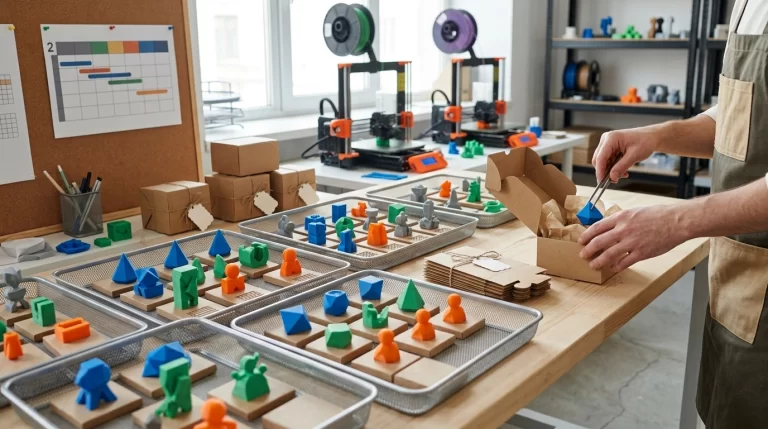
Quantity changes the manufacturing route. One piece may be quoted as a prototype. Ten pieces may still be direct printed. Five hundred pieces may need batch nesting, painting fixtures, inspection sampling, packaging design or even a comparison with vacuum casting. If you only write “bulk later,” the first quote cannot plan for production risk.
For OEM gift work, I would include whether one approval sample is required before batch production. That sample should define size, color, surface, detail level, logo placement, packaging and any fragile detail. Without an approved sample, a batch can be technically printed and still disappoint the buyer because the finish expectation was never locked.
Packaging belongs in the quote early. Foam inserts, individual boxes, labels, barcodes, export cartons and fragile-part protection can change labor and shipping volume. A small part with thin ears, fingers, antennas or clips may need more packaging attention than a large simple block.
The NIST additive manufacturing page is useful background for process vocabulary and measurement thinking. For a working RFQ, though, the useful checklist is more direct: files, size, material, use, tolerance, finish, quantity, sample approval, packaging and deadline. When those are visible, a 3D printing quote checklist stops being a form and becomes a way to avoid preventable rework.
Keep the 3D printing quote checklist beside the approved sample, because the sample only helps if the buying notes still match it.