


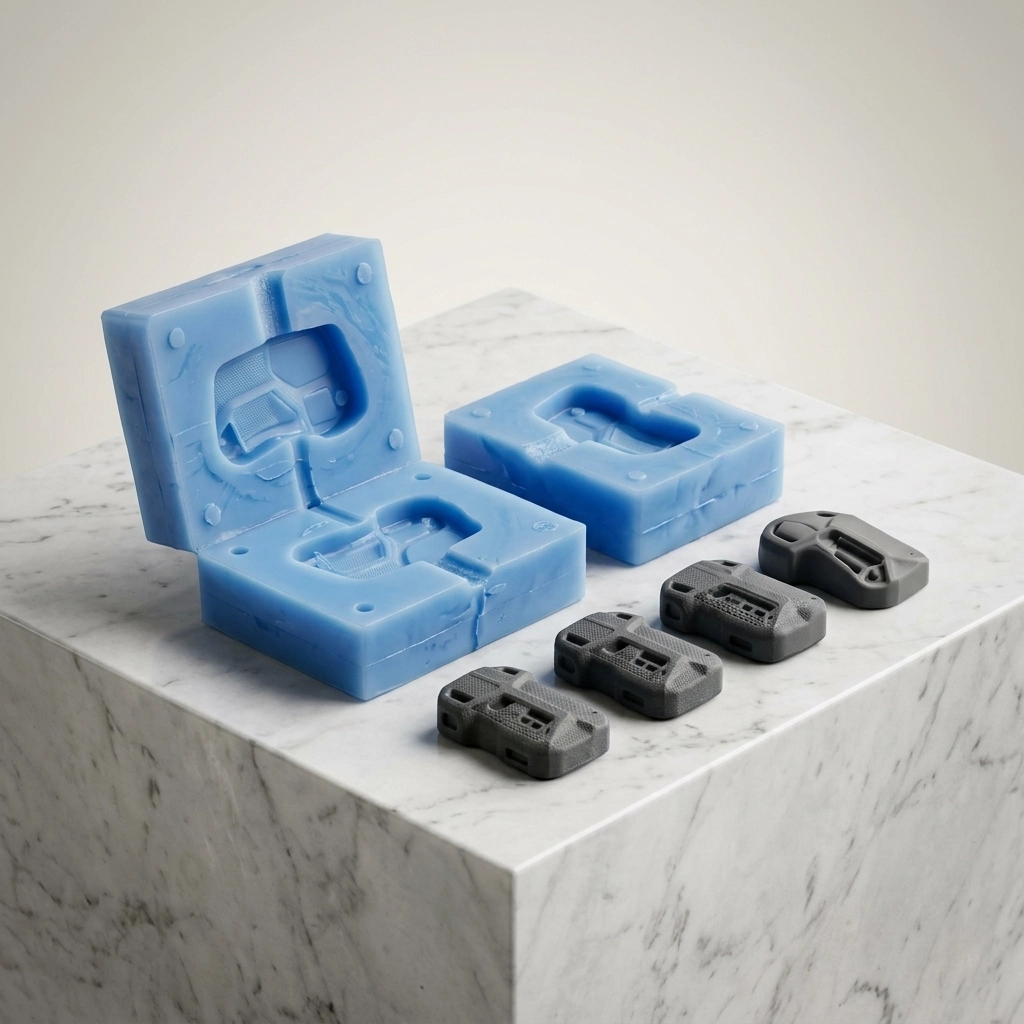
Vacuum Casting Small Batch Plastic Parts
Short-run plastic parts made from an approved master and silicone mold. Send STEP files for review of master finish, parting lines, casting resin, tolerance, color, inserts and mold planning.
Description
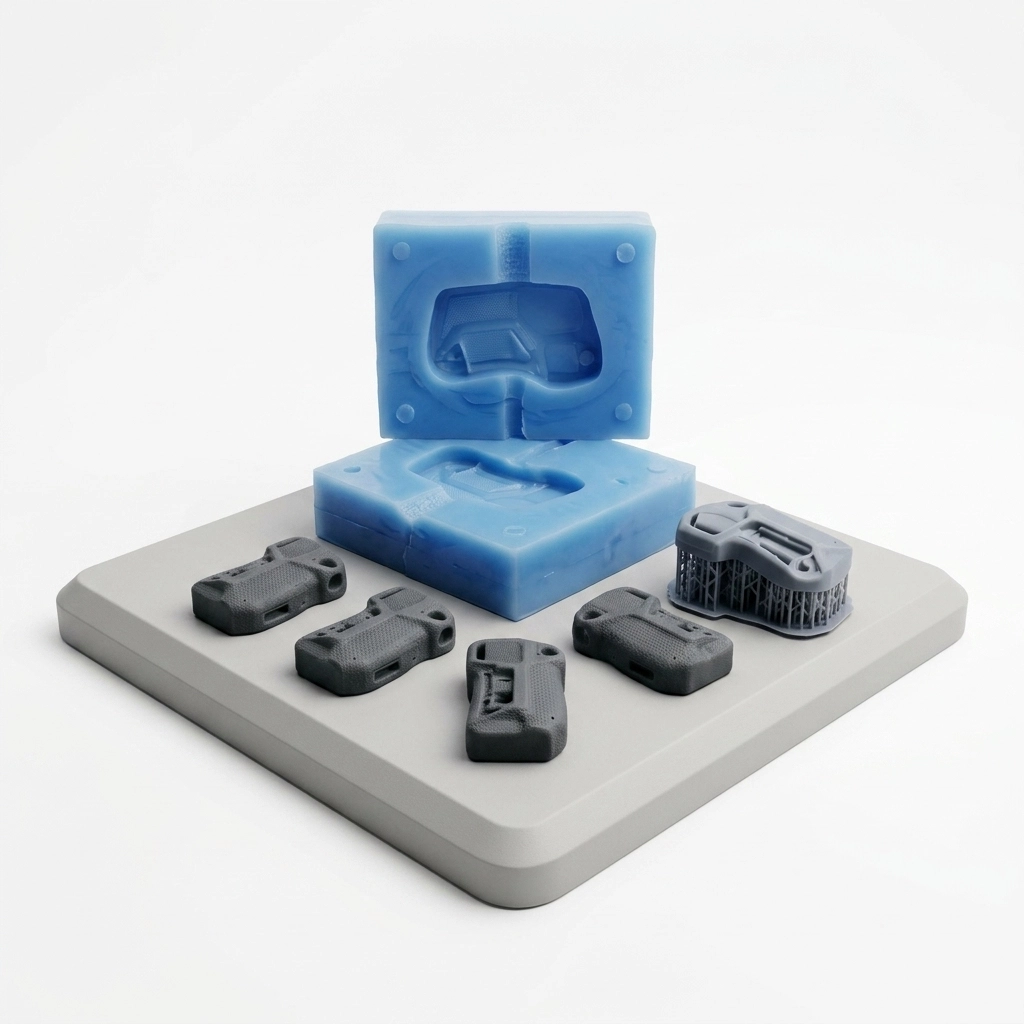
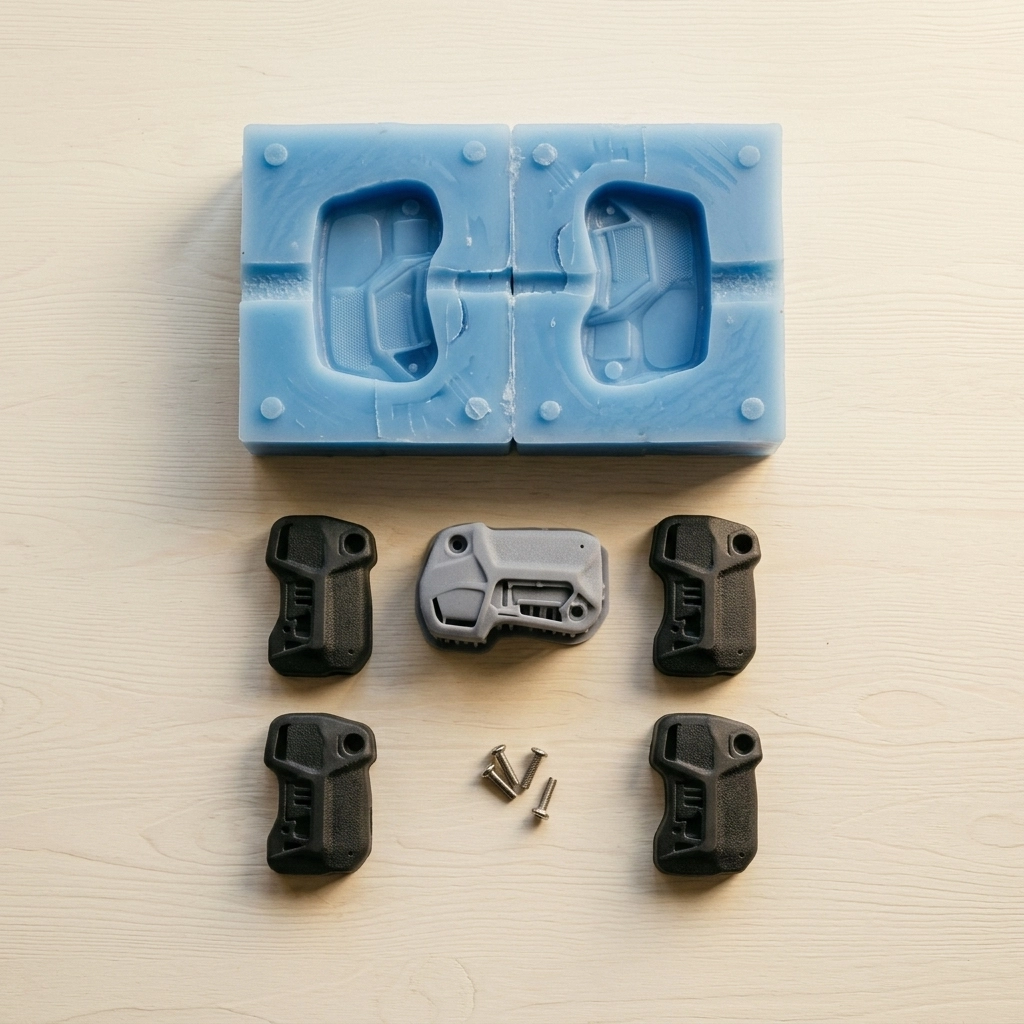
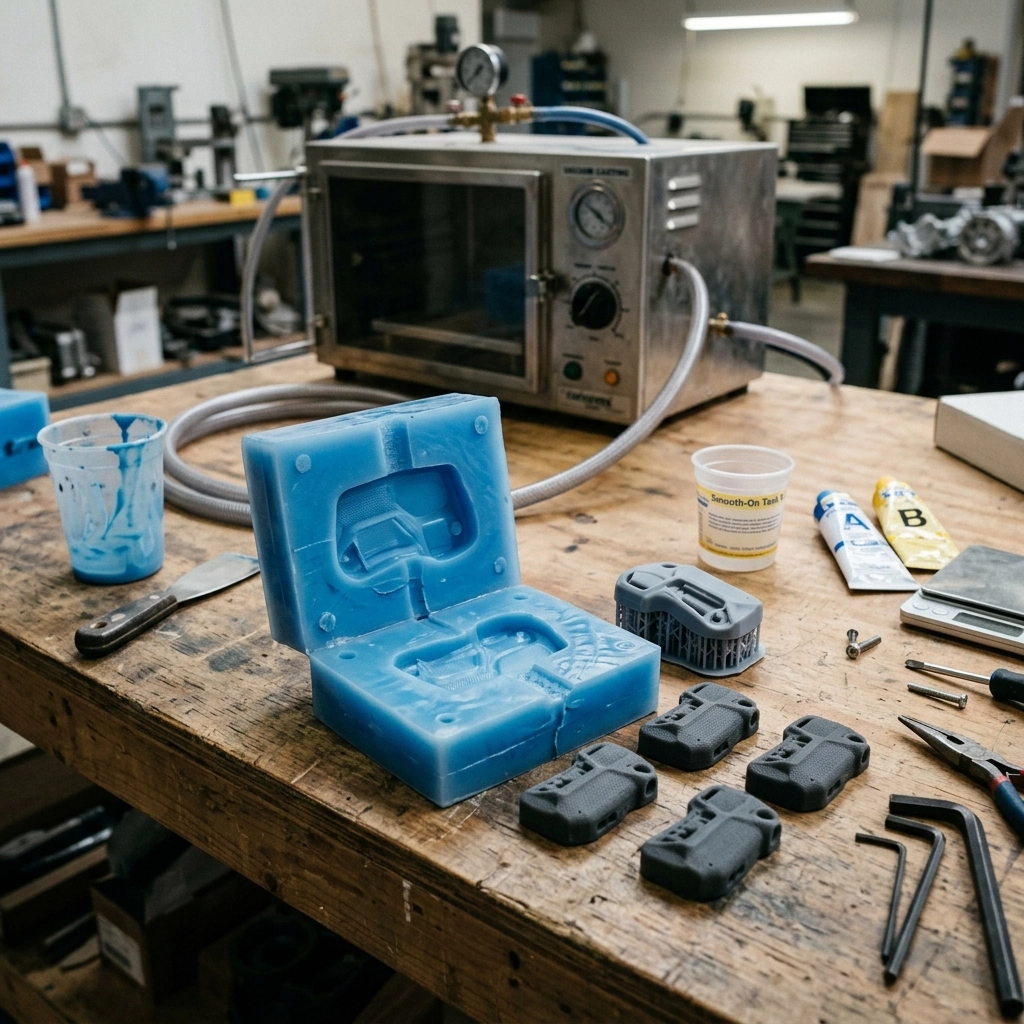
Vacuum casting small batch plastic parts fills the gap between one prototype and injection tooling. A master pattern is finished first, a silicone mold is built around it, and a casting resin is poured under controlled vacuum conditions to reproduce the cavity. The batch inherits both the good work and the defects in that master.
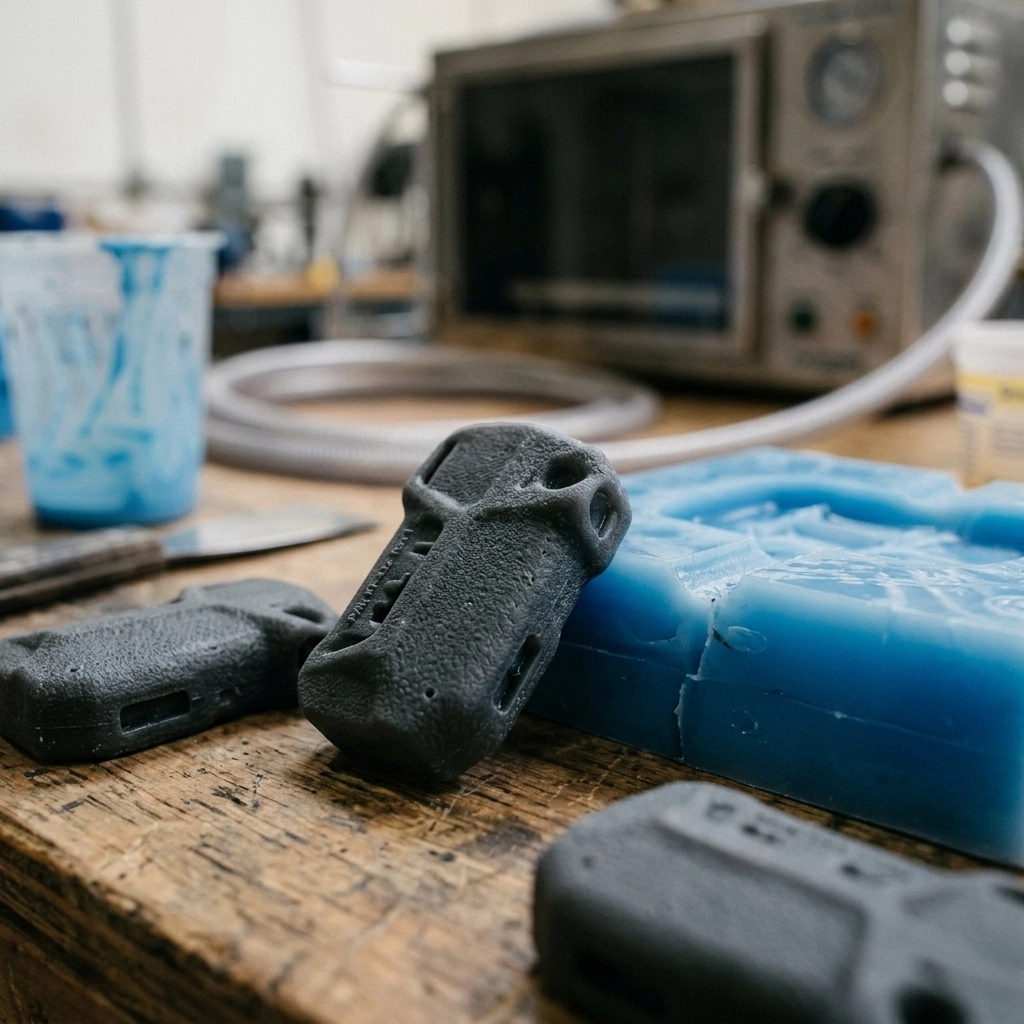
The process is often called silicone molding or urethane casting. It can produce attractive short-run housings, buttons, grips, display parts and test assemblies. It is not injection molding without a steel tool. Mold wear, casting chemistry, parting lines and manual handling remain part of every piece.
Vacuum Casting Small Batch Plastic Parts Begin With the Master
The silicone copies scratches, layer lines, softened edges and repair marks. If the final part needs a polished face, engraved logo or controlled texture, that detail should exist on the approved master at the right quality.
SLA is commonly used because it can produce fine detail and a finishable surface. CNC may be better for flat datums or materials that are easier to polish accurately. The master also needs enough stability to survive mold preparation without changing shape.
I prefer approving the master as a physical reference. A render cannot reveal a sanding wave, parting-line decision or the way a matte texture catches light.
Parting Lines, Gates and Vents Are Product Features
The mold must open, fill and release the part. A flexible silicone tool can tolerate undercuts that would complicate rigid injection tooling, but flexibility is not unlimited. Deep hooks, trapped cores and delicate projections can tear the mold or damage the casting during demolding.
Parting lines should avoid priority cosmetic faces where practical. Gates need enough flow area and a location that can be trimmed. Vents give displaced air somewhere to leave, especially at high points and thin extremities. Moving these features after the first casting may require mold rework or a new mold, so they belong in the review before silicone is poured.
The Resin Must Be Selected by Required Behavior
Rigid, impact-modified, flexible, clear and heat-oriented casting systems do not share one property set. State whether the part is a visual sample, an assembly test, a soft grip, a clear lens mockup or a functional prototype. Color and hardness alone do not define performance.
Ask for the actual material data and the test methods behind it. ASTM D638, for example, defines a method for tensile testing plastics under specified specimen and conditioning requirements; a number taken from a differently prepared sample may not predict the cast component. If flame, food contact, medical or other regulated performance matters, documentation must cover the exact resin and production condition.
Production handling also follows the supplier’s safety data sheets. Many polyurethane systems involve isocyanate chemistry, which is why controlled shop procedures matter even when the buyer only receives a cured part.
Tolerance Includes the Master, Mold and Cure
The final dimension is influenced by master accuracy, silicone movement, resin shrinkage, temperature, cure, demolding and any post-cure step. A broad thin cover can move differently from a compact knob. Tight control should be reserved for functional features and verified on the physical sample.
For vacuum casting small batch plastic parts that must assemble with production hardware, provide mating components or a drawing with the actual fit. Critical bores can be cast with allowance and finished later, but that needs a datum and fixture plan. Do not assume a silicone mold will hold machined tolerances across every feature.
Wall Transitions Affect Fill and Appearance
Very thin regions may fill poorly or become fragile during demolding. Heavy sections can cure differently, trap heat or create visible sink and distortion. Gradual transitions, ribs and sensible boss design are usually cleaner than abrupt changes from a thin wall to a solid block.
Draft can help release even though flexible silicone tolerates more geometry than a rigid tool. Sharp internal corners are also harder to fill and stress the mold. Small fillets may improve both casting and durability without changing the visual design.
Color and Texture Need a Physical Approval Standard
Pigment can be mixed into the casting resin or color can be added later through paint and coating. Molded-in color avoids a full paint film but still depends on batch mixing, resin color and section thickness. Clear castings need careful master finish, mold condition and bubble control; “clear” does not automatically mean optical quality.
Approve color, gloss and texture on a real sample under agreed lighting. Record whether marks at the gate and parting line are acceptable, and identify surfaces that may be sanded or polished.
The SLA resin service can provide a detailed master route, while the sample-to-bulk figurine guide explains approval control for decorated products.
Mold Life Is a Planning Range, Not a Promised Piece Count
Silicone molds wear. Abrasive texture, deep undercuts, high cure temperature, sharp features and demolding force can shorten useful life. Simple geometry may produce more acceptable castings than a delicate complex part from the same mold material. A project quantity may therefore require more than one mold.
Plan a first article, an approved batch reference and a replacement-mold strategy when repeatability matters. If demand grows or the design stabilizes, injection tooling may become the better production route.
Vacuum Casting Small Batch Plastic Parts RFQ Checklist
- STEP file, drawing and target dimensions;
- sample quantity, total batch and possible repeat order;
- required stiffness, impact, flexibility, heat and appearance;
- cosmetic faces, texture, color, gloss and clear-part expectations;
- inserts, mating hardware and critical fit features;
- inspection, assembly, labeling and packaging scope.
ASTM’s D638 plastics tensile test page is a useful reminder that property values depend on specimen preparation and test conditions. Use the material supplier’s current data and project-specific acceptance criteria.
Return to the custom 3D printing service hub if the project may stay as direct printing. For a manual review of vacuum casting small batch plastic parts, send the model, quantity, material behavior and finish through the RFQ contact page.