
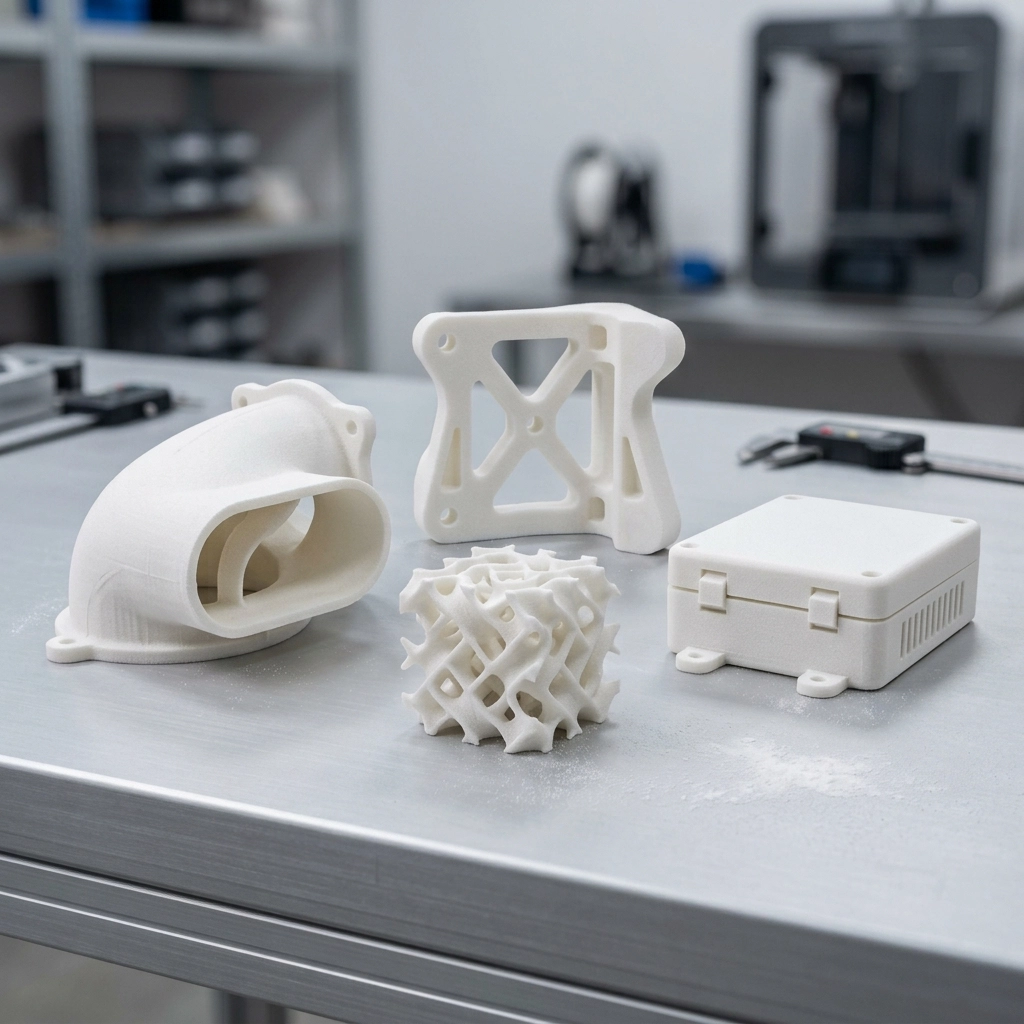
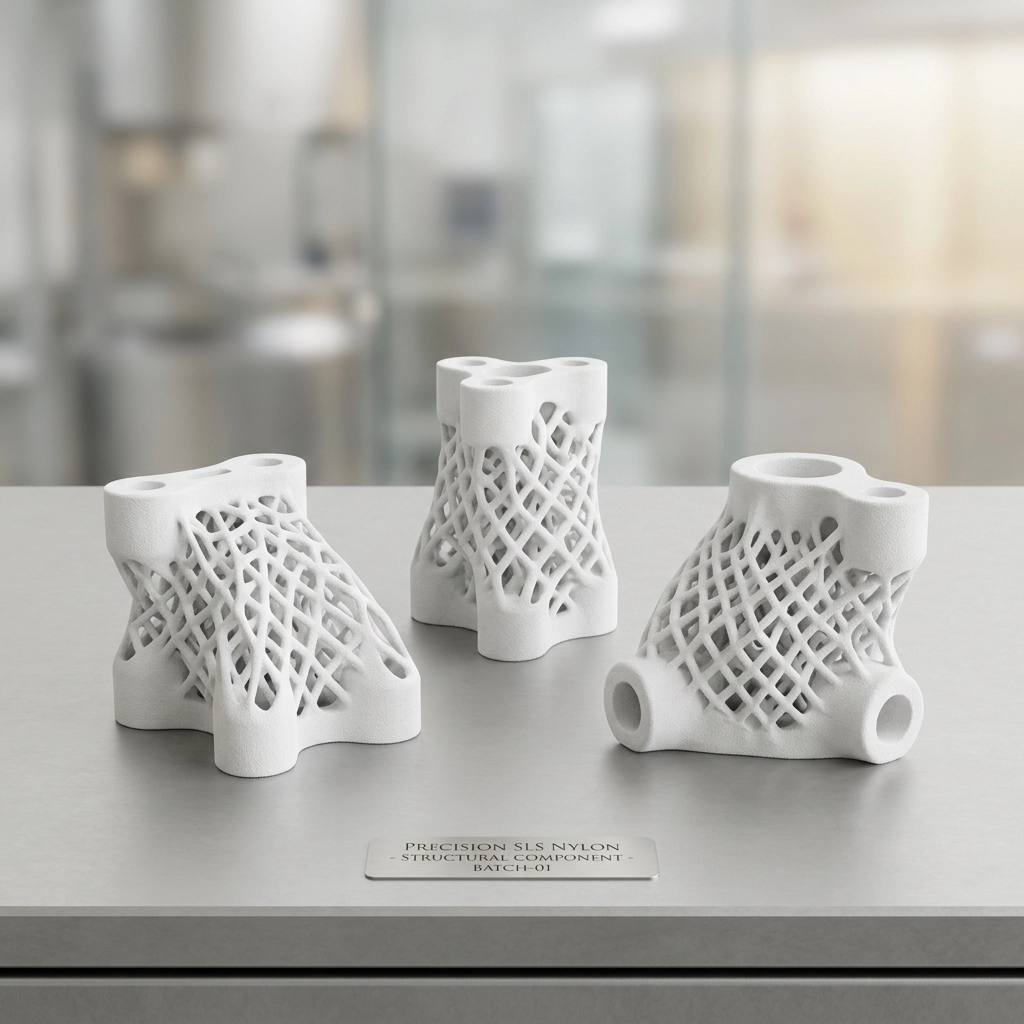
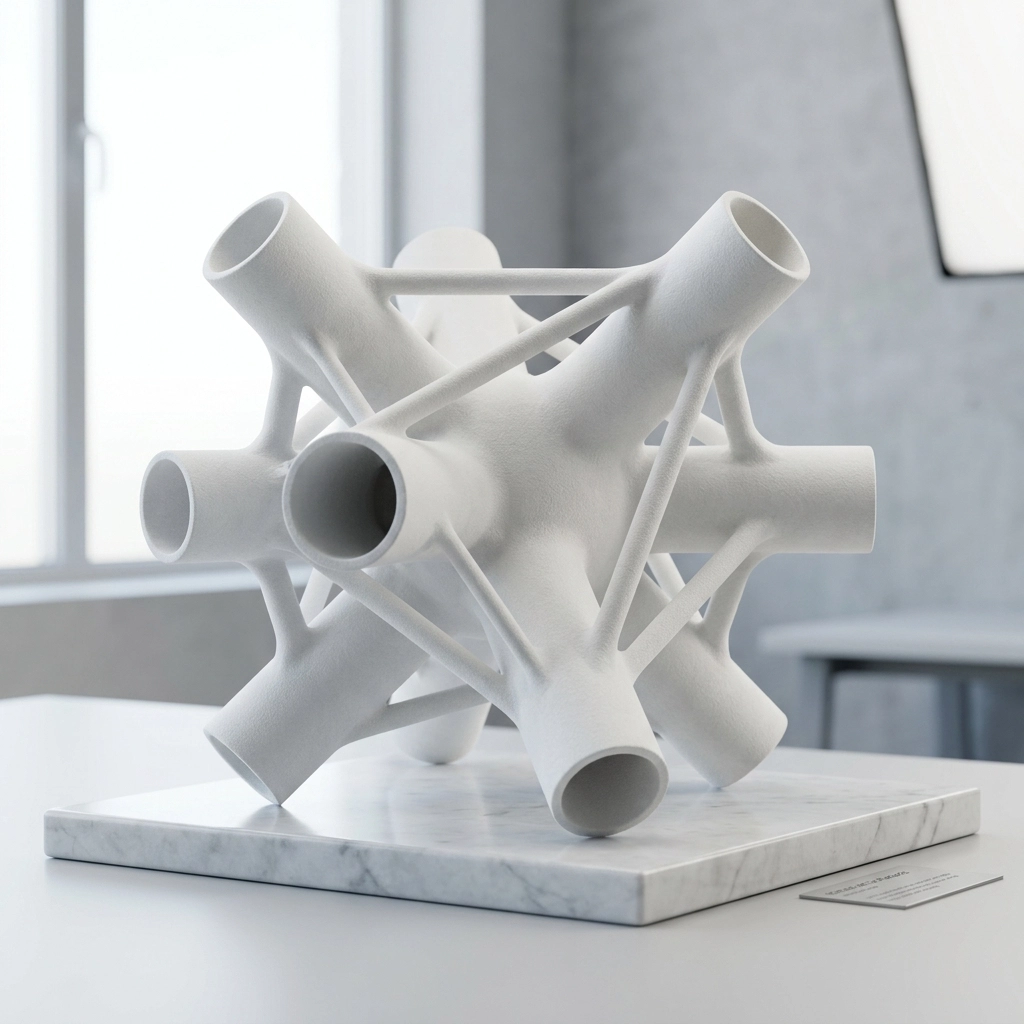
SLS Nylon 3D Printing Service
SLS nylon 3D printing for support-free PA12 parts, nested geometry, ducts, housings and functional prototypes. Send STEP or STL files for review of thermal distortion, trapped powder, fit, surface finish and batch requirements.
Description
SLS nylon 3D printing service is often described as support-free, which is true but incomplete. Loose powder carries the part during the build, so there are no support towers to cut away. The part still sees heat, shrinkage and a long cooling cycle. Large flat panels can move, small holes can close in, and internal passages can leave the machine packed with powder.
I would not choose SLS from a render alone. The useful questions are less glamorous: Can powder escape? Which faces need to fit? Is the wall short and stiff, or broad and flexible? Does the buyer expect a functional nylon texture or a molded cosmetic finish? Those answers shape the quote.
Support-Free SLS Still Has a Thermal Design Problem
Selective laser sintering builds polymer parts inside a heated powder bed. A laser scans the cross-section, the bed indexes, fresh powder is spread and the next layer is fused. The surrounding material supports overhangs and nested shapes, but the completed build must cool before the parts are unpacked.
That heat history is why broad, thin or uneven sections deserve attention. A heavy boss attached abruptly to a light wall does not cool like the wall around it. Long covers, shallow trays and flat plates may curl even though nothing in the CAD file looks difficult. Ribs, curved surfaces, gradual transitions and shorter spans are often more useful than simply increasing every wall.
The exact allowable geometry depends on the machine, powder, refresh strategy and build layout. A supplier-specific design guide can provide a baseline, but it does not replace review of the actual part.
The Geometry Checks Behind an SLS Nylon 3D Printing Service Quote
Powder escape comes before clever internal geometry
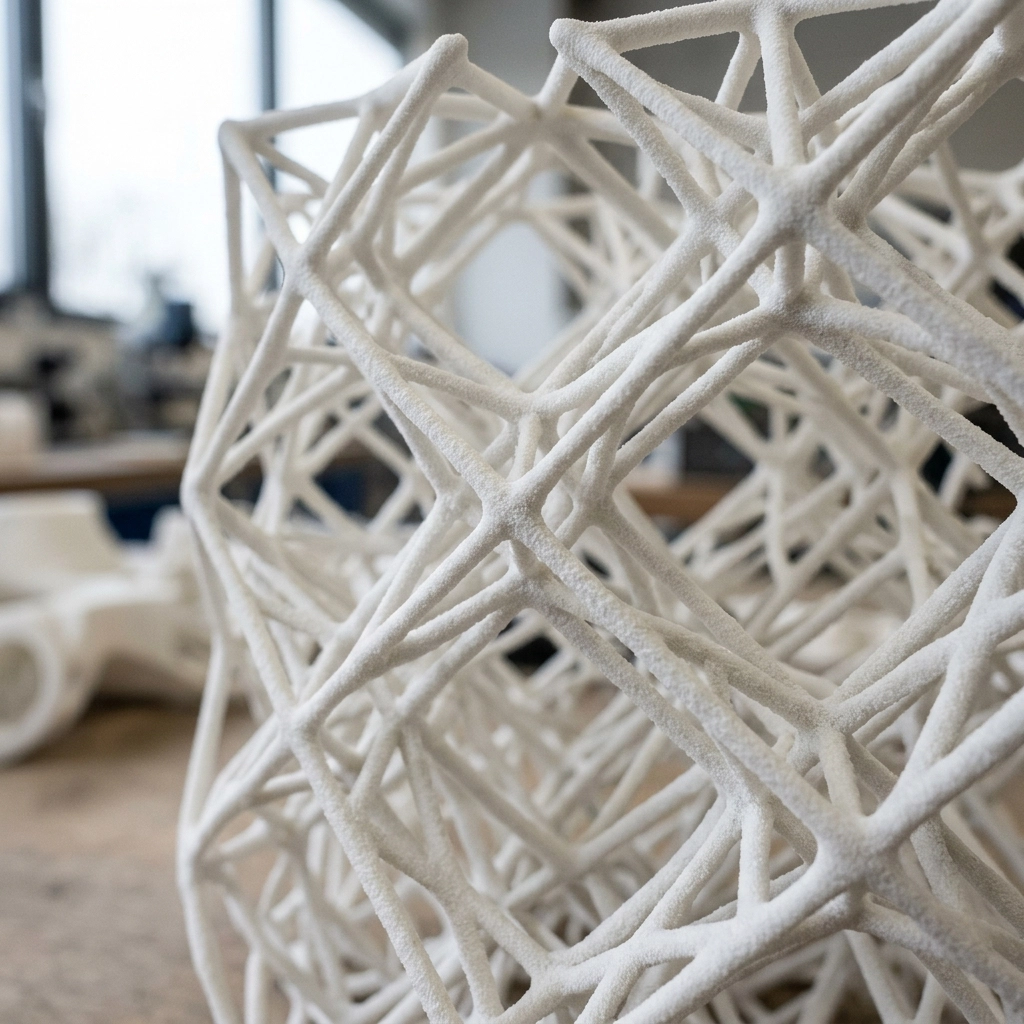
Internal channels, lattice cores and printed-in-place mechanisms are possible because there are no attached supports. They are only useful when loose powder can be removed. A narrow curved passage may be printable yet impossible to inspect or clean completely. Closed hollow volumes usually need escape openings positioned for access, not hidden wherever they are easiest to draw.
Mark passages that must remain open on the drawing or RFQ notes. If trapped powder is acceptable inside a sealed lightweight core, state that too. Otherwise the production team has to guess which cavities are functional.
Small holes are not the same as small pins
Fine positive and negative features respond differently. Heat can soften a slender pin, while partially fused powder and surface texture can reduce a small bore. If a hole controls assembly, I prefer to see its nominal size, mating component and intended fit rather than a generic tolerance note. An undersized pilot followed by drilling or reaming may be more dependable for a critical bore. Threads may also be better tapped after printing or made with an insert, depending on load and service cycles.
Clearance has to survive printing and cleanup
A moving joint can look separated in CAD and still fuse or bind after printing. The physical gap is affected by local heat, orientation, powder removal and surface texture. Hinges, chain links and nested assemblies should have an escape route for powder and enough access to free the joint without forcing a fragile feature. When the mechanism matters, a small clearance coupon is safer than guessing from a screenshot.
Part orientation is about heat and surface, not support scars
SLS does not need conventional supports, but orientation still changes how a surface is built, how heat moves through the geometry and how parts pack into the chamber. A cosmetic face, a long axis and a thin edge may pull the layout in different directions. Tell us which requirement wins. Otherwise a build optimized for packing density may not match the buyer’s preferred appearance or dimensional priority.
PA12, PA11 and Filled Nylon Are Not Interchangeable Labels
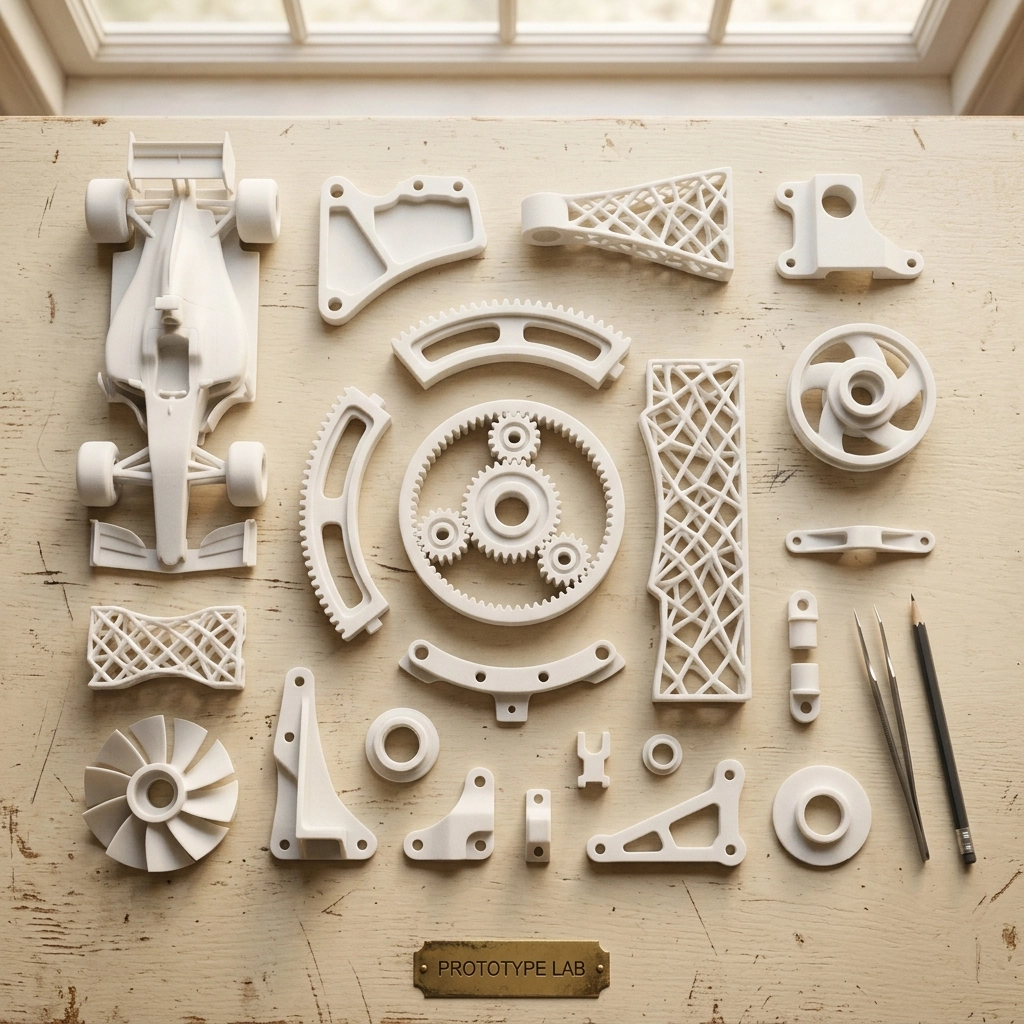
PA12 is a common SLS material for housings, brackets, fixtures and functional prototypes. PA11 is generally considered when greater ductility is useful, while glass-filled formulations trade some behavior for added stiffness and a different thermal response. For an SLS nylon 3D printing service order, the exact result belongs to the selected powder and validated process. Do not approve material from a family name alone.
State the working environment: load, impact, temperature, moisture, chemicals, UV exposure and contact requirements. A nylon part that works as an indoor fixture is not automatically qualified for a pressure boundary, regulated device or long-term outdoor component. Datasheets, testing and acceptance criteria should follow the actual end use.
Our PA12 nylon guide for SLS and MJF gives more context on material behavior. If the main decision is between the two powder-bed routes, compare this page with the MJF nylon 3D printing service rather than assuming one process wins every part.
SLS Nylon 3D Printing Service Finishing: What Each Step Changes
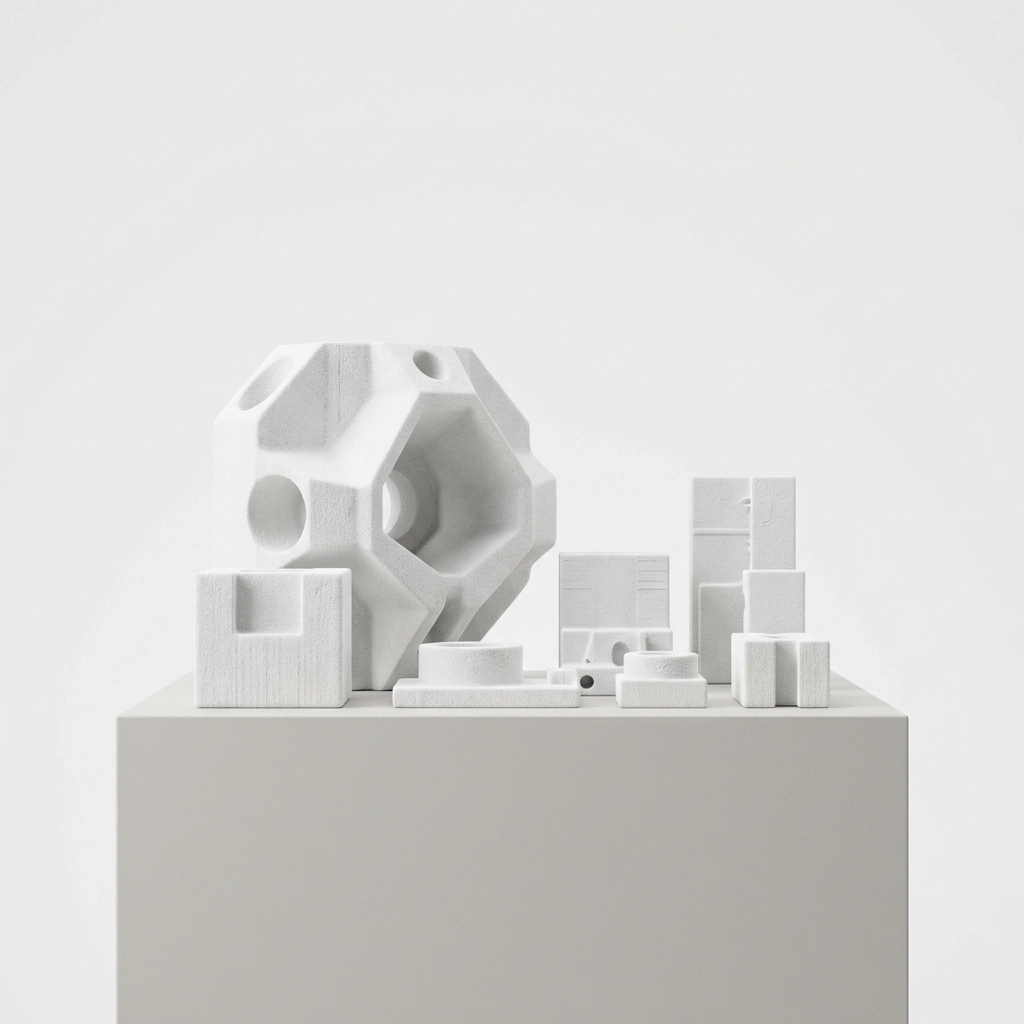
Unpacked SLS parts need powder removal and cleaning. The normal raw surface is matte and granular; it should not be sold as injection-molded smooth.
- Blasting removes loose powder and makes the appearance more even.
- Dyeing colors the porous surface without adding the same film thickness as paint.
- Tumbling can soften texture and edges, which matters around small text and precision features.
- Sealing or coating changes appearance and surface behavior but must be checked against fit and end use.
- Local machining may be sensible for selected holes, threads or mating faces.
Choose the finish before quoting. A raw functional fixture and a dyed consumer-facing cover use the same base process but not the same labor or inspection plan.
What to Put in an SLS Nylon 3D Printing Service RFQ
- STEP and STL files with confirmed units and final scale;
- material requirement and the reason behind it;
- sample quantity, batch quantity and repeat-order expectation;
- critical holes, fits, moving gaps and powder-cleaning paths;
- cosmetic faces and required raw, blasted, dyed, tumbled or coated finish;
- inspection points and any first-article approval requirement.
ISO/ASTM 52911-2 covers design guidance for laser-based powder bed fusion of polymers; the current standard scope is listed by ASTM International. It is a useful framework, not a substitute for material-specific limits or part-level acceptance criteria.
Use the 3D printing design guidelines to prepare wall, hole and fit notes, or return to the custom 3D printing service page when the file may suit SLA, MJF, FDM or machining better. For an SLS nylon 3D printing service review, send the file with quantity, finish and critical dimensions through the RFQ contact page.